


How to Care for the Most Popular Christmas Flowers

The most popular Christmas plants—such as poinsettia, Christmas cactus, and amaryllis—add festive cheer to any home. Let’s talk about how to care for these favorite holiday plants to keep them blooming and looking their best throughout the holidays!
5 Favorite Christmas Plants
When you display your Christmas plants, make sure they’re placed away from drafts and positioned in a bright room but not in direct sunlight.
All of these Christmas plants prefer 60° to 70°F (16° to 21°C) temperatures and like moist but not soggy soil. As with many of us, these colorful plants will look forward to next year’s holiday season!
Read Next

1. The Poinsettia
No plant symbolizes Christmastime quite like the poinsettia, especially the ruby-red variety. It might surprise you to learn that the red blooms are not the flowers; they are bracts or modified leaves! It’s an unlikely Christmas plant, since it’s native to Mexico, but it flowers during their winter and has become associated with the winter holidays.
We’re going to be blunt here: Poinsettias are tropical plants grown in greenhouses, and they may not be easy to rebloom.
But let’s start by taking care of this holiday gift so it looks its best, and if we’re lucky, we’ll encourage it to rebloom, too! If need be, mark these steps on your calendar:
- Through March, just water your poinsettia as usual.
- In early April, decrease watering. The soil needs to get very dry between waterings; however, don’t let the stem shrivel up!
- In late April (two weeks later), move your poinsettia to an area with no sunlight for about 12 to 15 hours every night and keep the plant at 60 degrees Fahrenheit.
- In May, cut back the stems to about four inches. Then, repot the plant in fresh potting soil (not regular soil). Move back into a well-lit window again and start watering. At this time, start fertilizing at two-week intervals.
- When nighttime temperatures no longer fall below 50°F (10°C), move the pot outside into a partially shaded location. Keep watering and fertilizing.
- Starting in July, pinch back each stem about an inch to keep the plant bushy and compact. Continue pinching new stems, leaving three to four leaves on each branch.
- In mid-August, it’s time to move the plant back inside to a well-lit window. Keep watering and fertilizing.
- To initiate flowering, the poinsettia needs long nights in complete darkness starting in early October. Cover the plant with a cardboard box or keep it in a closet from about 5 p.m. to 8 a.m. and water sparingly. During the day, bring it back out to the window.
- In early December, when buds form, stop the dark treatment.
- Stop fertilizing in mid-December. Your plant should be blooming again! If not, don’t give up hope. You still have a nice houseplant, and it may bloom next year.
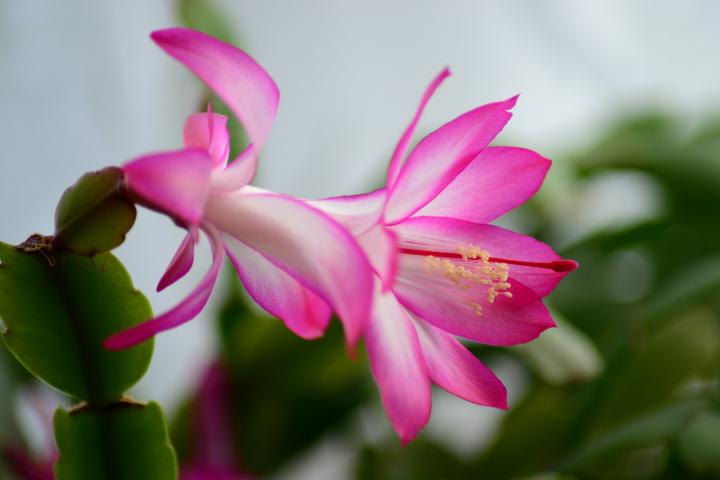
2. The Christmas Cactus
The Christmas cactus has become a recent favorite of Christmas plants. It’s a succulent houseplant with petals that bloom in a kaleidoscope of colors, including red, white, pink, cream, and fuchsia.
Why are Christmas cacti becoming so popular? Long-lived, they may produce bountiful blooms for 20 to 30 Christmases to come!
You can force a Christmas cactus into bloom in much the same way as a poinsettia (see above), by providing long nights starting around October 1. You can also persuade it to flower by subjecting it to cool night temperatures of 50° to 55°F (10° to 13°C) starting in early November.
Be sure your efforts are not in vain, though: Your Christmas cactus could be a different holiday cactus, accustomed to blooming at another time of year.
→ Get more tips on caring for Christmas cacti.

3. The Amaryllis
Although amaryllis can be purchased at any stage of development, for many, the real fun is growing their own plant from a bulb. Most amaryllis bulbs are sold already potted and with complete growing instructions. Once watering is started, you can expect magnificent, lilylike blooms of red, pink, white, or orange in four to six weeks.
If you receive one of these slender beauties this season, don’t toss the pot once the flowering ends. After flowering, grow the amaryllis as a foliage plant until the leaves turn yellow.
Then, store the potted bulb on its side in a cool, dark room or basement to rest for eight to ten weeks. When new growth appears, repot the bulb and return it to the light to start the cycle again and put on another show!
→ Get more tips on caring for amaryllis.
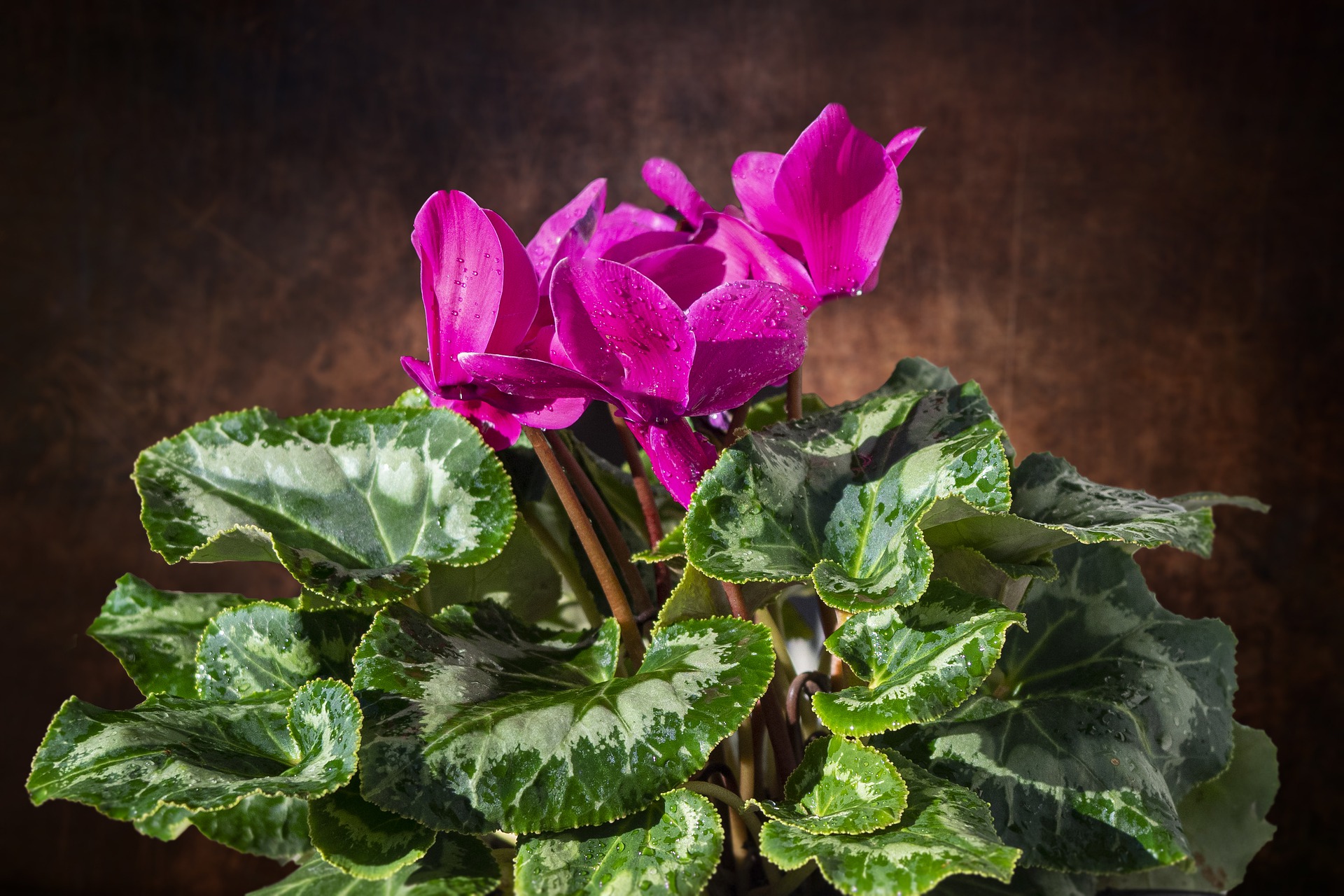
4. The Cyclamen
There’s one more Christmas favorite that’s been popping up in stores recently—the cyclamen plant! With upswept petals and pretty foilage, the cyclamen comes in cheerful red as well as white and pink. These plants like bright, indirect light and need to have their soil kept moist (but not soaked). If kept too warm, they will go dormant, meaning that they’ll stop blooming and drop foliage.
→ Learn more about caring for cyclamens.
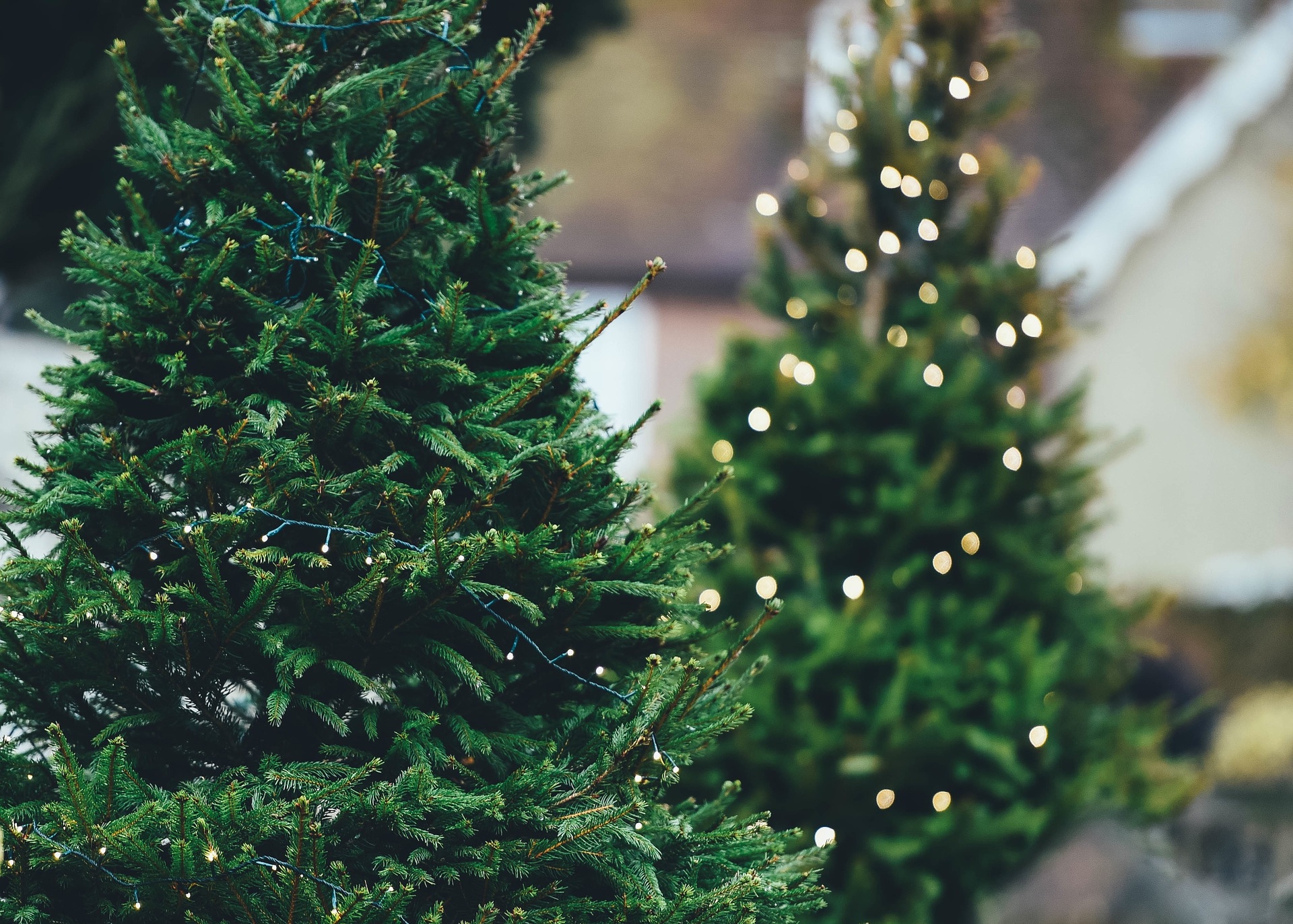
5. The Christmas Tree
And of course, there’s the Christmas tree! There’s something special about a fresh-smelling tree. Just make sure you buy from a sustainable Christmas tree farm that replants its trees like any other crop. The best-selling evergreens come Christmas time include Balsam, Douglas and Fraser firs. And don’t forget to recycle that Christmas tree when the holidays are over.
What are your favorite holiday plants? We would love to hear about them!
Catherine Boeckmann


ADVERTISEMENT
I have two poinsettia plants. Both loose all their leaves every winter when I bring them in. When I put them out in the spring their leaves return and they are healthy, green and profusely grow, but they never get a chance to turn red. Why do they drop their leaves?
Hi Wellner,
The most common problems for leaf drop are too little water (the plant drops leaves to survive), too much water (the plant drops its leaves due to root rot), and drastic temperature change (the plant is shocked by the change and drops leaves). It sounds like the third option is the most likely in your case. To help to prevent their leaves from dropping, acclimate the plants the the indoors slowly by bringing them inside for a couple of hours a day and then bringing them back outside. Increase the amount of time they spend indoors over 2 weeks before leaving them inside. If the problem persists, it could be due to too little or too much water. We hope this helps!
I got a Christmas cactus from my mother who got it from her mother-in-law before I was born, in 1950. So my cactus is over 66 years old! It's the fushia color flower, but the leaves are rounded along the sides instead of having points. It's about 36" accross and is very thick and brown in the main stems. It blooms regularly every year and seems to "shed" periodically during the year. I love it and hope to give it to one of my children someday. It's pretty amazing!!
Hi Bonnie,
That is an amazing story! It’s truly wonderful how much joy plants can give, especially one as treasured as your Christmas cactus.
How often and how much water should be given to a 2-3 ft Poinsettia ?
Hi Thomas,
Water the poinsettia when the soil feels dry to the touch. Keep the soil damp but not too wet.
Does one have to be concerned with planting an amaryllis by the phase of the moon to get good growth and flowers? If so, which phase? I am a little behind on getting my amaryllises from previous years planted, but is there a "best" day to plant them sometime soon?
Hi Pam,
We suggest to plant flowering bulbs when the Moon is waning. That is after the Moon is full and before it is new again. This month you can plant after Dec. 6.
I kept my poinsettia outside all summer , pruned it once around July 4th to make it more compact , when the nites promised frost I moved it in on a south facing porch back out during the warm fall days . One day I noticed some of the leaves starting to color and by Xmas it was beautiful ! I did not do the covering with a box or the closet treatment . Nature did it for me ! looking forward to the next year with the same treatment :-)
I have my poinsettias in a south facing window and water them with one cup of water once a week. They are 3 years old and are blooming.
