


Learn how to estimate distance quickly and easily

Did you know that your arm is about ten times longer than the distance between your eyes? That fact, together with a bit of math, can be used to estimate distances between you and any object of approximately known size.
How to Estimate Distances
Imagine, for example, that you’re standing on the side of a hill, trying to decide how far it is to the top of a low hill on the other side of the valley. Just below the hilltop is a barn, which you feel reasonably sure is about 100 feet wide on the side facing you.
- Hold one arm straight out in front of you, elbow straight, thumb pointing up.
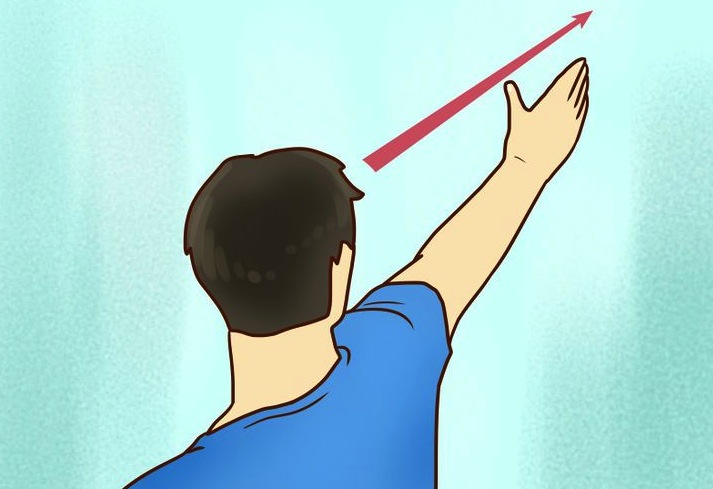
- Close one eye, and align one edge of your thumb with one edge of the barn.
- Without moving your head or arm, switch eyes, now sighting with the eye that was closed and closing the other.
- Your thumb will appear to jump sideways as a result of the change in perspective.
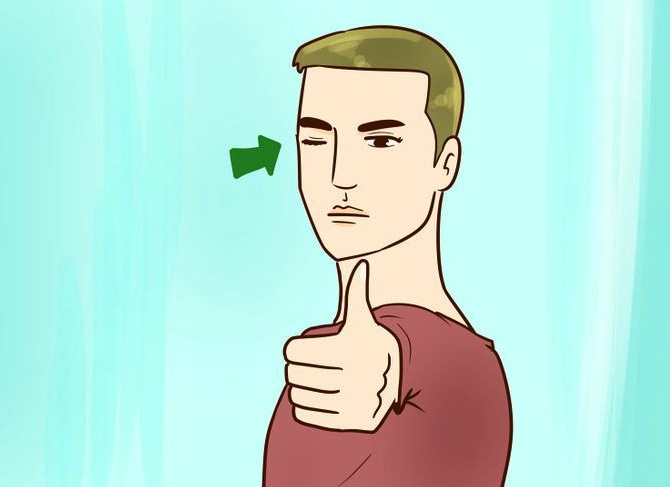
How far did it move? (Be sure to sight the same edge of your thumb when you switch eyes.)
- Let’s say it jumped about five times the width of the barn, or about 500 feet.

- Now multiply that figure by the handy constant 10 (the ratio of the length of your arm to the distance between your eyes).
- Now you get the distance between you and the barn—5,000 feet, or about one mile. The accompanying diagram should make the whole process clear.
Why Should You Have This Skill?
With a little practice, you’ll find that you can perform a quick thumb-jump estimate in just a few seconds, and the result will usually be more accurate than an out-and-out guess.
At a minimum, it will provide some assurance that the figure is in the ballpark—which, in many cases, is as close as you need to get.
This is a very handy trick if you’re hiking or out in nature, or even a photographer.
Just knowing that the length of your arm is about ten times the distance between your eyes helps you measure the distance between yourself and anywhere!
Catherine Boeckmann


ADVERTISEMENT
I have sight in only one eye. How would I be able to do this?
Okay, so how do I tell how wide the barn is?
This is where some “educated guessing” comes into play. If the barn or building has features that look normal-sized, such as a door or window, you can estimate the size of the entire barn from there. If the barn is simply a blank wall, well… You’ll just have to give it your best guess!
I was looking and reading the article, and I had that same question! Hope someone will answer it.
The distance to the Horizon is:
d=square root of 2 h.
Where;
d= the Distance to the Horizon in Miles. h= the elevation of the Observer above the Horizon in Feet.
