


Sign up for our daily newsletter to get gardening tips and advice.
Planting, Growing, and Harvesting Carrots

Everyone enjoys a sweet, crunchy carrot, but many gardeners find them a bit tricky to grow. It’s all in the soil! Take a moment to find out what you need to grow carrots in your garden successfully! Learn how to plant, grow, and harvest home-grown carrots.
About Carrots
Carrots are a cool-season crop grown in spring. They are an excellent source of vitamin A and add color to a meal. They can be served cooked or raw.
This popular vegetable has a natural sweetness—especially the homegrown carrot because the sugar that makes a carrot sweet begins to be replaced by fiber as it ages in the grocery stores.
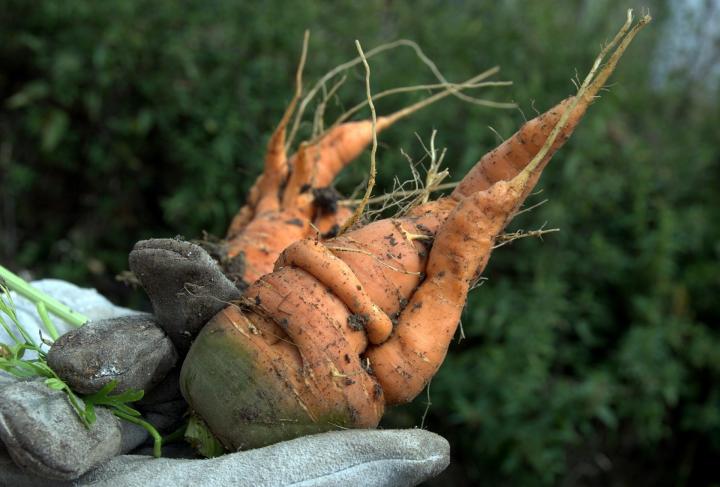
Plus, the home gardener has so many more varieties to grow, from Belgian whites to Purple Dragon to Parisian heirlooms that are round! (Not all carrots are the grocery store shape.) In fact, don’t expect to get perfectly straight “grocery store” carrots. Your carrots will still taste better, whatever their shape!
Carrots are known to be difficult to grow, especially in heavy, compacted soil. However, with a little effort, you can indeed grow carrots! Our planting guide below explains more.
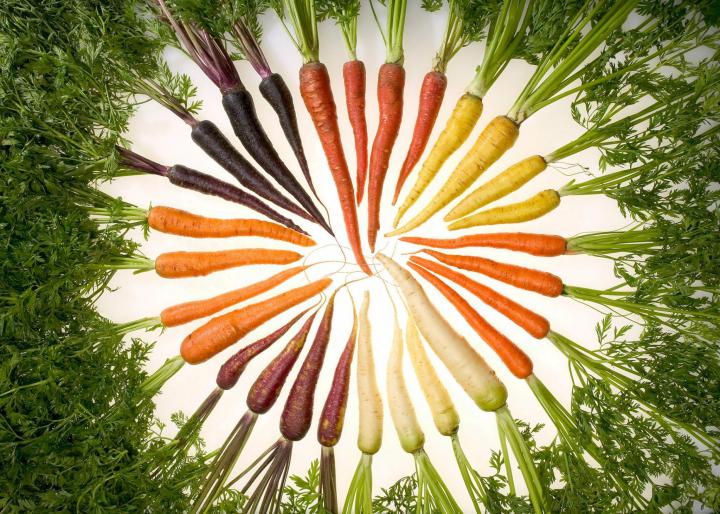
Carrots come in a rainbow of colors, sizes, and shapes.
- ‘Bolero’: slightly tapered; 7 to 8 inches; resists most leaf pests and blights.
- ‘Danvers’: classic heirloom; 6 to 8 inches long, that tapers at the end and has a rich, dark orange color; suited to heavy soil.
- ‘Little Finger’: heirloom; a small Nantes type of carrot only 4 inches long and one inch thick; good for containers.
- ‘Nantes’: cylindrical (not tapered); 6 to 7 inches; exceptionally sweet; crisp texture.
- ‘Thumberline’: heirloom; round carrot, good for clumpy or clay soil and containers.
- For unusual colors, try heirloom ‘Red Cored Chantenay’ and bright ‘Solar Yellow’.
How and When to Harvest Carrots
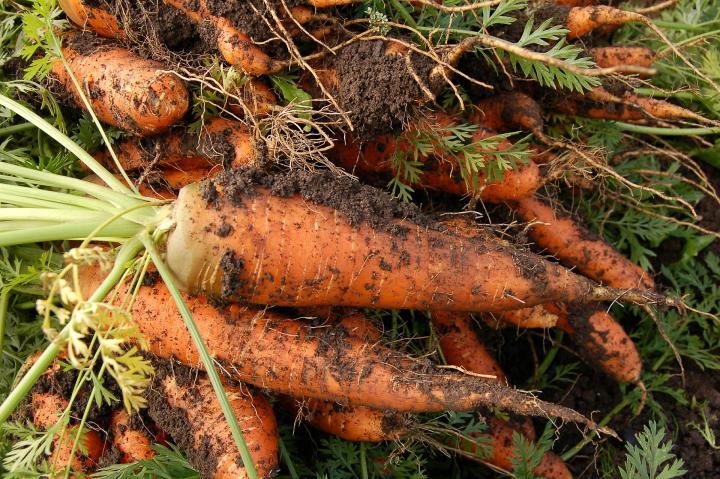
How do you know when your carrots are ready? Have a little root around and check the approximate width of the roots by looking at the neck of the root. The first roots should be ready as soon as two months from sowing.
- Generally, the smaller the carrot, the better the taste. Carrots should be about as wide as your thumb or at least ½ of an inch in diameter.
- Younger and shallower roots should come away easily enough simply by gripping them firmly at the base of the foliage. It often helps to push down on the root first and then twist it as you gently pull upwards.
- Larger, longer roots—particularly those of maincrop carrots that are sown for winter eating—may need to be eased up with the help of a fork.
- Harvest in stages—or as roots reach full size. In this way, you’ll stagger your harvest over many weeks.
- If you’re growing carrots in the spring and early summer, harvest before daily temperatures get too hot, as the heat can cause carrot roots to grow fibrous.
- If you are harvesting in the fall, carrots taste much better after one or more frosts. (A frost encourages the plant to start storing energy—sugars—in its root for later use.) Following the first hard frost in the fall, cover carrot tops with an 18-inch layer of shredded leaves to preserve them for harvesting later.
- Note: Carrots are biennials. If you fail to harvest and leave the carrots in the ground, the tops will flower and produce seeds next year.
How Do You Store Fresh Carrots?
- To store freshly harvested carrots, twist or cut off all but 1/2 inch of the tops, scrub off any dirt under cold running water, and air-dry. Seal in airtight plastic bags and refrigerate. If you simply put fresh carrots in the refrigerator, they’ll go limp in a few hours.
- You may leave mature carrots in the soil for temporary storage if the ground will not freeze and pests aren’t a problem.
- Carrots can also be stored in tubs of moist sand or dry sawdust in a cool, dry area.
Catherine Boeckmann


ADVERTISEMENT
Hi. I live here in Georgia. Southwest corner. I was told plant carrots in the winter months. I got seed pods trays that can start the seeds. I was wondering if I can transplant the plants in the ground in February? We have hot temperature in May in the 90's. Trying to the best time. Also like to plant onions too. Both of them are cold weather plants for here .
Been planting and harvesting carrots for decades. One of my fav's. I plant the Danvers variety, the soil isn't as much of an issue. I till and sift as best as I can and plant. When they start coming up, I use grass clippings between the rows and gently drop dry clippings over and around the carrots. I do enjoy a warm June day to thin and weed carrots. Its a bit of a task but I actually look forward to dropping all my cares and bask in the sun. I harvest sparingly to thin some out. In November, just as the ground here in S. NH is beginning to freeze, I fill large plastic trash bags full of leaves and place them right over the rows, covering as much of the crop as I can. This is a great insulator, push the snow aside and I have carrots until March. The ground under the leaves is soft and carrots come out easily. Works great for parsnips too. Problem is there is now more snow to remove!
Love your website and valuable information.
2 questions - I just planted carrots
Do I need to mulch the top.
When do I start fertilizing them and what fertilizer is the best to use?
thank you
Love your activities
nice info
I live in AB. I have been treated with yaya carrots that extremely sweet -- sweeter than I have ever eaten. I bought this variety last year, sent several packets around Canada, telling friends to: be prepared to fall in love again ... with carrots. What a disappointment "all" of us had. The ones we grew looked great and did have decent flavour, but none of the over-the-top sweetness of the carrots grown in central Alberta. what did we all do wrong?
Try planting them in the summer and harvesting after first few frosts. Look at the maturity date on the seed package, and count back that many days from when you start getting frosts in your area, and that would be the date to plant the carrots. Big types of carrots should be planted for fall/early winter harvest, and not in the spring for summer harvest.
Thank you for this very informative, delightfully presented tutorial on growing carrots! I’m an ex-pat (Scotland) living in New England, 83 years young, grown several greens, as well as flowers in pots, in my retirement community, but never tried carrots. This is the year! And all thanks to that young man who has explained it so succinctly and with humor. All blessings!
Sclerotina was not mentioned in the diseases of carrots; I have lost numerous carrots to that disease.
