


Sign up for our daily newsletter to get gardening tips and advice.
Planting, Growing, and Harvesting Peas

Select a sunny location and well-draining soil. Although peas can grow in part shade, they won’t be as sweet or productive as those grown in full sun. Prepare the soil, preferably in the fall, mixing in aged manure and/or compost, and much well—peas like well-draining soil.
When to Plant Peas
- Sow seeds 4 to 6 weeks before the last spring frost date when the soil is cool, or when it is at the desired temperature. Peas planted in cold (40°F) soil will germinate slowly; peas planted in soil that is at least 60°FF (but not more than 85°F) will catch up.
- Snow will not hurt emerging pea plants, but several days with temperatures in the teens might. Be prepared to plant again if the first peas don’t make it. Alternatively, try starting your peas in a cold frame.
- A second round of peas can be planted in the late summer or early fall, approximately 6 to 8 weeks before your first fall frost date.
Here are some more tips on when to start planting peas.
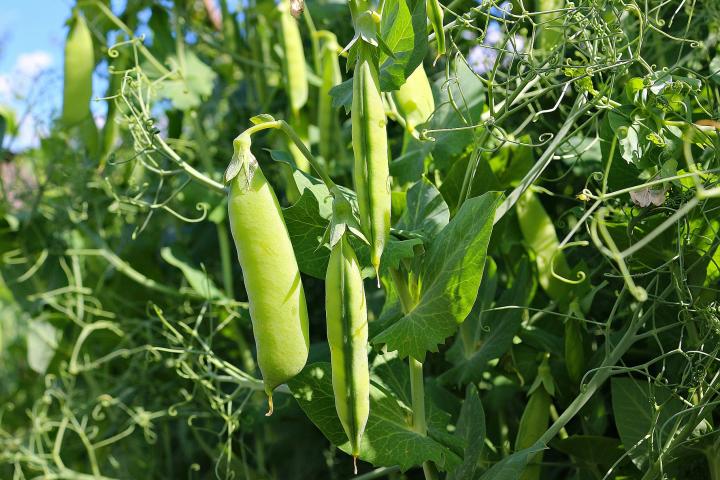
How to Plant Peas
- Peas are best direct-seeded right in the ground and do not like their roots disturbed. But transplanting is possible if you start seeds in biodegradable pots; you’ll transplant the pot and all into the garden, and the pot will disintegrate.
- Where spring is long and wet, plant seeds in raised garden beds.
- To speed germination, soak seeds in water overnight before planting.
- Sow seeds 1 inch deep (slightly deeper if the soil is dry) and about 2 inches apart. Do not thin.
- Plant rows 7 inches apart.
- Regarding crop rotation, do not plant peas in the same place more than once every four years.
- Like those of other legumes, pea roots fix nitrogen in the soil, making it available for other plants.
- In terms of fertilizer, peas need phosphorus and potassium, but excess nitrogen will encourage foliage growth instead of flowers or pods. Learn more about soil amendments.
- Bush peas can reach 18 to 30 inches tall. Pole types can grow at least 4 to 6 feet tall. Both types benefit from support (especially bush peas above 2 feet and all pole peas). Install thin tree branches or twiggy sticks (pea sticks), trellises, chicken wire, strings, or netting before plants establish their shallow roots. See instructions on how to build trellises and supports for peas.
- Water to keep the soil moist. If seeds wash out of the soil, poke them back into it.
Peas on St. Patrick’s Day
It’s an old American tradition to plant peas on St. Patrick’s Day! Our retired editor, Janice, shows us her trick on how to plant peas in early spring if there’s snow!
St. Patrick’s Day (March 17) is the traditional day for planting peas, one of the easiest plants to grow. It’s said to bring luck come harvest time. And it makes sense: Soil is typically thawed and workable, and these veggies prefer to get started in chilly spring weather.
How do you know when peas are ready to be picked?
Most varieties of peas are ready to harvest 60 to 70 days after planting. Peas mature quickly, so check daily once you see the flowers in bloom.
- Pick snow peas when the delicate pods begin to show immature seeds inside.
- Gather snap peas when the pods become plump yet are still glossy and filled with sweet-tasting peas.
- Pick shell peas before the pods become waxy.
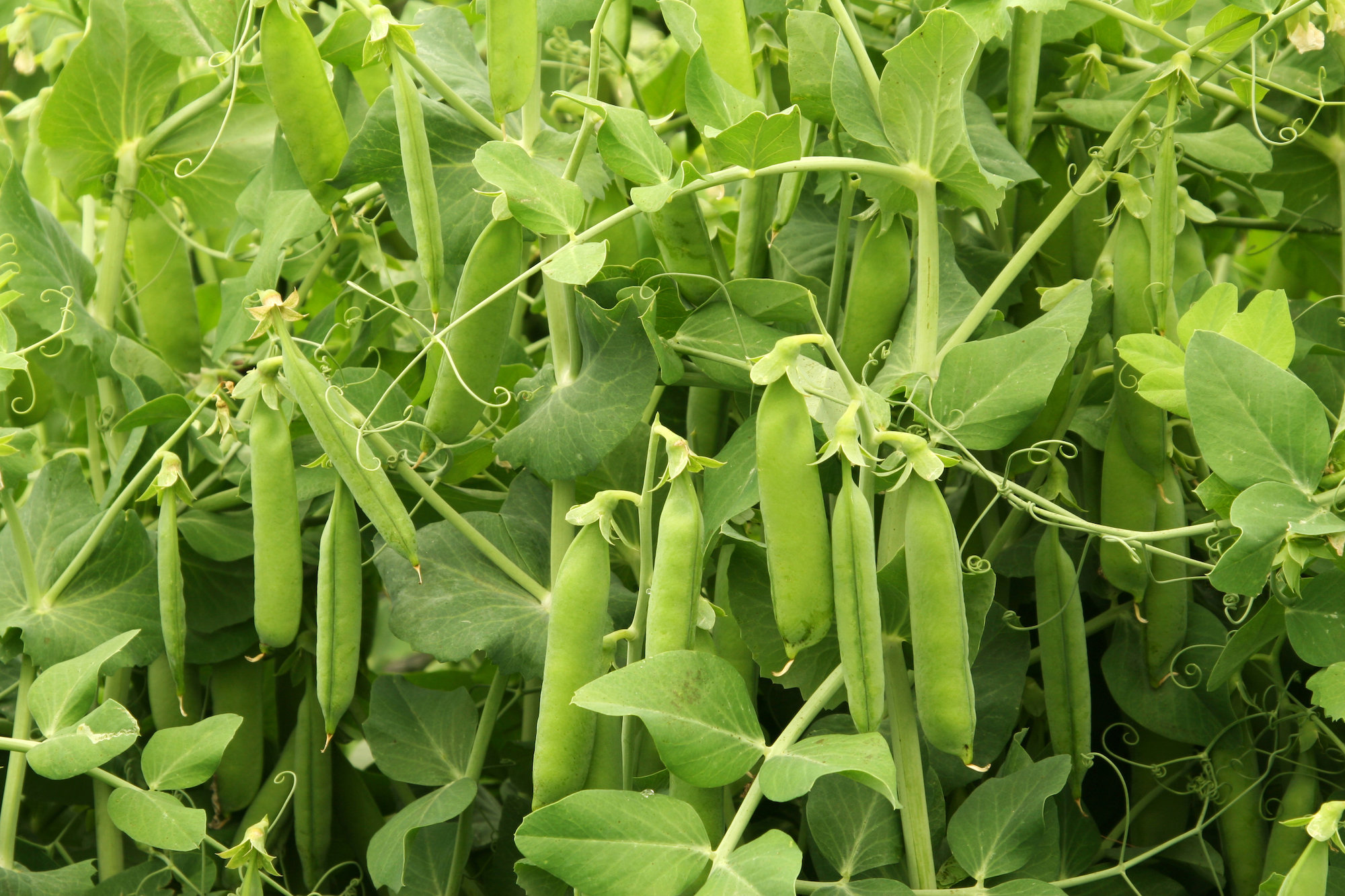
How to Harvest Peas
- Harvest peas in the morning after the dew has dried. They are crispiest then.
- Harvest regularly to encourage more pods to develop.
- Use two hands when you pick peas to avoid damaging the plant. Hold the vine with one hand and pull the pods off with the other.
- Peas are at the peak of flavor immediately after harvest.
- Pea pods that have hardened or turned a dull color are overmature. Mature plants usually stop producing and die back in hot summer weather.
- If you missed your peas’ peak period, you can still pick, dry, and shell them for use in winter soups.

How to Store Peas
- Store peas in the refrigerator for about five days. Place in paper bags, then wrap in plastic.
- Or, freeze peas: Shell sweet peas, blanch, immerse in cold water, drain, and pack in sealed containers.
- De-string/trim snow or snap peas and prepare as above.
Ideally, use peas when freshly picked as they rapidly toughen and will lose their sweetness.
Green peas can be eaten raw as a snack or in salads. Peas are also excellent in pasta, soups, casseroles, stir-fries, and sautés. Cooking times vary greatly depending on when the green peas were harvested. Young, small ones require less cooking than older, starchy ones.
To steam, put 1 inch of water in a pot, bring to a boil, place a steaming basket in the pan, slowly add peas to the steaming basket, and cover with a lid. Steam for about 2 minutes. Or, to microwave, put 2 tablespoons of water in a microwavable dish and cover. Microwave on high, checking every 2 minutes for doneness. Add butter and salt as desired.
Interestingly, the pea tendrils are also edible! Harvest these young pea shoots when they are 12 to 18 inches out of the ground. As with peas, eat the tender shoots soon after harvesting. Add to salads or in stir-fries at the end of cooking.
Catherine Boeckmann




ADVERTISEMENT
To shell peas more easily, blanch first then shell them. They pop right out of the shells very easily and fast.
What about southern peas? Black eye, purple hull, etc? I know they're more a warm weather crop but what about planting by the moon??
Cream 40 field peas need help to grow. How many days to harvest?
I grow sweet peas for the flowers & peas; Bees like pea blossoms; pea blossoms are pretty~
Snow, munch, sugar snap every March. Zone7 they never make it into the house💙👍🏼
Hi, I’ve been picking my snow peas for a month now and most grew this last week. I picked a few that are developed inside but still in pod. Can I use these for planting next year? I know I should have left them on the vine. Can I let them dry and use or just eat them now?
When I studied Biology we were taught that the seeds or seed coverings (the sexual reproduction part of the plant was fruit as opposed to roots, stems and leaves. Question: Why is a pea not a fruit, but a vegetable?
True. Or, more specifically, pea pods are fruits and peas are seeds. The tendril tips are a vegetable though, and, an edible specialty.
According to the scientific definition of fruit, peas are indeed a fruit, since they are the seed-bearing structure that develops from the pea flower. However, in common language and in gardening, we usually follow the culinary definition of fruits and vegetables, which is that vegetables are savory and fruits are sweet. Of course, this is not always true—just eat a sugar snap pea—but this is the way that most vegetables and fruit are organized. This is why tomatoes, cucumbers, and pumpkins are also called vegetables despite technically being fruits!
So, long story short: Peas are both fruits and vegetables, depending on which definitions you follow!
We converted a single car garage into my greenhouse here in Pine, AZ (zone 7B)...have been growing peas all winter and they are flowering now. Heated by a portable heater at night and cooled by fan in day IF it is a sunny, warm day. Also growing lettuces, radish - both of which we are enjoying in salads daily, carrots, green onions, red and white “bulb” onions, broccoli, celery, spinach, strawberries (yes, picked a strawberry last week), blueberry bushes, dwarf trees: meyer lemon and Clementine mandarin.
These are very happy plants...and are eagerly awaiting peas to have with dinners!
Oh...the pea plants touch each other..seeds were planted about 2” apart....but they intertwined when growing upward...very happy plants. Feeding Chicken Soup for the Soil and side dressed with compost. Happy-happy plants!
