

Sign up for our daily newsletter to get gardening tips and advice.
Planting, Growing, and Caring for Marigolds

Marigolds thrive in full sunshine and can often withstand very hot summers. African and signet marigolds are drought tolerant, while French marigolds are more tolerant of wet conditions. If planted in shade and cool, moist areas, marigolds are prone to powdery mildew and won’t bloom well.
Though they grow in almost any soil, marigolds do best in moderately fertile, well-drained soil. Prepare the soil by digging down about 6 inches to loosen it, then mix in compost to add fertility and improve consistency.
When to Plant Marigolds
- Young French and signet marigolds can be planted from spring through midsummer, but the tall African marigolds are best planted right away in the spring (after the danger of frost has passed) because they are slower to mature and produce flowers. Find local frost dates here.
- Sow seeds directly into the garden once the soil is warm in the spring. You can start seeds indoors, but they germinate so easily outside that there’s really no advantage. The exception is African marigolds, best bought as young plants or started indoors about 4 to 6 weeks before your last frost date.
- Marigolds sprout within a week in warm weather and plants typically produce blooms in about 8 weeks.
How to Plant Marigolds
- French marigolds can easily be started from seed, while African marigolds are best purchased as young plants (when started from seed, they can take a long time to flower).
- Optional: If soil is nutrient-starved, add some slow-release (granular) fertilizer in the planting hole. A 5-10-5 works fine.
- Moisten the soil, then sow seeds 1 inch apart and no more than 1 inch deep.
- While still small, thin the seedlings. Space French and signet types 8 to 10 inches apart. The larger African marigolds should be at least 10 to 12 inches apart.
- If planting transplants, thoroughly water each plant after planting in the garden.
- If planting in containers, use a soil-based potting mix. Either mix in slow-acting granular fertilizer at planting time or plan to water with diluted liquid fertilizer periodically. Take care to space them properly; marigolds grown in containers can become crowded.
How to Grow Marigolds
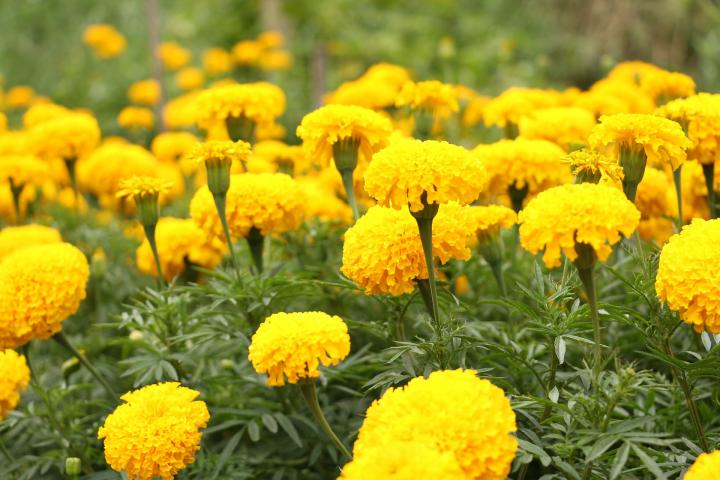
- Once the marigolds have established themselves, pinch off the tops of the plants to encourage them to grow bushier. This will keep the plants from becoming leggy and will encourage more blooming.
- Marigolds don’t require deadheading, but if dying blossoms are regularly removed, it will encourage the plant to continue blooming profusely.
- When you water marigolds, allow the soil to dry somewhat between waterings, then water well and repeat the process. Water more in high heat.
- Do not water marigolds from overhead. Water at the base of the plant. (Excess water on leaves can lead to powdery mildew.)
- Do not fertilize marigolds during growth. A diet that’s too nitrogen-rich stimulates lush foliage at the expense of flowers.
- The dense, double flowerheads of the African marigolds tend to rot in wet weather.
- Add a layer of mulch between plants to suppress weeds and keep the soil moist, especially when plants are young.
How to Deadhead Marigolds
Deadheading is about removing faded flowers by pinching off the flower head. For some plants, including marigolds, pinching off the dead flower heads encourages them to produce more blooms rather than wasting their energy on forming seeds, extending the flowering season. Marigolds also look so much better after deadheading.
Deadheading marigolds is very simple. When a blossom starts to go bad, pinch (cut) its stem back to the nearest set of leaves.
Whether you’re deadheading your annuals, be sure to fertilize as well. Annuals are very heavy feeders and will respond well.
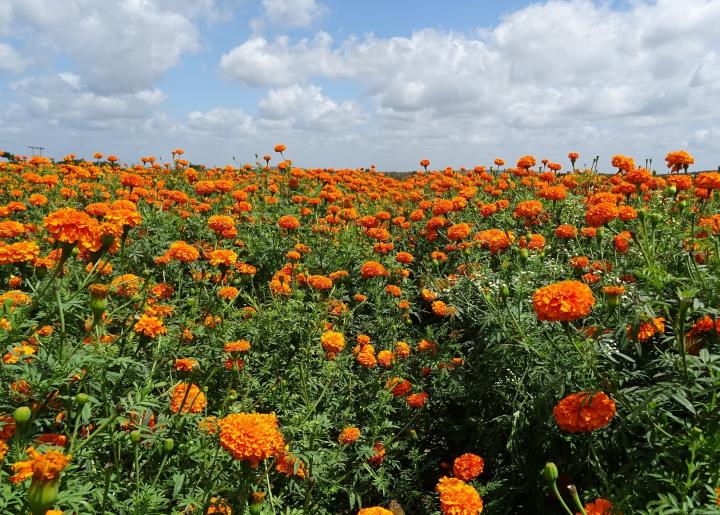
Marigolds come in a range of colors—from creamy white to golden orange—and sizes. French marigold varieties tend to be smaller than American/African varieties.
French Marigolds (T. patula)
- ‘Little Hero’ Series: 7” tall plants with large, double carnation flowers in 7 color combinations of maroon, orange, and yellow.
- ‘Hero’ Series: 10” tall plants with double carnations, large (2” wide) flowers in 7 different combinations of yellow, orange, and maroon.
- ‘Bonanza’ Series: 2” wide, double carnation flowers in 5 different combinations of yellow, orange, and maroon on bushy, compact 8” tall plants.
- ‘Aurora’ Series: 1’ tall plants with wide-petaled, anemone-like flowers in shades of maroon, yellow, and orange.
- ‘Janie’ Series: Early blooming. 8” tall plants are perfect for container growing. Double carnation type flowers in 6 different combinations of yellow, orange, and maroon.
- ‘Boy O’ Boy’ Series: 6” tall prolifically flowering plants with flowers in shades of maroon, yellow, and orange
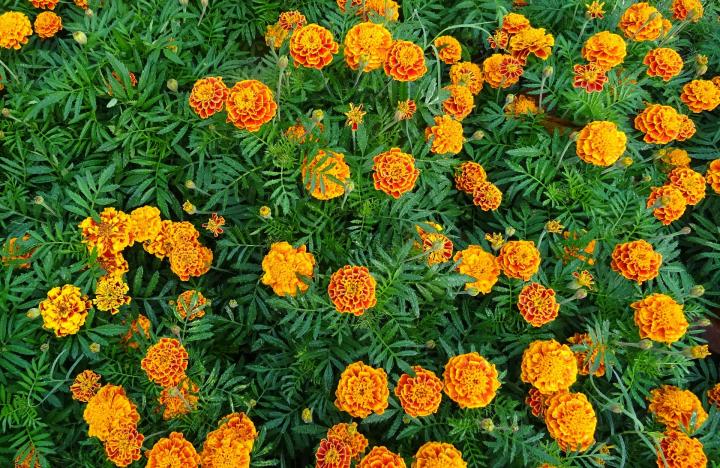
American/African Marigolds (T. erecta)
- ‘Jubilee’ Series: 2’ tall plants with dense, double flowers in shades of yellow and orange.
- ‘Gold Coin’ Series: 1½ to 2’ tall plants with large (5” wide) double blooms in gold, yellow, and orange.
- ‘Safari’ Series: 1’ tall plants with flat-topped, large flowers in shades of maroon, yellow, and orange.
- ‘French Vanilla’: 3” wide flowers are pure creamy white. Minimal scent. Plants are 1½ to 2’ tall.
The flowers of Tagetes marigolds are NOT edible, but those of Calendula are. The bright petals of Calendula add color and a spicy tang to salads and other summer dishes.
- The flower petals are sometimes cooked with rice to impart saffron’s color (but, unfortunately, not flavor).
Catherine Boeckmann




ADVERTISEMENT
How about pictures of the various marigolds?
Is “deadheading” and “pinching back” the same
On a flower? Pictures?? Maybe silly but new to this.
Deadheading refers to removing spent flowers from their stems. pinching back means removing the tip of growth, flowers,buds, leaves, stem and all, from the central and largest stem(s).
can you plant marigolds and mums around each other?
Hi Judy,
You can certainly plant marigolds and mums in the same garden area. Both require full sun and well-draining soil.
Just be aware that both can spread quite a bit so you will want to give some space between plantings.
I have marigolds that have been reseeding themselves for a couple years now. How would I save the seeds to plant in other areas the following spring?
Hi Karen,
Instead of deadheading your marigolds, let spent flowers remain on the plant to dry. As the seed head matures, it will turn brown. To catch seeds you can place a paper bag underneath the spent blooms, but it is not always necessary. Once the seed pod is dry, remove them from the plant and allow to air dry for a few days. Then you can harvest the seeds from the pod and put in an envelope until you are ready to plant in the spring.
I have a 3' tall marigold plant that my daughter gave me. It's under the hummingbird feeder, so the little birds drop down to visit the flowers. I let the first 2 blooms whither so I could collect the seeds and put them in a large pot for next spring.
Good to know about watering,I always had problems with these beautiful flowers!! Love,love them! 🙏❤️🌼
I have some marigolds from a fried's father's funeral and all i can say is that they grow so well in all sorts of conditions and every time i go out to my front yard i am amazed by how they are flourishing!!! They look so pretty alongside all our yard plants. I love marigolds!!!
Plant marigolds in with your tomatoes plants, they keep the bugs away!
