
Wondering how to raise baby chicks on your homestead? From buying day-old chicks to setting up a brooder, feeding starter rations, and transitioning birds to the coop, this beginner’s guide to raising baby chicks covers everything you need to know to keep your flock healthy and productive.
Where to Buy Baby Chicks (Local Stores vs. Hatcheries)
There are several ways to get chickens. Most often, chicks can be bought locally in the spring from farm supply stores or small farms. These days, you can even order chicks online and have them shipped to your door (or local post office). Then there’s always the “ask a friend with chickens to hatch some for you” approach.
When to Buy Baby Chicks
You can purchase chickens at several stages of development—it all depends on how long you’re willing to wait for eggs.
- Day-old chicks are available from hatcheries. Most farm suppliers do one or two chick orders a year, so you can get your chickens where you plan to get your feed. They’re usually under $3 each. You’ll have to wait about 6 months for eggs.
- Ready-to-lay pullets are 20 weeks old and just about to start laying. They’re more expensive than day-olds, but you will get your eggs sooner. They can go straight to the coop, and they are all females. These, too, can be ordered through your farm supplier from the hatchery.
- Mature laying hens are harder to come by. Unless you have someone with a small flock nearby who wants to replace older hens and will sell their “old girls” to you, chances are you’ll have to buy pullets or chicks. (“Battery hens” are not good candidates for a farm flock—they’re confined in tiny cages, debeaked, and made to produce so hard that they’re “laid out” at 2 to 3 years of age.)
Hatching Chicks
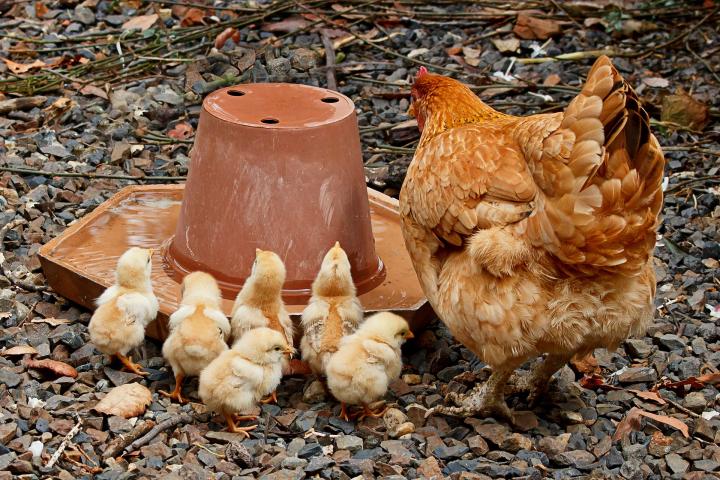
If you already have chickens (or know someone who does), you can always hatch your own chicks. Of course, you’ll also need a rooster to get fertile eggs. Hens will lay perfectly well without one, but the eggs won’t ever develop or hatch. (Also, check your zoning regulations; some places allow hens but not roosters.)
You’ll also need a broody hen. Broodiness—the instinct to sit on eggs until they hatch—has been bred out of a lot of chickens, but we always had one or two who would begin to sit tight on the nest and peck if we tried to remove their eggs. Bantams are famous for their broodiness; a bantam hen will even hatch other hens’ eggs.
You can hatch replacement chicks yourself with a home incubator. Chicken eggs take 21 days to hatch. An incubator must be monitored diligently; chicks left too long after hatching will die of dehydration or pecking. On the whole, we find it best to leave hatching to the hen. Read our guide to hatching chicks at home.
Did you know that there are best times for setting eggs under a hen or in an incubator? You can find out more about setting chicken eggs by the Moon’s sign here.
How to Set Up a Brooder for Baby Chicks
Tending baby chicks isn’t difficult, nor does it need to be elaborate. First, they need a draft-free brooder pen with a red brooder lamp on at all times. This keeps the temperature at 92°F (33°C) at 2 inches above the floor. (It also reduces pecking and cannibalism among chicks.) When the chicks have feathered out, reduce the temperature by 5°F per week until they are 6 weeks old.
What Do Baby Chicks Eat? Feeding Guide for Beginners
For simplicity, most owners of small flocks buy commercial rations from their local feed stores.
- Young chicks will require “starter” feeds, and you may have a choice of medicated or non-medicated versions. (If you can keep a healthy flock with the non-medicated rations, do so.)
- Fresh water should be in constant supply.
- Once the hens reach laying age, at approximately 5 months, you’ll want to switch to layer rations with at least 16 percent protein.
- Chicken feeds can be supplemented by homegrown or home-mixed rations of grains (oats, corn, barley, wheat, etc.), various brans, fish meal, alfalfa meal, and bonemeal.
- You can add scraps from your table, such as fruit and vegetable peels or leftover breads. However, avoid offering raw potato peels (hard to digest), garlic or onions (which may alter the way the eggs or meat taste), or anything spoiled.
- Feeds bought from the store contain all the phosphorus and salt your hens will need, and they eliminate the need for grit.
If You Free-Range Your Hens or Supplement Their Diets
- Be sure to offer a hopper of grit to help the hens grind up any grains or plant matter they eat.
- Hens also need a hopper of ground oyster shells or another calcium source to prevent soft-shelled eggs. Keep refilling the oyster shells, as the hens will only eat what they need.
Tips for Keeping a Happy Chicken Coop
- If you don’t yet have one, here’s how to build your own chicken coop.
- Many sources say that you can’t keep a flock of mixed ages. We never had a problem with older chickens picking on younger ones or vice versa. Our hens raised their chicks happily in the flock. Most picking is the result of overcrowding. Give your chickens lots of space.
- Young chicks need to be close to water and food at all times. Spread a 4-inch layer of pine shavings on the floor, then lay several layers of newspaper over that. Scatter lots of chick feed on the paper and also have feeding troughs filled in the pen. Remove a layer of paper every day, and by the time the last layer is gone, the chicks will have found the feeding trough.
- Always use red bulbs; injury doesn’t show under red light. Under white light, any bloody spot immediately attracts pecking. Chicks will cheerfully and efficiently peck each other to death.
- Block corners of the pen with cardboard to make wider angles that are harder for chicks to pack up in. (You could also make a circular pen.) This prevents suffocation.
- Ensure that waterers are shallow and cleaned daily to avoid having chicks drown. My hatchery recommends one gallon-sized waterer for every hundred chicks. I always had two or three, even for fewer chicks, so that they wouldn’t crowd each other.
- With pullets, I used one waterer for every six to eight chickens and a feed trough long enough to accommodate all of them at once.
Frequently Asked Questions
How long do chicks need a heat lamp?
Chicks need supplemental heat for about 4–6 weeks. Start at 92–95°F the first week and reduce the temperature by 5°F each week. Once chicks are fully feathered and outdoor temperatures are mild, they can transition out of the brooder.
When can baby chicks go outside?
Chicks can go outside for short, supervised visits once they’re a few weeks old and the weather is warm. They can move permanently to the coop around 6 weeks old, once fully feathered and nighttime temperatures are above 50°F.
When do chickens start laying eggs?
Most hens begin laying eggs around 18–24 weeks old (about 5–6 months), depending on breed, nutrition, and daylight hours.
Is it better to buy day-old chicks or pullets?
Day-old chicks are less expensive but require more time and care before laying. Ready-to-lay pullets cost more but begin producing eggs much sooner. The best option depends on your budget and how quickly you want fresh eggs.
Do you need a rooster for hens to lay eggs?
No, hens do not need a rooster to lay eggs. However, you will need a rooster if you want fertile eggs for hatching chicks.
How many chickens should a beginner start with?
Most beginners start with 3–6 chickens. Chickens are social animals and should never be kept alone, so plan for at least two or three birds.
What bedding is best for baby chicks?
Pine shavings are one of the best bedding choices for baby chicks. Avoid cedar shavings, which can cause respiratory issues.
How do you keep baby chicks from pecking each other?
Use a red heat bulb to reduce aggressive pecking, avoid overcrowding, and ensure plenty of food and water space. Most pecking problems are caused by stress or lack of space.
More of Raising Chickens 101
See more of our beginner’s guide to raising chickens:
- Raising Chickens: How to Get Started
- Choosing the Right Chicken Breeds
- How to Build a Chicken Coop
- When Chickens Stop Laying Eggs
Are you raising chicks this year? Tell us all about it! Which breeds did you choose and why?




Janet, we would try slowly integrating the Silkie in with the Delawares (your idea of the smallest or least-aggressive bird first is ideal). Be sure to monitor them closely during the time period.
Hi Nicole! Generally, the idea is to transition your chicks to the outdoor coop between 6 and 8 weeks old. At 6 weeks, chicks need steady temperatures above 65°F. If it is cooler when making the transition, let them stay in the brood a little longer. That is why it is best to begin the process of raising chicks in the spring/early summer. You will want to slowly integrate them to the coop if you have older chickens to minimize stress and conflict. Pay attention to your young chicks to see how they are adjusting. Do they need supplemental heat? Can they find their way into the coop from the outdoor run? Can they escape from the coop and become vulnerable to predators? All things to consider as you help transition your chicks to the next stage of life.
- « Previous
- 1
- 2
- …
- 10
- Next »

Comments