
Caption
The Striped Cucumber Beetle has beautiful coloring, but it’s bad news for the gardener!
Identification
How to Identify Cucumber Beetles
The adult striped cucumber beetle (shown in the photo above) is about a quarter of an inch long with a bright yellow abdomen, three black stripes down its wing covers, and a dark-colored head and antennae.
Spotted cucumber beetles (shown below) are about a third of an inch long, bright greenish-yellow, with 12 black spots on their wing covers.

Identifying Cucumber Beetle Damage
While cucumber beetle larvae feed on cucurbit roots, adult feeding is more damaging to the crop. Adults feed on leaves and can stunt plant growth. Look for holes, yellowing, and wilting leaves.
Feeding on flowers can reduce fruit production and direct feeding on fruit causes unattractive scars and pock marks on the fruit too.
Often, the cucumber beetles alone will not kill the plants or cause major damage, but the spread of disease will. Feeding by adult cucumber beetles can spread bacterial wilt disease among cucurbit plants, even when the population density of the insect is low.
Adult cucumber beetles overwinter in weeds, garden debris, and woody areas. The diseases they carry can also overwinter internally, and they can be passed onto plants the next spring through fecal matter.


More Like This
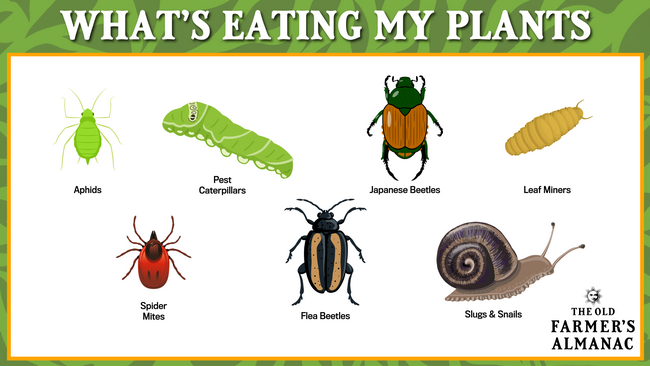


Yes, the adults can cause minor damage to rose petals. Choose a pesticide that has a low impact on natural enemies, such as lady beetles and pollinators. Neem is a plant based pesticide that prevents insects from feeding, which eventually kills them. Pyrethrins have no residual and treatments need to come in contact with the beetles to be effective. Finally, there are broad-spectrum pesticides (permethrin, bifenthrin, lambda-cyhalothrin and carbaryl) but we don't use them since they kill beneficial insects, too.
- « Previous
- 1
- 2
- …
- 10
- Next »

Comments