


Grow crisp, refreshing cucumbers with this easy guide


The Almanac Garden Planner - Use It Free for 7 Days!
Plan your 2025 garden with our award-winning Garden Planner.
Planting
Select a site that gets full sun (at least 6-8 hours of direct sunlight per day). Cucumbers like warmth and lots of light!
Cucumbers require fertile soil. Before planting, add about 2 inches of organic matter (aged manure and/or compost) and a complete fertilizer to the area. The soil should be moist but well-draining (not soggy) and have a pH of around 6.5 to 7.0.
When to Plant Cucumbers
- For an early crop, sow cucumber seeds indoors for about three weeks before transplanting them outside. Provide bottom heat of about 70ºF (21ºC) with a heating pad or place the seed flats on top of a refrigerator or water heater. Sow two seeds an inch deep in each pot, then water well. Once the seedlings emerge, remove the weakest to leave one per pot.
- Outdoors, sow or transplant when soil is about 70ºF (21ºC), and no earlier than 2 weeks after the last frost date. Cucumbers are extremely susceptible to frost and cold damage. (In cooler climates, warm the soil by covering it with black plastic before planting.)
- Make successive plantings (every 2 weeks) for continued harvests through the season. In warm soil, cucumbers will grow quickly and ripen in about 6 weeks.
How to Plant Cucumbers
- Sow 4 to 6 seeds directly in the garden about 1 inch deep, 12 to 18 inches apart, in rows 4 feet apart.
- Cucumbers can also be planted in mounds (or “hills”) that are spaced 1 to 2 feet apart, with 2 to 3 seeds planted in each mound. Once plants reach 4 inches in height, thin them to one plant per mound.
- After planting, mulch around the area with straw, chopped leaves, or another organic mulch to keep pests at bay, and bush types should be kept off the ground to avoid disease.
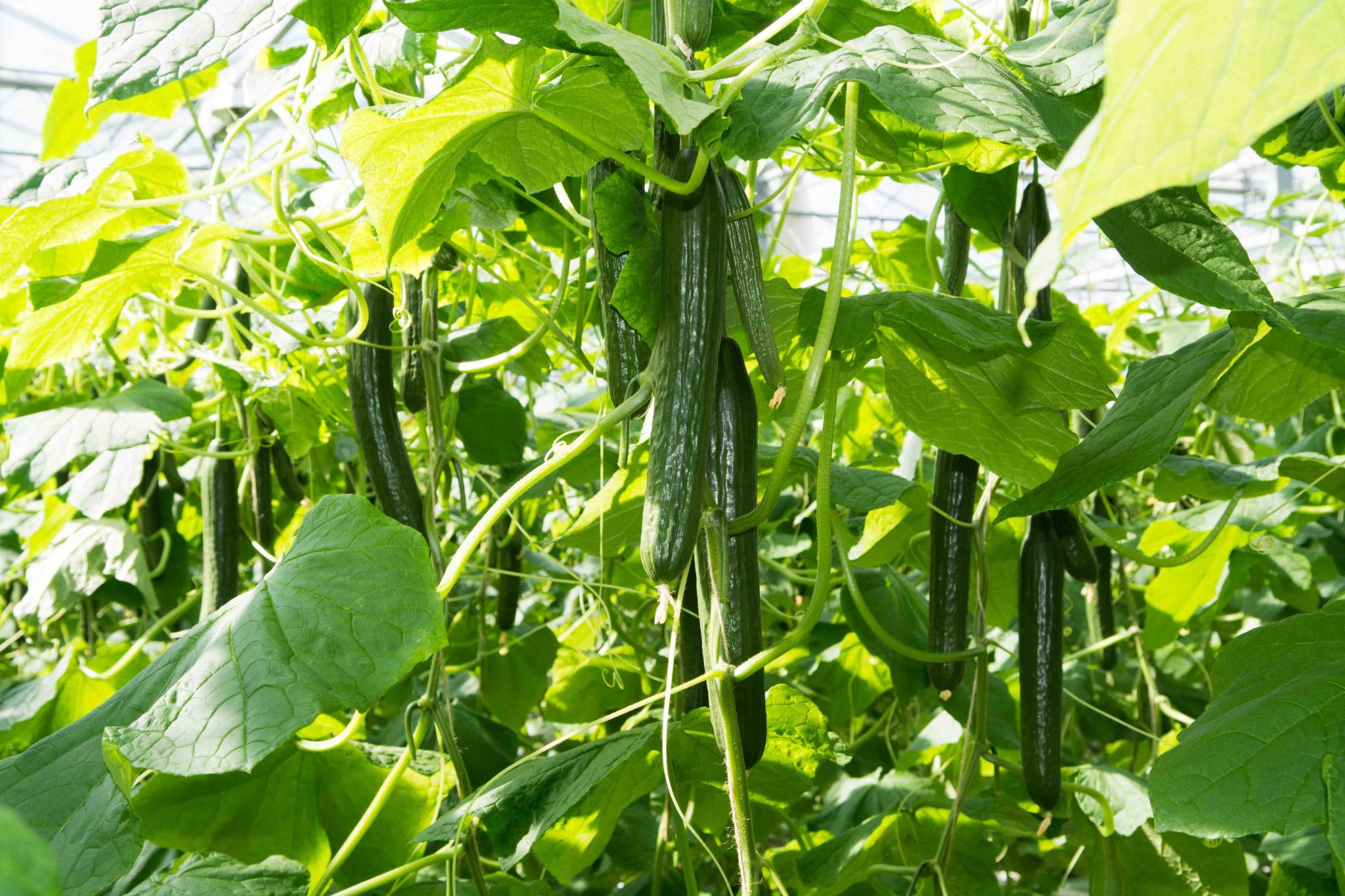
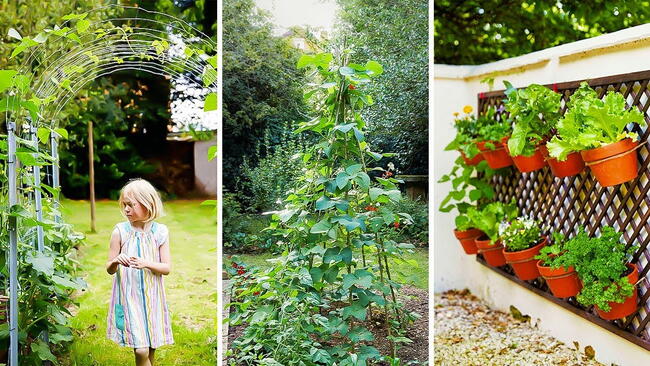
- A trellis is a good idea if you want the vine to climb or if you have limited space. Trellising also protects the fruit from damage from lying on the moist ground. See how to build a trellis and support for vining vegetables.
- If you’ve had pests, cover freshly planted cucumber seeds with row covers, netting, or a berry basket; this will keep them from digging out the seeds.
Growing
- When seedlings emerge, begin watering frequently. Cucumbers need at least one inch of water per week (or more if temperatures are particularly high). Inconsistent watering leads to bitter-tasting fruit.
- When you water, irrigate deeply. Avoid getting the leaves wet, as that may encourage leaf diseases that can ruin the plant. If possible, water your cucumbers with a soaker hose or drip irrigation to keep the foliage dry.
- Mulch around plants to retain soil moisture and reduce weeding; however, do not apply mulches until soils have warmed to 75°F. Harvest cucumbers when fruits are young and tender.
- Cover young plants with row covers or berry baskets if pests appear. Continually check for pests or disease.
- When seedlings reach 4 inches tall, thin the plants to two plants per location
- After the vines develop runners, side dress with additional nitrogen fertilizer.
Making a Cucumber Frame
A cucumber frame is a great way to support outdoor cucumbers. Stretch chicken wire or netting over a wooden frame and secure it into place with staples or U-shaped nails. Lean the frame against an A-frame made of sturdy bamboo canes.
Salad leaves such as lettuce can then be grown in the shade of the frame – a clever solution for growing cool-season crops in hotter areas.
Also, see our video on how how to build a trellis and support for cucumbers.
Types
- ‘Boston Pickling’ (vine) is our favorite heirloom variety bred especially for pickling.
- ‘Burpless Bush Hybrid’ (bush) is good for small gardens, pots, or pickling.
- ‘Bush Crop’ (bush) is a dwarf variety with a high yield. Great for eating fresh.
- ‘Calypso’ (vine) is disease-resistant and has a high yield. Perfect for pickling.
- ‘Lemon’ (vine) produces round, yellow, super-sweet fruits. Fun for kids!
- ‘Parisian Pickling’ (vine) produces long, thin cucumbers perfect for making gherkins or cornichons.
- ‘Sweet Success’ (vine) is good for greenhouses, as it requires no pollinators. Produces seedless fruit.
Cooking Notes
- See our section on pickling with lots of recipes and ideas.
- Enjoy our fun video on How to Make Easy Refrigerator Dill Pickles!
Catherine Boeckmann



ADVERTISEMENT
Love the content! It's so detailed and helpful.
I really appreciate the depth of research and clarity of presentation in your blog post. Thank you for sharing your wisdom and experiences.
Oh! that's a very informative! I will take that into consideration when I start planting round cucumber varieties for my vegetable garden!
I really liked this article because it answered everything to the point and brief. Keep it up!
I have learned from experience and also from running my own little tests and cucumbers store much better in your basement or anywhere that is not hot other than the fridge and I have pictures to prove that after having done both at the same time. The cucumbers stored in the refrigerator went bad weeks before the others that had been stored in the basement.
I agree Diane. Cucumbers last much longer stored in a cool dark place like a basement rather than the refrigerator.
Thanks for sharing your experience, Diane! We are all interested in ways to keep the summer harvest fresh!
I have grown lemon, Suyo Long, and pickling cucumbers this year. Despite spring and midsummer plantings, variety diversity, applying compost, mulching, lots of sun, and spreading the plantings among several locations, I continue to have dismal results. The seedlings always start out strong and begin to fruit very well, but once they reached 6-8", the bottom leaves begin to develop yellow spots, some curl upward, remain very small, and eventually turn brown and die. This pathology continues working its way up the plant. Growth slows significantly, fruits become deformed, cease to grow or die. The plant, however, continues to languish, producing prolific amounts of male flowers, but it never dies. Do you have any suggestions of what the issue may be?
We’re so sorry to hear this. It sounds like Cucumber mosaic virus (CMV).
This is a virus. The leaves become yellow and curl downwards. The cucumbers become distorted and stunted in size. Take a look at this page to see which problem matches, and take the recommended precautions.
This is my 1st time planting & growing White Wonder cucumber in a half-barrel container. All of the cucumbers are very bitter, no matter what the size. What am I doing wrong? Please help!!!

