


Sign up for our daily newsletter to get gardening tips and advice.
Planting, Growing, and Harvesting Green Beans

Beans grow best in well-draining soil with normal fertility and an acidic to neutral pH (6.0–7.0). They don’t typically need supplemental fertilizer because they fix their own nitrogen in the soil. However, particularly poor soil should still be amended with aged manure or compost in the fall prior to planting (or about a week before planting in the spring).
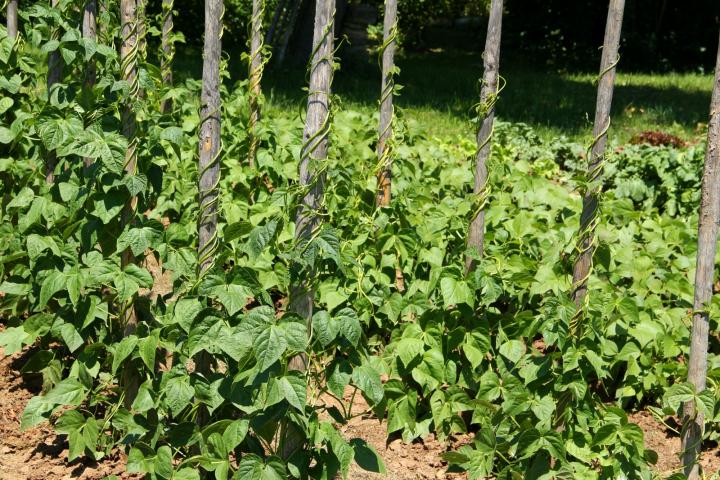
Beans don’t like having their roots disturbed, so set up any supports for pole beans prior to planting.
When to Plant Beans
- Beans grow best when direct-seeded outdoors. Sow any time after the last spring frost date, when the soil has warmed to at least 55°F (12°C). Don’t plant too early, as cold, moist soil will delay germination and could cause the seeds to rot.
- Tip: To get a head start on planting, place black plastic or landscaping fabric over your garden beds to warm the soil prior to sowing seeds.
- Do not start green bean seeds indoors. Due to their fragile roots, they may not survive transplanting. Plus, they’re such fast growers that there’s no real advantage to starting them early indoors.
How to Plant Beans
- Sow bush beans 1 inch deep and 2 inches apart in rows 18 inches apart.
- Sow pole beans 1 inch deep, placing them around supports.
- Tip: Plant pole and bush beans a little deeper in sandy soils, but not too deep. Seedlings cannot push through soil that is too deep, heavy, dense, packed, and/or mulched; they will break their “necks” in trying to emerge.
- For pole beans, set up trellises, stakes, or other supports prior to planting so that the plants’ fragile roots are not disturbed.
- One option is to create a teepee: Tie three or four (or more) 7-foot-long bamboo poles or long, straight branches together at the top and splay the legs in a circle. Then, plant three or four seeds around each pole. As vines appear, train them to wind up the poles. For more stability, wrap string/wire around the poles about halfway up, encircling the tepee; this gives the vines something to grab.
- Another easy support for them is a “cattle panel”—a portable section of wire fence—16 feet long and 5 feet tall. The beans will climb with ease, and you won’t have to get into contorted positions to pick them.
- For a continued harvest that lasts all summer, sow seeds every 2 weeks. If you’re going to be away and unable to harvest, skip a planting. Beans do not wait for anyone!
- Practice crop rotation (planting crops in different areas each year) to avoid the build-up of pests and diseases in one spot.
How to Grow Beans From Planting to Harvest
- Mulch soil around bean plants to retain moisture; make sure that it is well-drained. Beans have shallow roots, so mulch keeps them cool.
- Water regularly, about 2 inches per square foot per week. If you do not keep beans well watered, they will stop flowering. Water on sunny days so that foliage will not remain soaked, which could encourage disease.
- If necessary, begin fertilizing after heavy bloom and the set of pods. Avoid using high-nitrogen fertilizer, or you will get lush foliage and few beans. A side dressing of compost or aged manure halfway through the growing season is a good alternative to liquid fertilizer.
- Weed diligently but carefully to avoid disturbing the beans’ roots.
- Pinch off the tops of pole bean vines when they reach the top of the support. This will force them to put energy into producing more pods instead.
- In high heat, use row covers over young plants; hot weather can cause blossoms to drop from plants, reducing the harvest.
Catherine Boeckmann




ADVERTISEMENT
Has anyone planted Anasazi beans? If so would the planting be like other beans?
Thank you
Hi Linda,
We have not planted Anasazi beans before, but upon doing a little research there is a rich history behind this bean variety.
It’s best known for thriving in the Four Corners area of the Southwest U.S., but given its relatively short growing season it can be planted just about anywhere. You will want to wait to plant your seeds until the soil reaches at least 60°F because they will not do well in colder soil. Plant at a depth of 1/2 inch in loose, well-draining soil and cover lightly. Keep the soil reasonably moist until seedlings emerge.
It is a good idea to place a trellis next to your planting area or plant near a fence so your plants have support.
I planted bush beans in a raised bed and they sprouted and came up beautifully. Unfortunately, deer came into the yard and nibbled the tops of the bean plants. They also took the tops off my pepper plants. I'd like to replant, but am afraid I will have the same problem.
I read that a fishing line strung around the garden about 24” above the ground will detour deer cause they feel something on their legs and they will leave before entering the garden
that's smart
The information is very useful for those who want to farm green beans. It has really helped me I intend to grow them.
I have eaten store bought my whole life.when you grow your own nothing compares to the freshness.
I have about 30 plants - all the same from the same seed 'bag'.
When harvesting for dry beans, I have gotten about 5 pods that have purplish/black beans inside....is this a disease, or a normal thing?
My first thought would be that a different variety of seed got mixed in with the seeds you purchased.
Hi there.
Your articles have helped me with my garden so much. Thank you.
My pole beans are growing on their trellis and flowering and looking great. The problem is that the first part of June i started getting a handful of beans then we left for vacation for 10 days. We got back and the plants had grown a great deal but have had zero beans since then :(. I see the bees pollinating them and they are looking good and vibrant but no beans. Can you help?
