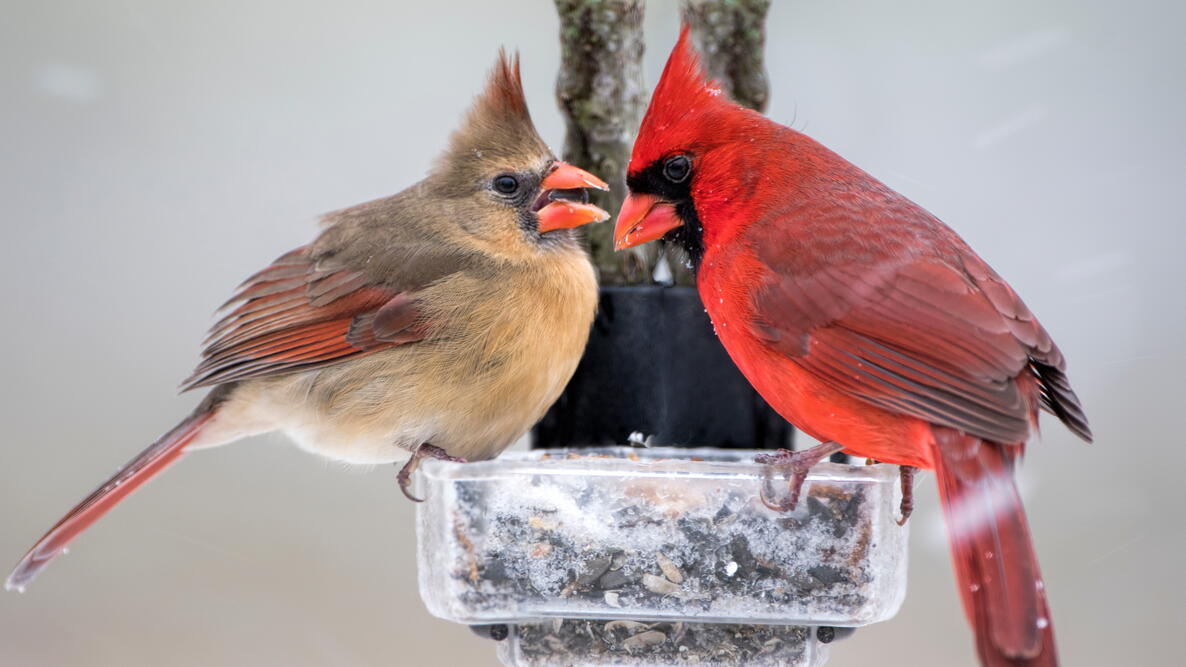
When the snow flies and natural food sources are scarce, our feathered friends rely on a little extra help! Winter bird feeding is one of the simplest and most rewarding ways to enjoy wildlife right outside your window. From suet to sunflower seeds, learn which foods birds love most in cold weather—and how to keep them healthy all season long.
Best Winter Bird Foods
Favorite winter bird foods include:
- Sunflower Seeds
- Niger (Thistle)
- Cracked Corn
- Nuts and Fruit
See our chart on more wild bird food preferences.
“The little grain of wheat, tritucum, is the noblest food of man. The lesser grains of grasses are the food of passerine birds at present. Their diet is like man’s”.
–Henry David Thoreau, Walden

Suet
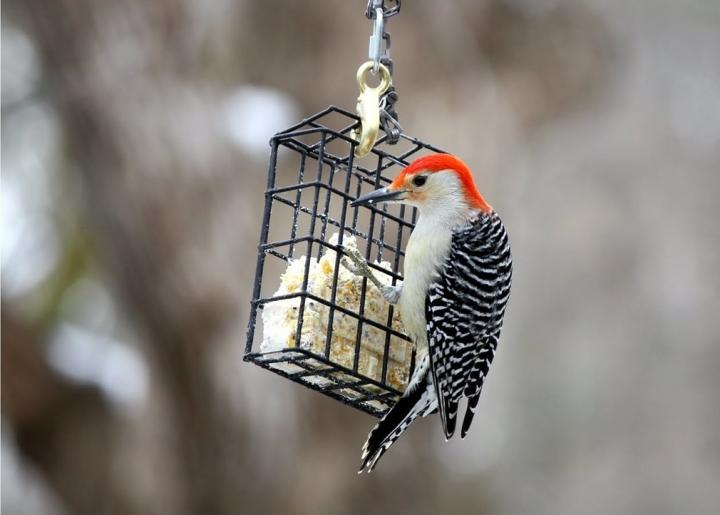
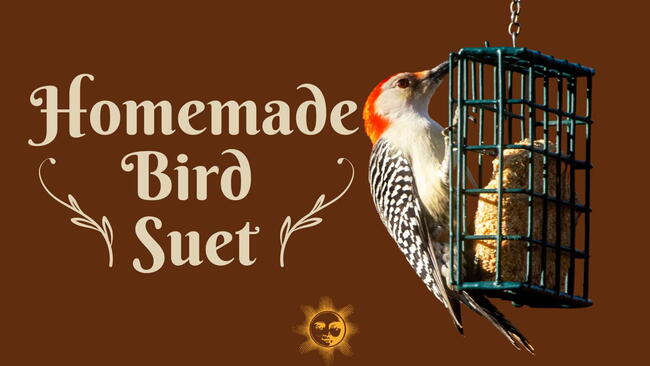
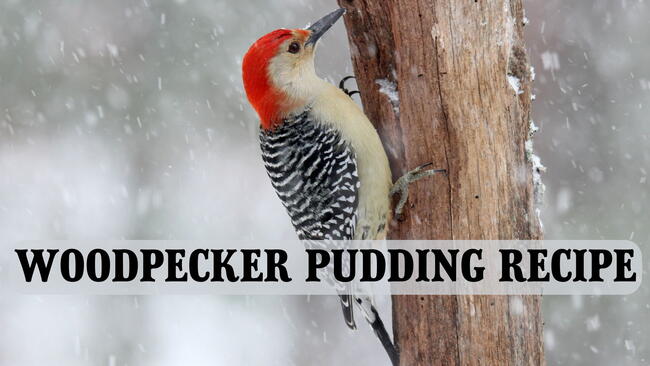
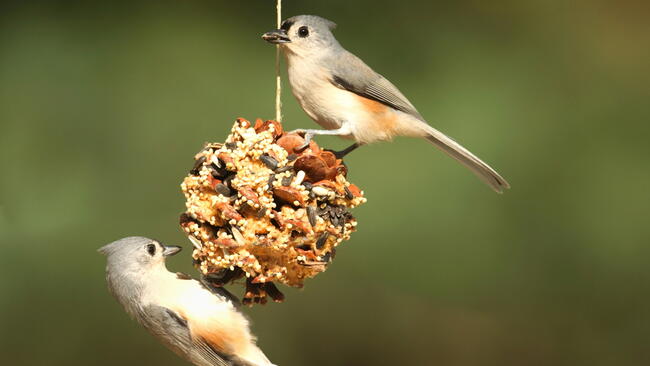
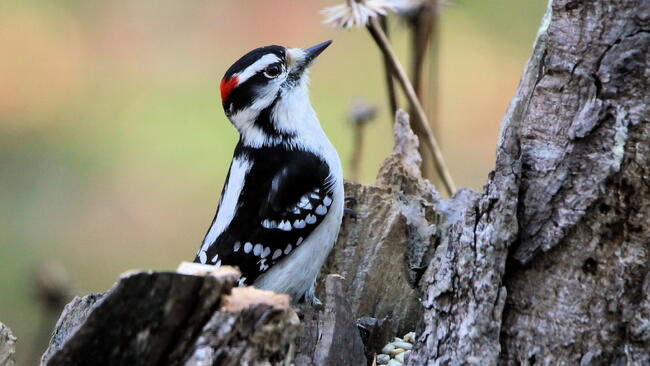
Suet can be purchased in the meat department at your local grocery store. It can be placed in containers built for bird feeding (they most often resemble a little cage). Almost all birds will eat suet, especially in cold weather. Most often, you will see the Downy, Hairy, Red-bellied, and Pileated Woodpeckers, as well as chickadees, nuthatches, and titmice. See how to make suet.
Cracked Corn
A number of birds are ground feeders and will eat corn scattered on the ground; cardinals, sparrows, juncos, turkeys, and other birds will appear daily.
Nuts
An expensive but special treat, nuts provide much-needed protein, fats, and vitamins. Unshelled peanuts will be attractive to blue jays and woodpeckers, and will also provide entertainment as you watch smaller birds like chickadees and titmice attempt to reach the nutmeats inside the shell. Peanuts are a favorite of blackbirds, chickadees, jays, and sparrows. Peanut hearts are especially attractive.
Niger (Thistle seed)
Niger, commonly called thistle seed, is a very popular seed for finches, including redpolls, Pine Siskins, Goldfinches, and Purple Finches.
Fruit
Apples, crabapples, pears, and oranges are popular foods for jays, waxwings, woodpeckers, Ruffed Grouse, and pheasants.
Sunflower Seeds
Small black oil seeds are best. Hulled sunflower seeds are attractive to birds, though costly. Sunflower seeds are popular with many birds, but especially finches.
You can purchase seed mixes in bags from 10 to 50 pounds. Seeds will typically include sunflower, corn, millet, buckwheat, and other grains.
You can also make your own bird food: See homemade bird food recipes.
What Attracts Which Birds
| Bird Species | Favorite Winter Foods | Best Feeder Type | Fun Fact / Feeding Tip |
|---|---|---|---|
| Chickadee | Sunflower seeds, suet, peanuts | Tube feeder, suet cage | Loves to grab seeds and hide them for later! |
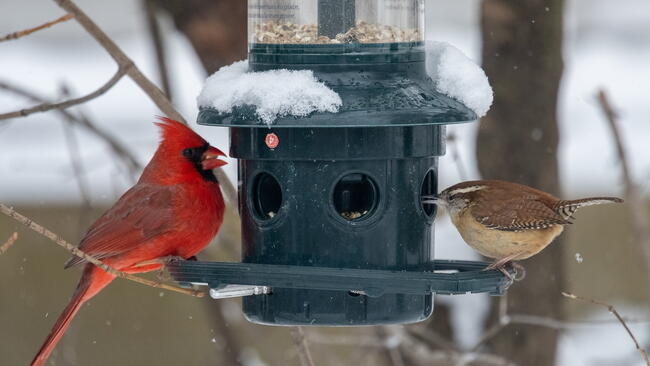
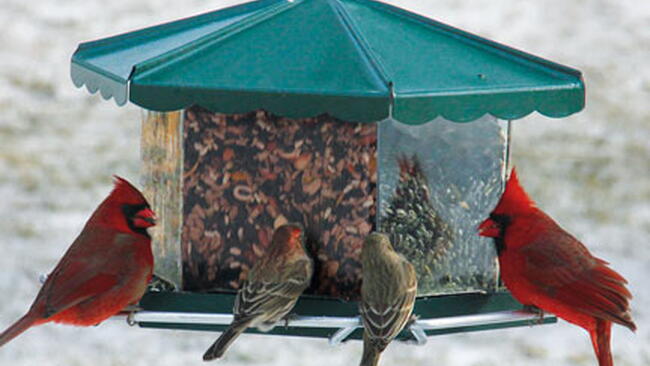
| Cardinal | Cracked corn, sunflower seeds, safflower | Platform or tray feeder | Prefers to feed facing open areas, not enclosed feeders. |
| Blue Jay | Peanuts (in or out of shell), suet, sunflower | Platform or peanut feeder | Will call loudly to announce a new food source. |
| Woodpecker (Downy, Hairy, Red-bellied) | Suet, peanuts, sunflower seeds | Suet cage, tree-mounted feeder | Clings easily to bark and vertical surfaces. |
| Finch (Goldfinch, Purple Finch, Siskin) | Niger (thistle seed), sunflower hearts | Tube feeder with small ports | Prefers to feed in groups—great for window viewing! |
| Nuthatch | Sunflower seeds, suet, peanuts | Suet cage, hopper feeder | Often climbs down tree trunks headfirst. |
| Sparrow | Millet, cracked corn, sunflower seeds | Ground or platform feeder | Attracts easily with mixed seed blends. |
| Junco (Snowbird) | Cracked corn, millet, sunflower chips | Ground feeder or open tray | Forages low to the ground, especially after snowfalls. |
| Waxwing | Berries, apples, oranges | Platform feeder or natural branches | Loves fruit left out on shrubs or trees. |
| Titmouse | Sunflower seeds, suet, peanuts | Tube feeder, suet cage | Bold little bird—often first to test new feeders! |
How to Store and Keep Bird Seed Fresh
Old bird seed loses its nutritional value and should be discarded. Wet, lumpy bird seed should be removed from feeders. Maintain a seed inventory that will only last a few weeks and use large metal trash cans with tight covers to store seed.
Spoiled seed can be contaminated with mold, feces, fungus, and other chemicals. Mold and fungus can lead to bird diseases.
Where to Place Bird Feeders in Winter
Feeders can be placed on poles, hung by wires from tree limbs, or put on gutters so that they are just feet from windows, preferably in south-facing locations.
During periods of severe winter storms, snow, and freezing rain, clearing an area on the ground near the cover of bushes or forest can be life-saving for many species.
See more about choosing the right birdfeeder.
Fill your feeders before impending storms and then watch the feeding party that follows!
What food do you put out for birds in the winter?


Comments