For daily wit & wisdom, sign up for the Almanac newsletter.
Body
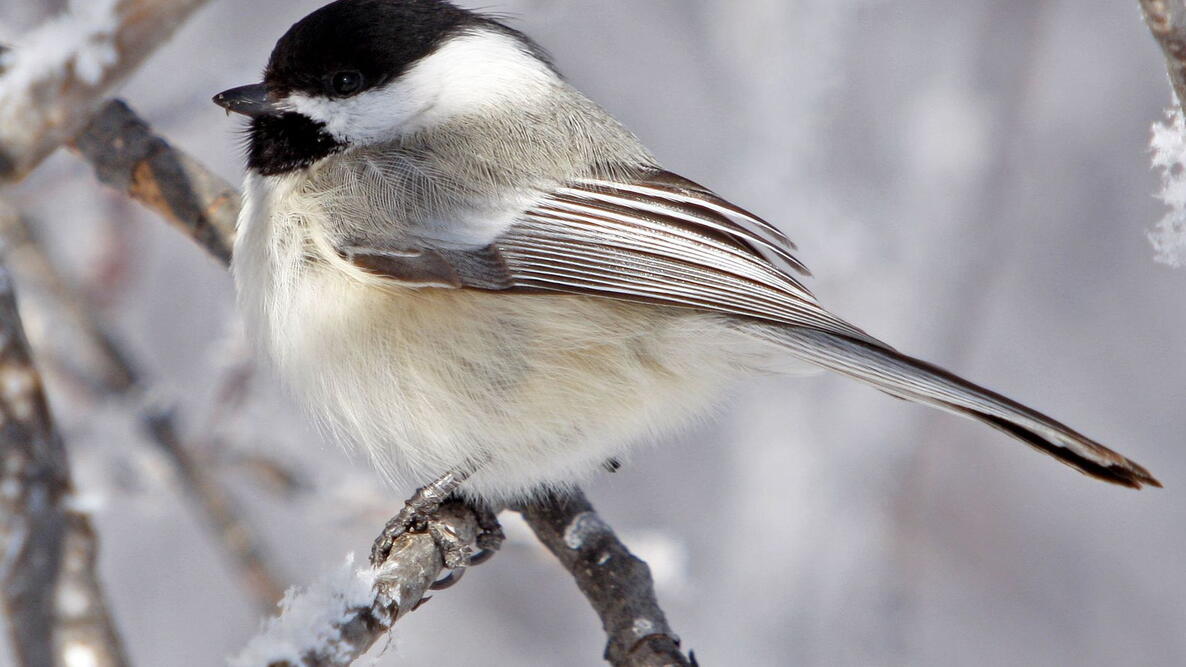
Here you can identify the sounds and birdsong of the black-capped chickadee. You may recognize their “chick-a-dee-dee-ee” or the whistled “fee-bee.”
Listen first for the two-note whistle of the male black-capped chickadee. It’s a very clear two-note song that drops in pitch and sounds like “fee-bee.” Now you know what THAT sound is! The males begin singing in mid-January, and the song increases in frequency as winter progresses. Females also sing occasionally.
Then, listen for the chickadee call which sounds like “chickadee-dee-dee.“ Interestingly, they will use an increasing numbers of dee notes when they are alarmed.
If you wish to attract the friendly chickadee, they will readily visit bird feeders and especially like sunflower seeds or suet in winter. You may see them take the food and fly away to store in a tree crevice for later.
Their diet is mostly seeds, insects, and berries. They can been seen hopping among branches and foraging for food, even flying out to catch insects mid-air.
Tom Warren is a graduate of Harvard College and earned an MBA from the Wharton School of the University of Pennsylvania. After serving in the US Army, he became a compensation professional. He has had...
Comments