Are you tired of spending endless hours maintaining your traditional grass lawn? If so, you should consider the much easier and greener alternative—the clover lawn.
At one time, most yards had at least some clover growing in them. It was a world before chemicals, and clover was part of seed blends because it improved the soil and the condition of the lawn. Move on from the quest for a perfect lawn of just turf grass. It’s not natural and ends up requiring chemicals.
Before World War II and the advent of chemicals, clover was used as a great companion with turf grass. It was added to seed blends, along with fescues, ryegrasses, and Kentucky bluegrass, because it helped grass thrive.
More and more gardeners are beginning to recognize the benefits of clover in lawn grass mixtures—or even as a replacement for grass.
See the incredible benefits of clover below, find out how to plant it, and learn about some of the different types!
Benefits of a Clover Lawn

- Being a legume, the clover plant fixes nutrient-deficient soil. Clover can convert nitrogen into fertilizer using bacteria in its root system, practically eliminating the need for additional fertilization.
- Clover is among the first plants to green up and thrive in the spring.
- It’s an extremely drought-resistant plant and will keep its cool-green color even during the hottest and driest parts of summer.
- Clover will also thrive in poorly draining areas or places that are too shady for a conventional lawn. Due to its long roots, it draws moisture and nutrients from deep in the soil, so it will grow in most soil types.
- The flowers create a beautiful visual effect and bring in bees, butterflies, and beneficial insects that prey on garden pests.
- You don’t need to mow clover lawns as frequently as grass lawns. Twice a year will suffice, once after the clover has bloomed and dropped its seeds and once again a month before the first frost.
- You won’t need to use herbicides or pesticides; these lawns are fast-growing and will prevent other weeds from coming through.
- Growing a clover lawn is much cheaper than a grass lawn, both in planting and ongoing maintenance costs.
Types of Clover

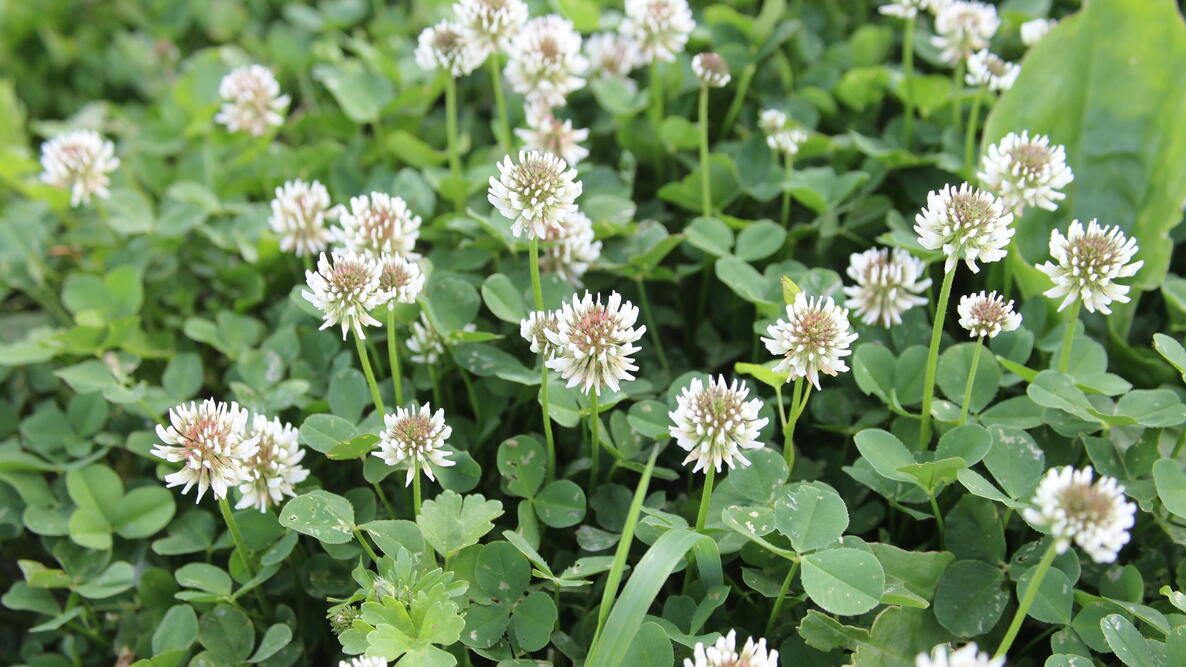
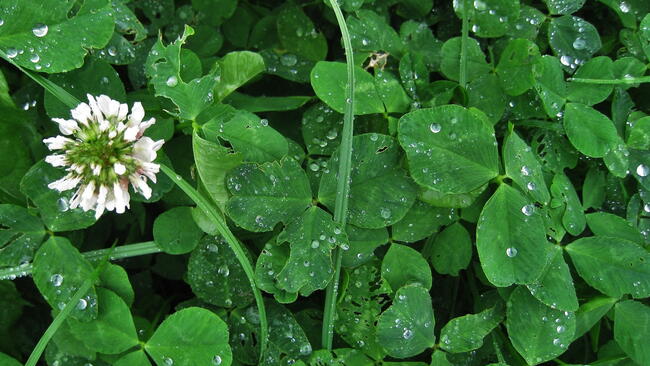
White clover (Trifolium repens) is the most common clover for lawns. Left uncut, white clover grows 4 to 8 inches tall and produces small white flowers that are often tinged with pink. It’s a rapid spreader that crowds out broadleaf weeds while growing harmoniously with grass.
Like white clover, red clover (T. pratense) is native to Europe, but it has been naturalized in North America. It produces attractive purple flowers and typically grows taller than white clover (a little too tall compared to lawn grass).
Microclover (T. repens) is a smaller variety of white clover with smaller leaves. This variety of flowers is less than the two above, making it an ideal choice if you have children playing on the lawn. It does tend to be more expensive than other clover seed types, as they are specially cultivated for their more uniform appearance. It is not as shade-, heat-, or drought-tolerant as other types.
How to Plant Clover: Step-by-Step
.jpg)
You can plant clover by itself for ground cover, but it stands up better to foot traffic when combined with lawn grass.
Step 1: Choose the type you want for your lawn based on personal preferences and your climate.
Step 2: If you’re opting for a sole clover lawn, remove existing grass and weeds and rake the area to loosen the topsoil. Check the pH of the soil; it should be between 6.0 and 7.0 (but check your variety as some prefer different conditions).
Step 3: To sow clover alone, mix it with enough sand to facilitate spreading. About 2 ounces of clover is needed for every 1,000 square feet of lawn.
Step 4: Water lightly with a spray nozzle to moisten the soil without disturbing or washing away the seeds. Keep the soil moist for the next 10 days, or until a week or so after the seeds have germinated.
Other planting tips:
- Only 5 to 10% of the weight of tiny clover seed must be mixed with the recommended amount of grass seed to create a thick stand.
- When adding clover to an existing lawn, first mow it close and remove any thatch to allow the seed to fall to the soil surface.
- Since clover has a low growth habit, it can be left unmown all season long if desired. Alternatively, it can be mowed a couple of times a year to maintain its appearance.
How to Care for Clover

Clover is a hardy and fast-growing plant that requires minimal care once it is established; however, if you want to help it, keep these things in mind.
Sun: Provide full sun if possible, but it will still grow in some shade.
Soil: Clover isn’t all that fussy and will even help your soil as it grows. It will tolerate all soil types, including poorly draining soil.
Water: Once established, you only need to water your lawn if there has been no rain for a couple of weeks.
Disadvantages of Clover Lawns
There are very few downsides to growing a clover lawn, but here are a couple you might want to consider.
When in flower, clovers attract stinging insects such as honeybees. Honeybees rarely sting when they are away from their hive, but if they make you uncomfortable or you are allergic to bee stings, simply have the lawn mowed more often when clover is in bloom. Or, grow clover on surfaces where there is little activity on the lawn, and the desired result is more aesthetic than functional.
Clover spreads easily. This could be either an advantage or a problem, depending on the area you are growing the plant!
How to Get Rid of Clover in Lawns
If your clover spreads too far, or you’re looking for solutions to remove it from your yard, there are a few options you can use.
- If it’s just a small patch, remove it by hand and ensure you take up the roots, too, to prevent regrowth.
- Use a vinegar solution directly on the clover—be careful with this method as it can damage the surrounding grass.
- Corn gluten meal spread in early spring before germination will inhibit seed germination.
- Reseed areas with grass to prevent clover from outcompeting.
Luck of the Clover
Finding a four-leaf clover is considered good luck. Surely, it must be because, on average, there is only one of them for every 10,000 three-leaf clovers. But even if you never find a four-leaf specimen, just having clover growing in your lawn will keep it greener longer with minimum care, which we consider to be extremely good luck.
Looking for more ground cover options? See a few more hardy ground cover plants.

More Like This

Comments

Well, we learned a few things, Anne. There are numerous pre-emergents on the market and you need to determine which best serves your purpose. We can not directly answer that; have a conversation with the expert at your local nursery. Here's why: pre-emergents can last in the soil for weeks to months. Some eliminate specific weeds; some eliminate just about any new seeds. The soil on which you put the pre-emergent can not be disturbed (even by birds or critters) during the treatment period (see weeks, months above). Application season varies, too.
So this is really a conversation you need to have with a vendor who knows the various products and what will best suit your needs on so many levels.
We hope this helps.
Good idea. You probably need a few inches of topsoil. Clover has deep roots but it does not do well in deep sand and/or gravel.
Check the pH of your soil; it should be around 6.5. Adjust, if necessary (see here for guidance, if nec: http://www.almanac.com/content/ph-preferences). Rake the soil smooth. Spread the seed. Cover it with about one-quarter inch of soil. (You can spread straw if you have it but not wood chips; they would be too heavy.) Do not pack it down. Water daily to keep the soil/seed moist, until you see it growing.
Hi, Cynthia: Provided that your soil is the proper 6.4 pH (for most clovers), is rich enough, and you scraped enough to give the seeds some purchase, they can take at least a week to 10 days to get going. They do need to be kept moist -- but not flooded, of course. And watch out for the birds! Thanks for asking and good luck!
A low-maintenance grass that tolerates sandy soil and partial shade is blue fescue. Zoysiagrass, seashore paspalum, and bermudagrass have the highest wear tolerance. You can mix clover seed with the grass seed as clover is drought tolerant and also resists pet urine.
- « Previous
- 1
- 2
- …
- 10
- Next »

Water, water, water! And add fertilizer high in nitrogen.