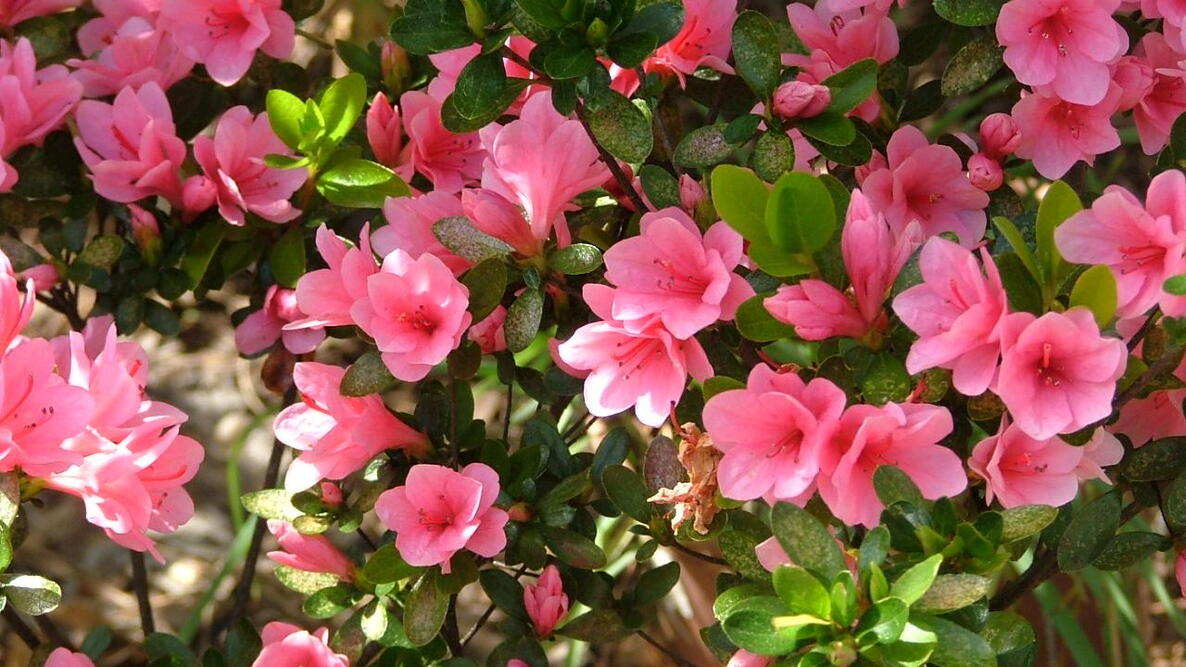
Caption
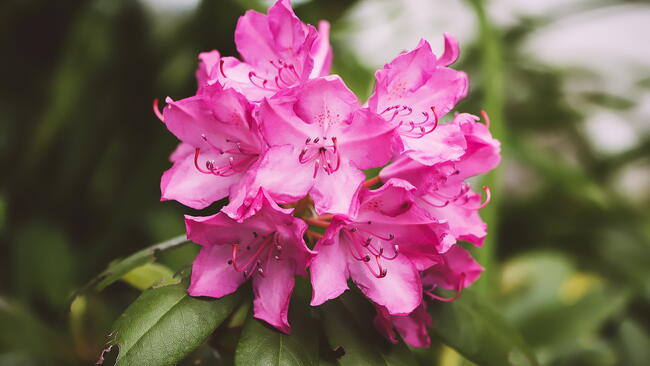
One of many of the azalea bushes in my backyard now blooming.
Known as “The Royalty of the Garden,” azaleas have long been adored for their brightly colored flowers and outstanding form and foliage. Here are a few tips for growing azaleas in your garden!
How to Grow Azaleas
The best time to plant azaleas is in late spring or early fall. Evergreen azaleas do well in partial shade with some wind protection. Deciduous varieties flower more profusely in full sun.
- Provide well-drained, humus-rich soil that is slightly acidic (pH 4.5–6).
- Mulch well. Shallow-rooted, azaleas tend to dry out quickly if not mulched. A mulch of oak leaf mold, pine needles, or aged oak, pine, or hemlock sawdust will keep soil acidic and moist. Read more in our Mulching Guide.
- Fertilizer isn’t needed. The decaying mulch will provide all of the nutrients that azaleas need.
- Seldom bothered by insects and diseases, azaleas require little care once established, except for watering during dry times.
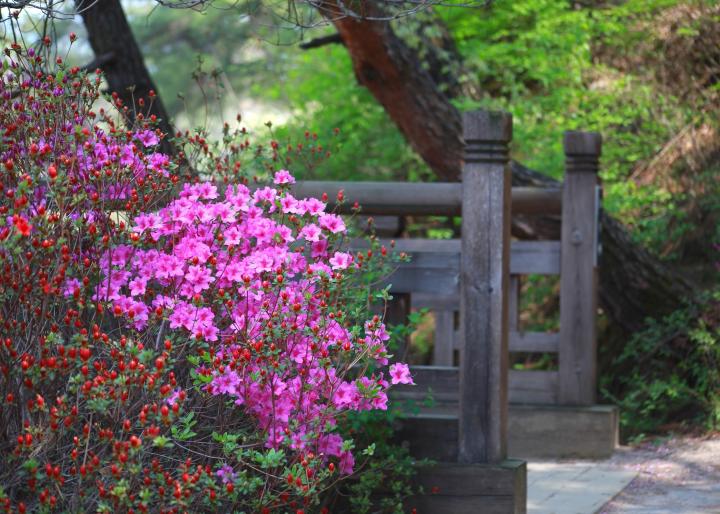
Varieties to Fit Your Landscape
With thousands of varieties, there are azaleas for just about every landscape situation:
- Deciduous varieties are considered the hardiest, many growing as far north as Zone 4. Some, such as the bright-pink roseshell azalea (Rhododendron prinophyllum), are even hardy in Zone 3. With few exceptions, most evergreen azaleas are only reliable in Zone 6.
- Low-growing ground cover azaleas such as ‘Joseph Hill’, a bright-red-flowering evergreen that grows only to about a foot.
- Tall varieties include the white-blooming sweet azalea (R. arborescens), a deciduous plant that can reach 20 feet tall.
- Weeping azaleas, such as ‘Pink Cascade’.
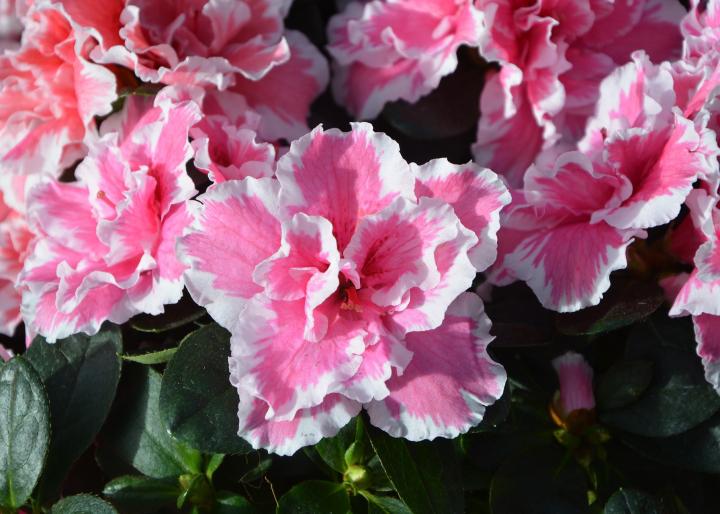
Late-Blooming Varieties
While most azaleas flower in spring, there are varieties that extend the season:
- ‘Flame Creeper’, an orange-flowering ground cover azalea, and ‘Weston’s Lemon Drop’, with peachy-color buds that open to a soft yellow, both flower in late June or July.
- The pink-flowering ‘Sweet September’ is an exceptionally late bloomer.
“The Royalty of the Garden” seems to be a fitting name for this beautiful and majestic plant, but we’ve got a hunch that once your garden is filled with the colors and fragrance of beautiful blooming azaleas, you’ll probably think that it’s you who’s getting the royal treatment.
See our Rhododendron and Azalea Plant Guide for more information on how to plant and care for these gorgeous shrubs.




It is best to transplant azaleas in early fall when the weather is relatively cool. If you really want to transplant in warm weather, choose an overcast day, or a day or so after it has rained (which cools the soil), or earlier or later in the day. The main challenge with transplanting azaleas is to get all of the roots so very wide (versus deep) to get every root to reduce the stress on the plant.
Hi Jesse,
Azaleas need to go dormant in winter, which means they should be outside rather than kept inside as a potted plant. If yours is inside, give it a good watering, then add a thick layer of mulch to the pot and find a protected spot outside for it, perhaps on a table or chair, tucked up against the house or a shed. Given its young age, you might also consider wrapping the pot and plant loosely in burlap for added wind and cold protection. As for the dropping leaves--it could be a deciduous variety.
Hi, Mary, This is one of those situations where you have to figure just because it worked for years doesn't mean it will keep working. There are several reason why azaleas fail to bloom:
• lack of moisture during late spring/summer (note, you write that the buds dried up...so this makes some sense)
• less than 3 hours of sunlight (has a larger tree, shrub, or new building reduced its exposure ot the sun? Remember the north side is the least sunny side, so a little more shade could make a difference betw blooming and not.)
• poor nutrition (have you amended the soil in 10 years? Add rich compost/organic matter and some aged manure—in the fall or not at all!—to improve conditions, especially if you have not done it in a while. Oh, and water.)
If any of this sounds familiar, you know what you have to do!
We hope this helps!
- « Previous
- 1
- 2
- …
- 10
- Next »

Comments