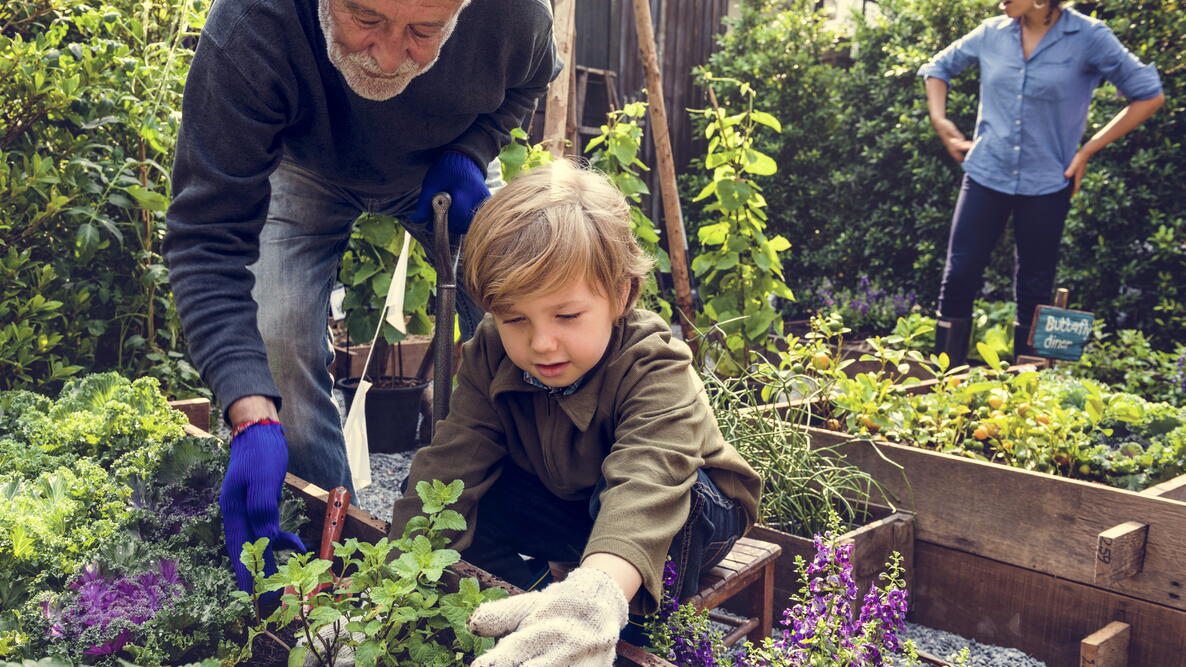
Help kids grow! Gardening gives children a hands-on way to learn where food comes from, explore nature, and get their hands dirty. Start with easy seeds and a small garden space, then try fun projects at home or in a school garden.

How to Start Garden Seeds With Kids
Seeds can be started almost any time in the garden as long as they have time to reach harvest before fall frost. The smaller the kids, the larger the seeds should be—so they are big enough for small fingers to handle. Here are some good seeds to plant:
- peas
- beans
- sunflowers
- squash
- nasturtium
These plants will germinate and grow quickly, which makes them interesting subject for any kid (or adult) to watch! Measure and track plant growth under different light and watering conditions. The plants might not survive until you can get them into the garden, but it is always exciting to see them germinate and start to grow nonetheless.
See the Almanac’s Vegetable Growing Guides to get started.

How to Plant a Garden With Kids
Start small! The best way to kill any interest in gardening is to make it seem like an overwhelming chore. A sandbox-sized plot is perfect for the younger set. Give them their own sturdy, child-sized tools, and expect them to get wet and dirty.
Set them up for success by making small raised beds that are easy for them to reach into but which keep them from climbing in and walking on the plants.
Let them outline the borders with rocks and define the paths with stepping stones or mulch so they know what is garden and what is not. Have them create plant tags, using pictures for non-readers.
I learned a long time ago not to let a little one loose with a hose, so give them a pint sized watering can to use. Teach them about mulch by letting them spread grass clippings around their plants. Remember to keep it organic; kids and chemicals don’t mix!
Plants for a Kids’ Garden
What type of vegetables or flowers are ideal for kids to plant? Steer them toward large-seeded or fast growing plants such as:
- pole beans
- sunflowers
- radishes
- corn
- morning glories
- cucumbers
- pumpkins
But also let them decide what to grow. (What do they like to eat?) For your sanity keep the number of choices age-appropriate. Usually, the younger the kids are, the shorter the attention spans.
Building a green bean teepee or a sunflower house is a really fun way to involve kids. See our guides on how to build a green bean teepee and how to plant a sunflower house!

Garden Projects for Older Kids
Older kids might enjoy planning a theme garden like a pizza garden, salsa garden, or one with rainbow-colored vegetables. Picky eaters will often try a new vegetable if they have grown it themselves.
Have them read the instructions on the seed packets and figure out when, how deep, and how far apart to plant the seeds. The more involved they are, the more committed they are likely to be.
Don’t worry about perfection; gardening is a learn-as-you-go, trial and error thing, with experience being the best teacher.
If they are responsible for watering and weeding, they will soon learn that a neglected garden doesn’t produce much but if they harvest a bumper crop, they will take great pride in their achievements.

There are lots of fun things in the garden to share with the kids. Point out and identify bugs, explaining which are the good guys and which are the bad guys. Let them personalize their pumpkins by scratching their names on the skin of the young fruits and then watching their names grow as the pumpkins mature.

How to Plant a School Garden
School gardens are a great way to get kids involved in the outdoors and learning about nature from an early age.
Teach children to grow and they’ll develop a healthy attitude to food that will last a lifetime. School gardens demonstrate, hands-on, where good, nourishing fruit and vegetables come from.
In this short video we’ll show you how to start a school garden from scratch and discover new ways to get kids growing.
Easy Garden Projects to Try With Kids
You don’t need a big garden or perfect weather to get kids growing. These projects offer ways to explore plants indoors, make a garden more inviting to wildlife, or create a leafy place to play.
Grow a Vegetable Forest
Not warm enough to plant outside? Start indoors. Clear a spot on a sunny windowsill or table and let kids practice growing vegetables in containers. They can watch the seeds sprout and the plants grow while they wait for garden weather.
Make a Storybook Garden
No garden space? Settle in with a garden-themed story instead. Read together, then talk about the vegetables in the story and learn a little about how they grow and where our food comes from.
Welcome a Rabble of Butterflies
Invite butterflies to visit by planting flowers with broad blooms in a garden or container. Kids can watch for butterflies as they feed and rest, learn what plants attract them, and find out that a group of butterflies is called a rabble.
Plant a Grocery Garden
Save seeds and pits from fruits such as lemons, mangoes, and avocados, and use them to try growing houseplants. It’s a fun way for kids to see how something from the kitchen can become a growing plant—and to practice patience as they wait for signs of growth.
Grow a Hideaway
A garden hideaway can be a fun alternative to a fort made with wood, hammer, and nails. Help kids choose a spot and imagine a little leafy retreat of their own. They can watch as the plants grow and make the space feel more tucked away over time.
Get Growing
Start with a sack of soil and some seeds, then let kids try a few simple gardening techniques. They can practice planting, caring for their seeds, and noticing what helps the plants grow. It’s a low-fuss way to get started, even without a garden bed.
More Garden Activities for Kids
Make garden stepping stones, build bat and bird houses, make a sundial, assemble a weather station and use it to keep track of the weather in your backyard, start a compost pile, tap some maple trees and try your hand at making syrup, and don’t forget to make some mudpies.

Share your enthusiasm! If you make it seem like drudgery, they will not be interested. Remember, you are planting a seed that, with a little guidance and encouragement, can grow into a budding gardener—and don’t forget the wheelbarrow rides! Stay safe and be well!





Comments