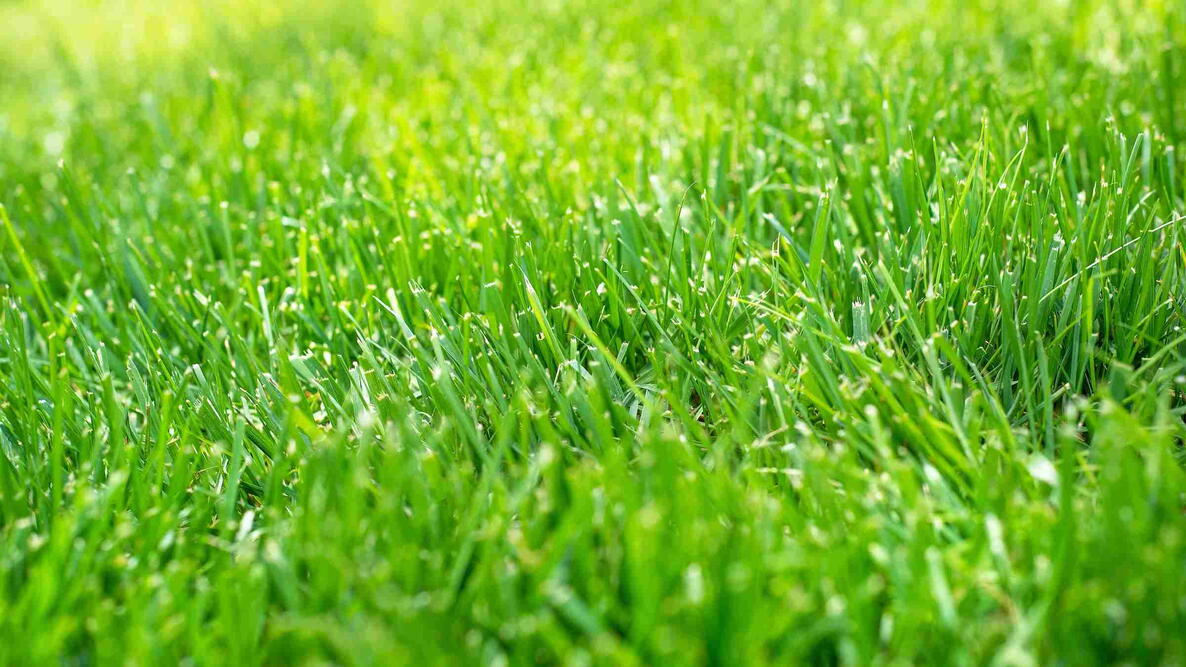
While some grasses are firmly in the “cool-season” or “warm-season” camps, tall fescue manages to achieve a “best of both worlds” scenario where it can actually thrive in both climates. It’s happy in USDA Zones 3 through 8, and it has the distinction of being a relatively easygoing grass that is fairly tolerant of drought, disease, traffic, and heat.
Tall fescue is a low-maintenance lawn choice, which is perhaps why it’s one of the most widely grown turfgrasses in America (what can we say—we like low maintenance!). It’s got a lot going for it—it’s both versatile and easy to care for. While technically a cool-season grass, tall fescue thrives in a variety of climates, so if your lawn is located anywhere in Zones 3 through 8, you may want to consider it.
Tall fescue is native to Europe, but it didn’t gain popularity as a turfgrass in the U.S. until the 1950s. People discovered it was attractive, heat- and drought-tolerant, disease-resistant, and able to handle heavy foot traffic. It’s also fairly weed-resistant and tolerates a little shade.
Worried about soil type, pH, or temperature? No problem! The deep-rooted tall fescue (roots 2–3 feet deep) isn’t fussy. It doesn’t generally produce much thatch, although dwarf types can produce a bit more. If thatch occurs, a simple core aeration will fix it.
Why Is It Called Tall Fescue?
Its common name comes from its former botanical name, Festuca arundinacea. Festuca is Latin for stem or stalk. And tall fescue, of course, can become quite tall if left unmown. (You won’t do that for your lawn, of course.) Its current botanical name is Lolium arundinaceum.
What Does Tall Fescue Look Like?
Tall fescue has a coarse texture with wide leaf blades, about ¼ to ½ inch across. The blades are rigid and extend outward from the stem at nearly 90 degrees. Its medium-to-dark green color and bunch-type growth habit sometimes make it look patchy—but modern turf-type tall fescues (TTTF) have thinner blades to reduce this.
Thanks to its deep roots, tall fescue absorbs water efficiently, producing a strong, robust lawn.

Growing
Deep roots allow tall fescue to survive moderate drought and make it one of the most resilient cool-season grasses. With proper care, it can thrive in a variety of conditions, including heavy traffic, heat, and partial shade.
Watering Your Lawn
Water deeply but infrequently. About 1 inch of water per week is sufficient under normal conditions.
Seasonal adjustments:
- Spring & fall: water lightly as needed.
- Summer: increase frequency if heat stress appears.
- Winter: minimal watering unless in a dry region.
Watch for signs of stress: yellowing tips, wilting, shallow roots, or puddling.
Tip: Water early in the morning to reduce disease risk and allow leaves to dry before evening.
Mowing
- Keep grass 2.5–3.5 inches tall.
- 3 inches is ideal for shady areas.
- Avoid cutting shorter than 2 inches.
- Leave clippings on the lawn to recycle nutrients.

Fertilization and Nutrition
- Apply nitrogen in early spring and autumn; additional applications as needed.
- Conduct periodic soil tests to monitor pH and nutrients.
- Add phosphorus or potassium only if soil tests indicate a deficiency.
- Consider organic options, like compost or slow-release fertilizers.
Overseeding and Lawn Repair
- Overseed bare patches in fall; older lawns may need this every 2–3 years.
- Use slit seeding or core aeration to improve seed-to-soil contact.
- Optional: add 10% Kentucky Bluegrass to improve density.
- Keep soil lightly moist until seedlings establish.
Thatch and Aeration
- Tall fescue usually produces minimal thatch, but dwarf varieties may develop some.
- Signs: spongy lawn, poor water absorption.
- Core aeration: once per year (spring or fall).
- Dethatching: only if thatch is excessive.
Prevention
- Avoid overwatering and cutting too short.
- Rotate mowing patterns to reduce stress.
- Use natural or organic controls when possible (e.g., beneficial nematodes for grubs).
Seasonal Care Checklist
- Spring: Fertilize, inspect for bare patches, mow regularly.
- Summer: Mow higher, water deeply, monitor for heat stress.
- Fall: Overseed, fertilize, core aerate if needed.
- Winter: Minimal maintenance; clear debris, avoid heavy foot traffic.
Types
Tall fescue has come a long way from the coarse pasture grass it once was. Modern turf-type cultivars are finer-textured, denser, and greener year-round, while dwarf varieties such as ‘Eldorado’ and ‘Silverado’ grow more slowly, meaning less mowing and easier upkeep.
The University of Illinois Extension lists these as top-performing turf-type cultivars: Clash, Daybreak, Expanse, Providence, Serenade, Spyder 2 LS, Stealth, Teacher, Titanium G-LS, and Xanadu.
Because tall fescue is a “transition zone” grass, performance depends on where you live. Here’s a quick guide:
| Region | How Tall Fescue Performs | What to Look For |
|---|---|---|
| Transition Zone (Mid-Atlantic, Midwest, parts of the Plains) | Ideal region. Handles both heat and cold better than most cool-season grasses. | Choose turf-type cultivars with drought and disease resistance (e.g., Spyder 2 LS, Titanium G-LS). |
| Northern States (Upper Midwest, New England) | Survives but may thin in severe winters. | Select cold-hardy cultivars; overseed with Kentucky bluegrass or ryegrass for winter resilience. |
| Southern States (Upper South, parts of Texas, Oklahoma) | Can struggle in prolonged summer heat. Best in shaded or irrigated lawns. | Look for heat-tolerant cultivars with brown patch resistance. Consider dwarf types for less stress and maintenance. |
| Dry/Western States | Performs well if irrigated; tolerates drought better than most cool-season grasses. | Pick drought-tolerant cultivars tested in your state’s extension trials. |
When selecting seed, always check your local extension’s turf trials—they’ll tell you which cultivars are proven performers in your specific climate.
Frequently Asked Questions
-
What is tall fescue grass?
A versatile cool-season turfgrass, tall fescue thrives in Zones 3–8. It tolerates heat, drought, heavy traffic, and low maintenance, making it perfect for busy lawns.
-
How do I plant tall fescue grass?
Plant by seed or sod in early fall or spring. Prepare the soil, keep it moist, and follow proper seeding rates for thick, healthy growth.
-
How often should I water tall fescue?
Thanks to its deep roots (2–3 feet), you should water deeply but infrequently—roughly 1–1.5 inches per week, adjusting for rainfall and heat.
-
What mowing height is best for tall fescue?
Keep it 2.5–3.5 inches tall. Higher mowing shades roots, retains moisture, and helps reduce weeds.
-
Does tall fescue tolerate shade?
Yes! It performs well in partial shade, though 4–6 hours of sunlight per day helps it thrive.
-
How resistant is tall fescue to drought, heat, and traffic?
Among cool-season grasses, it’s one of the toughest—handling high heat, moderate drought, and heavy foot traffic better than Kentucky Bluegrass or Ryegrass.
-
How do I handle thatch in tall fescue lawns?
Thatch is usually minimal. If it accumulates, core aeration in spring or fall reduces buildup and improves soil health.
-
Can tall fescue grow in different soil types?
Yes! It adapts to a wide range of soils and pH levels, making it low-maintenance and beginner-friendly.
-
How does tall fescue compare to Kentucky Bluegrass?
Kentucky Bluegrass looks denser and greener, but tall fescue wins for heat, drought, traffic tolerance, and low maintenance, making it ideal for active yards or warmer climates.
-
When should I overseed my tall fescue lawn?
Early fall is best to establish strong roots before winter. Spring overseeding is possible but may compete with weeds and summer heat.

More Like This



Comments