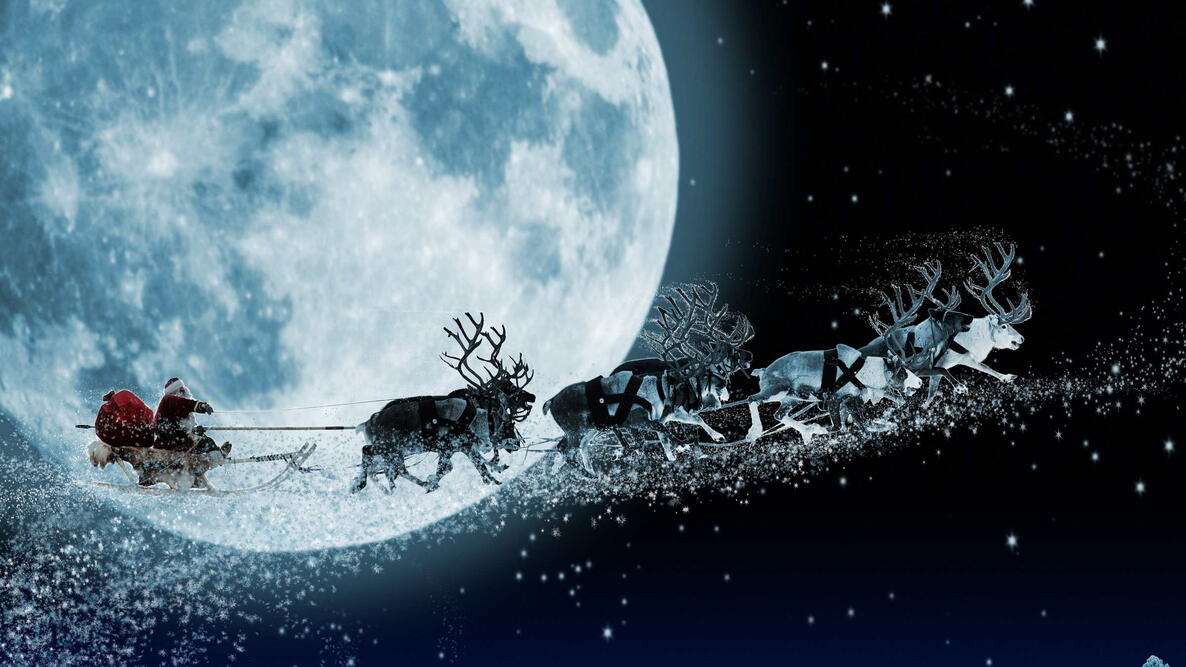
Reindeer are magical creatures that can see in the dark. And, yes, Santa’s helpers are female (except Rudolph). Learn more about Santa’s leading ladies—and five amazing reasons why reindeer are perfect for the job!
5 Fascinating Facts About Reindeer
Reindeer thrive at the North Pole, where Santa lives! And that’s not all …
1. Reindeer love cold places
You won’t see any reindeer roaming around your neighborhood unless you live near the Arctic. While many mammals have just one layer of fur, reindeer have two layers of thick, furry, brownish-gray hair. The layer closest to their skin is dense, woolly, and soft.
On top are long, hollow guard hairs. Air gets trapped inside these hairs and holds in body heat to keep the reindeer warm. These hairs also help reindeer to float; they are excellent swimmers!
The reindeer’s double coat of fur does not extend to its legs. In cold weather, reindeer constrict, or tighten, their blood vessels, causing less blood to flow and essentially turning down the temperature in their legs. This helps to keep their body heat steady.
2. Reindeer can see in the dark!
In the winter, the Arctic has very little daylight. Reindeer eyes even change color to let in tiny amounts of light during the very dark winter months.
Also, reindeer are some of the only mammals that can see in ultraviolet; this means that they can see objects in the background that humans can not distinguish. Is it any wonder that reindeer can pull Santa’s sleigh through the night?
3. Both male and female reindeer have antlers
For all members of the deer family, except wild caribou, only the males have antlers! However, both the female and male reindeer have antlers. Reindeer are the domesticated cousins of wild caribou—and are usually about 8 to 10 inches shorter.
In early spring, male reindeer begin to grow antlers. At full size, these will be 20 to 50 inches tall. A few weeks later, the female reindeer’s antlers start to appear; they can grow from 9 to 20 inches tall. All new antlers are covered with protective soft fur, called velvet. Reindeer shed their antlers annually and grow a new, larger set yearly.
4. Reindeer can go very long distances at high speed
First, they usually travel 35 miles in a single day, and can reach speeds of up to 50 miles an hour! Plus, reindeer have a superb sense of smell. This helps them to locate food buried deep in the snow so that they can keep eating as they go and do not need to store up fat like most mammals.
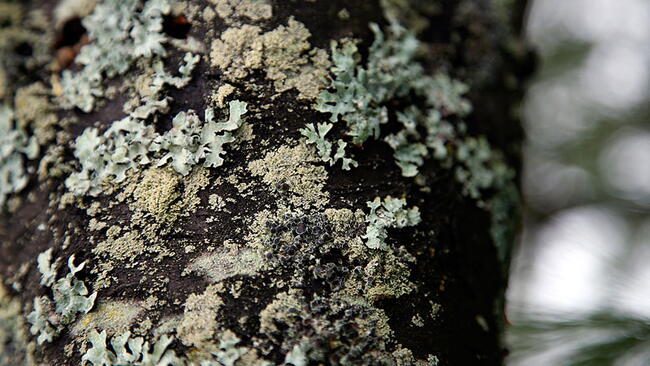
They eat simple lichen, which is very accessible on tree trunks and rocks in the Arctic, and it’s instant nutrition. In other words, Santa’s reindeer can be ready with the energy for a long-haul overnight trip when they’re needed!
5. Reindeer can stand upright on any surface
In bitterly cold weather, the footpads on a reindeer’s hooves shrink and tighten, exposing the rims of its hooves. This helps the reindeer pierce through the snow as it walks and digs for food in deep snow. Their wide, crescent-shaped hooves are also very steady and keep them from slipping. Clearly, their sturdy nature makes them perfect for Santa’s sleigh and landing on steep roofs while delivering Christmas gifts.
Are Santa’s Reindeer Female?
Here’s a fun fact from the Almanac archives …
As the story goes, eight reindeer adorned with full sets of antlers lead Santa’s sleigh on Christmas Eve. “Now, Dasher! Now, Dancer! Now, Prancer and Vixen! On, Comet! On Cupid! On, Donner and Blitzen!”
In the wild, of course, the only reindeer left with antlers at Christmastime are the females. Male reindeer (bulls) shed their fuzzy antlers before the beginning of winter (late November to mid-December).
- During the mating season in the fall, the male reindeer use their antlers to impress their mates. After fall, they no longer have use for their antlers and they shed them before Christmastime.
- However, the females retain their antlers until after they give birth to calves in the spring. This gives the expectant mothers a means to protect food resources through the harsh weather.

That begs the question: What kind of sledder would hook up pregnant females to a sled? Not exactly good animal husbandry, Santa.
Hmmm. Perhaps Santa’s sleigh helpers are castrated males (called steers), who don’t lose their antlers until February or March. Sledders use steers because the bulls are too tired from rutting all the females and too lean to pull a sled through heavy snow.
Nonetheless, the prevailing theory is that Santa has an all-girl team, joined by young, red-nosed Rudolph. Yep, Santa’s leading ladies don’t mind stopping for directions.
All joking aside, we hope you’ve enjoyed the wildlife trivia.
Check our Christmas Trivia page for more fun facts.

More Like This




Thanks for this pleasant degree of humor . . .
Thank YOU for your kind words, Beverly, and best wishes for you and yours!
Well, put this in the category of news to us! We can only wonder if those farmers subscribe the idea that there is a "Best Day" to do this and other things: https://www.almanac.com/bestdays/timetable
- « Previous
- 1
- 2
- …
- 10
- Next »

Comments