
Caption
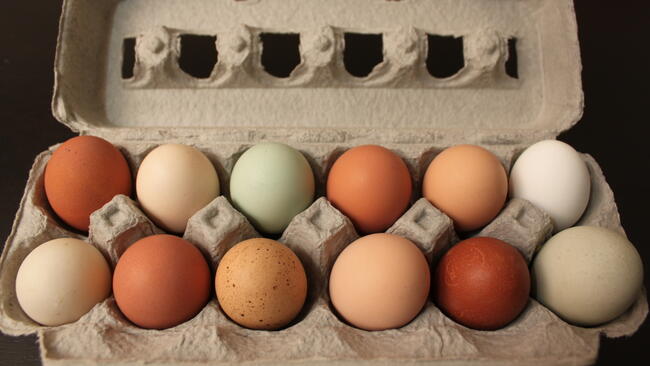
“Love my fresh eggs and so do my customers!” Thanks to Jenna, Almanac Facebook fan, for sharing this beautiful collection!
How do you collect eggs from a chicken coop? What happens if you don’t collect chicken eggs? Should you wash eggs? We answer all these questions and more in our article on how to collect, clean, and store chicken eggs!
Once you’ve eaten farm-fresh eggs, it’s hard to go back to grocery store eggs. Fresh eggs—free-range or not—are delicious, with bright yolks and firm whites. Grocery store eggs are often already a month old before they even reach the shelves. If you’re raising chickens or planning to, having a constant supply of fresh eggs is probably your primary reason for getting the birds in the first place! Here’s everything you need to know.
How Often Do Chickens Lay Eggs?
Hens lay about one egg per day when they’re laying. You’ll collect more eggs during extremely warm or cold weather as the hens spend more time in their coop. Collecting eggs frequently keeps the eggs from breaking due to hen traffic. Always discard eggs with cracks, which allow bacteria to enter the egg.
Also, be sure the shells are strong. Give your hens ground oyster shells or a similar calcium supplement, available at farm suppliers, to promote the development of strong eggshells.

How to Collect Eggs
Ideally, wait until the hens leave their laying spots to collect eggs. They’ll typically be happy to hop off the nest if food is involved, so collecting eggs right after feeding can be a good strategy. Gather eggs in a basket, a cloth sling, or any other container that won’t put pressure on them.
Occasionally, you might encounter a broody hen who does not want to leave her nest. If she doesn’t respond to gentle shooing, you’ll have to reach in and remove the eggs from under her. Expect some squawking and maybe even a few indignant pecks!
When to Collect Eggs
You’ll want to collect eggs every morning; hens cackling loudly are a sign or clue that they’re laying. I usually have another look in the evening as well. Some hens lay in the morning and others in the evening.
Why Are My Chickens Eating Their Eggs?!
Oddly enough, chickens like to eat eggs as much as we do. Most egg-eaters learn from broken eggs and then begin to break eggs themselves. Chickens are opportunists and will pick at whatever looks edible. If you clean up broken eggs immediately and throw out any “eggy” straw or shavings, you can prevent egg-eating. A chicken that learns this habit can’t be cured, and others may follow her lead. You don’t want the chickens eating your eggs—you want them yourself!
What Color Eggs Will My Chickens Lay?
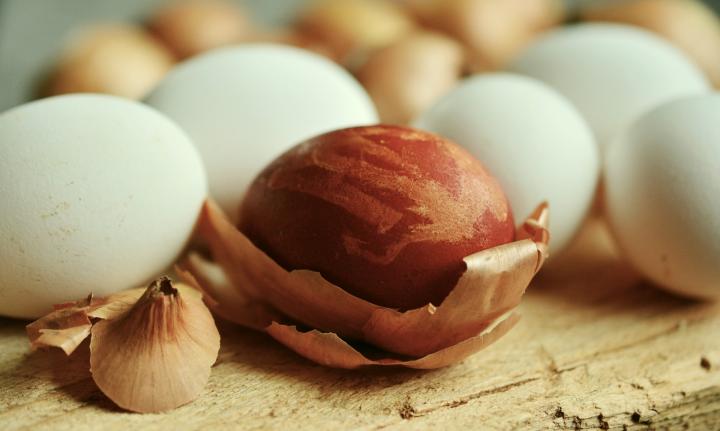
You can tell what color eggs a hen will lay by the color of her ear. Yes, her ear. Birds don’t have external ears like humans do, so look for a small circle or oval of skin on the side of the head, next to the ear hole. If it’s white, your hen will lay white eggs; if it’s red, she’ll lay brown ones. There’s no difference in flavor or nutrition, but white eggs show the dyes more brightly at Easter! (Especially natural dyes, as pictured here.)
Cleaning Chicken Eggs
Avoid washing farm-fresh eggs if you can; wipe with a dry, rough cloth. Eggshells have a “bloom,” a natural coating that protects the egg from bacteria. Washing the eggs removes this protective layer, and you need to put them in the refrigerator. Otherwise, the eggs can be stored on the counter for up to a month or stored in the refrigerator; it’s a personal preference. I think the eggs taste better within two weeks, but they’re fine to eat within a month of laying.
If the eggs have a little manure on them, remove it. To keep your eggs clean, keep their straw fresh and pick out any large pieces of muck as best you can, but the eggs may inevitably have a little muck on them. Just wipe with a damp cloth for small spots.
A really dirty egg can be submerged and scrubbed with a vegetable brush. Always use warm water (warmer than the egg); cold water will make the egg shrink inside the shell and will draw in bacteria.
If you wash the eggs, be gentle and quick. Let eggs air-dry thoroughly before putting them away. (I like to sort them by color, darkest to lightest, but that’s just me!)
Storing Chicken Eggs
I put my eggs in dated egg cartons and store them in the fridge on a shelf—not the door, where they will get jostled with every opening/closing. For partial cartons, I mark each egg in pencil with the day it was collected. Refrigerate between 32- and 40 degrees Fahrenheit. Fresh eggs are good for a month in the refrigerator.
A cooking tip: To make deviled eggs, use week-old or older eggs, not this morning’s. The shells of really fresh eggs stick and don’t peel cleanly.

Hatching Chicken Eggs
A common question is whether a chicken could hatch from an egg purchased at the grocery store. No, this isn’t possible. For a chicken to develop from an egg, it must be fertilized. Most eggs sold commercially in the grocery store are from poultry farms and have not been fertilized. Plus, eggs that aren’t incubated within the proper temperature range for the proper amount of time won’t develop or hatch. Now that that question is answered, let’s get to the business of babies.
If you want to get chicks from your eggs, you’ll need a rooster! As a rule of thumb, 10 to 12 hens per rooster is a good ratio. While you could build an incubator and supervise the development of the eggs, it’s easiest to let the hens take care of hatching.
A hen that is getting ready to nest becomes “broody.” This means that she wants to hatch her eggs. She’ll sit “tight” on the nest and resist having her eggs collected, whereas a non-broody hen will let you reach under her to collect eggs. A broody hen may even peck or screech at anyone coming near. There are ways to discourage broodiness, but why would you? The hen does all the work of hatching and raising—and you get free chicks!
If you do decide to get an incubator, a forced-air model with an automatic egg-turner is recommended, as eggs will need to be turned four to five times a day. The temperature inside the incubator should be between 99° and 102°F, while the humidity should remain between 55 and 60%. Chicken eggs will hatch after approximately 21 days. Check with your local cooperative extension service for more information.
→ Read more about raising baby chickens!
Do Chickens Ever Stop Laying Eggs?
Farm chickens can live for 4 to 7 years and lay eggs for most of that time. Every year, they go “off-lay” (i.e., stop laying eggs) for several months. This happens during the winter when there’s too little daylight to trigger egg-laying. Don’t worry, though—they’ll begin again in the spring as the days grow longer again!
→ See what to do when chickens stop laying eggs.
More of Raising Chickens 101
This article is part of our Raising Chickens 101 series. See more of our beginner’s guide to raising chickens:






If you are only noticing this change in cold weather, it is likely nothing to worry about. It is not uncommon for chickens to stop laying or to lay less as the weather cools. This can mean that eggs move through their system slower, and the roughness that you are experiencing is simply an excess of calcium getting layered onto the eggshell. This is not dangerous to the birds, and does not affect the quality of the egg. Our friends at the University of Florida Extension Service detail some of the causes of eggshell variation on this handy page: https://edis.ifas.ufl.edu/publication/VM013
- « Previous
- 1
- 2
- …
- 10
- Next »

Comments