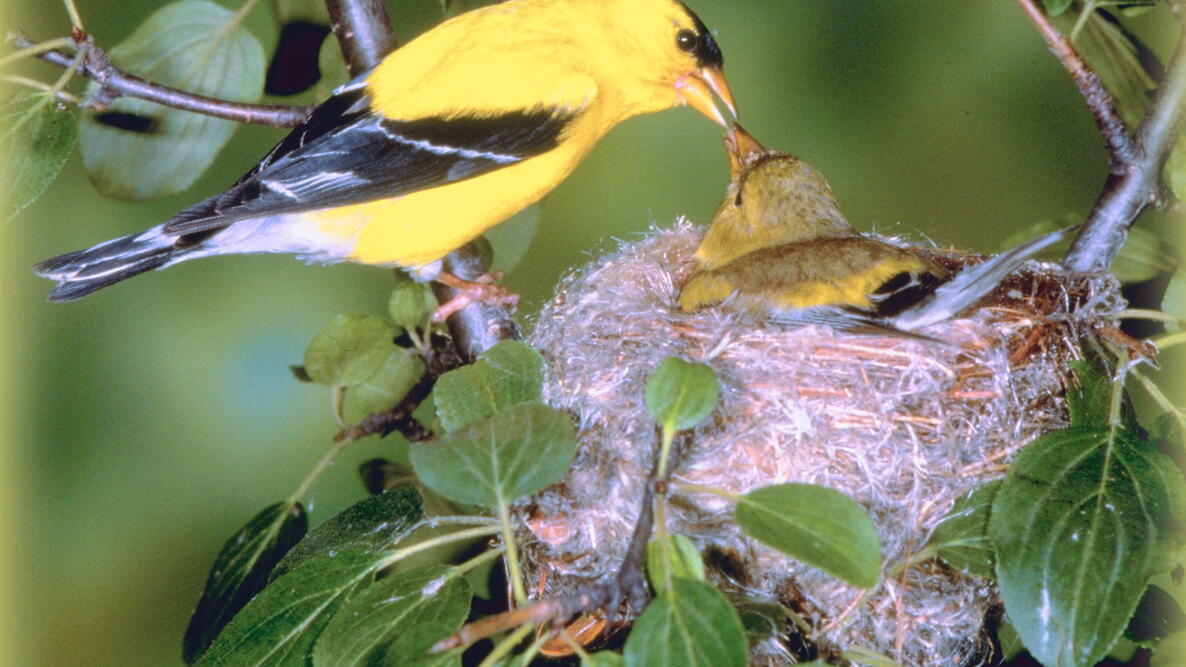
Caption
An American Goldfinch and her nestling.
The American Goldfinch, with its vibrant yellow plumage, is one of the most cheerful signs of spring. These small, lively birds are a favorite among backyard birdwatchers and are easy to attract to your garden with the right seeds and plants.
Why the American Goldfinch Is a Spring Favorite
The bright yellow color of male goldfinches signals the arrival of warmer weather. After molting in late winter and late summer, male goldfinches display their signature yellow body with a black forehead, black wings, and white markings. Adult females are more subtle, with olive-toned backs and lighter yellow underparts. Their colorful appearance combined with their bouncy flight style makes them a delight to spot at feeders.

What Do American Goldfinches Eat?
American Goldfinches are strictly vegetarian, primarily feeding on seeds. They favor plants in the Asteraceae family, including:
- Sunflowers
- Thistles
- Asters
- Milkweeds
Males often sing exuberantly in spring, but interestingly, these birds nest later than many others. They wait until thistles and milkweeds go to seed, using the soft plant fibers to build their nests.

How to Attract American Goldfinches to Your Yard
Want to bring these bright birds to your garden? Here are some tips:
- Plant Milkweed and Thistle – These seed-producing plants are favorites for goldfinches.
- Offer Sunflower and Nyjer Seeds – Fill your feeders with these seeds to encourage visits.
- Keep the Ground Clean – Rake up fallen seeds to prevent contagious diseases among visiting birds.
- Observe Their Feeding Habits – Watch them balance on seedheads, plucking seeds with precision—it’s both fun and educational!
Listen to the American Goldfinch
Have you ever heard the distinct “po-ta-to-chip” call of the American Goldfinch? Their cheerful, bouncy songs are unmistakable and a true hallmark of spring mornings.
Share Your Experience: Have you spotted or heard an American Goldfinch in your area? Comment below and let us know where you’re seeing or hearing these birds.
Click here to listen to the sounds of other birds, compliments of The Macaulay Library at The Cornell Lab of Ornithology.



Comments