Primary Image
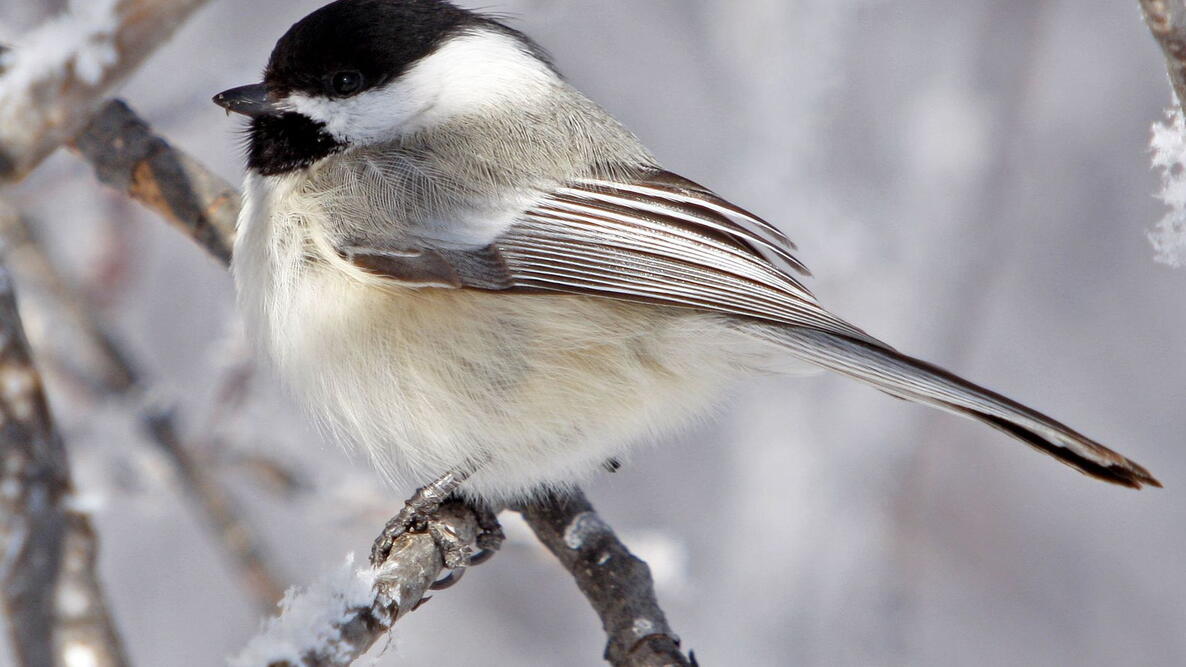
Caption
The bold little chickadee is a welcome sight at any feeder.
Image Credit:
Photo by USFWS Mountain-Prairie via Wikimedia Commons

Comments
Well, it's February here in southern Illinois, and I have a great variety of birds at my feeders. Northern cardinals, tufted titmice (or is it titmouses? LOL), and the occasional woodpecker, lots of sparrows, finches of all types, and ah—the rarest of sparrows - every once in a while I get a Eurasian tree sparrow with it's black ear patch on its white cheek, over from St. Louis, Missouri, 100 miles away! Anyway, I'm used to all their calls, but for the past two afternoons, I've heard a call I didn't recognize. It was a mournful? call—and just two notes. Well, thanks to your website, I now know that it's one of those little black capped chickadees... calling out to his mate. How sweet! BUT, and there's always a but! The call is MUCH lower in pitch than any of the recordings I can find out there. Begs the question: do their voices change in pitch, perhaps as they age? I donno. But it's funny to listen to the same bird and find major variations, to pitch and song sometimes! For example, my Carolina wrens have a VERY different "teakettle" call here in Illinois than they do in recordings from other parts of the country! The notes go different ways! Almost like they speak a dialect, or something! That wouldn't surprise me, since humans do that all the time. I wonder if the birds can identify "foreigners" that way! Love those rascals, even if they do eat me out of house and home!
Heard the "fee-bee" call in British Columbia Canada
I've been in Groton CT for almost a couple years now and have heard this song so much. It's beautiful! I just couldn't figure out which bird it was coming from. Almost 2 years later and I finally googled the right thing and found that it was the Black capped chickadee.
When I lived in Swannanoa, NC my bird feeder was visited constantly by chickadees. I noticed that they would line up on a nearby tree branch and take their turn at the feeder. No line hopping! Such polite little beauties!
After the rain stopped and the sun came out, a little chickadee sang happily in the oak tree in our front yard: fee-bee-bee, fee-bee-bee! This late Spring has been cooler than usual, so the birds have been singing a lot more than they do in late May.
Friendly bird if hungry they fly to meet me. Will come to me when I hold food in my hand and will eat from my hand. Takes time but they have to feel trust.
I’m in NEPA (northeast Pennsylvania). We have a group of chickadees that stays year round. There is one extremely friendly bird that flies along with me from the shed to the shelves where I put the seed. He/she talks to me and I answer back...love it! Was wondering about who does the fee-bee call. Now I know, thanks!
I live in the thumb area of Michigan, and have had a few Chickadees fly within inches of my head. Some Chickadees sit on the deck railing a few feet away as I'm filling the feeder. They're such cute little birds, and I love watching them.
I live in Baton Rouge Louisiana and we have chickadees that chirp 4 notes. It’s very mockingjay.
- « Previous
- 1
- 2
- …
- 10
- Next »
📣The Gardening Club Just Got Better! 3 Deliveries, 10% Store Discount, and more!

No. The Black-capped Chickadee has nine recognized subspecies and occurs from Alaska through the southern half of Canada and south to roughly half of the lower 48 U.S. states.