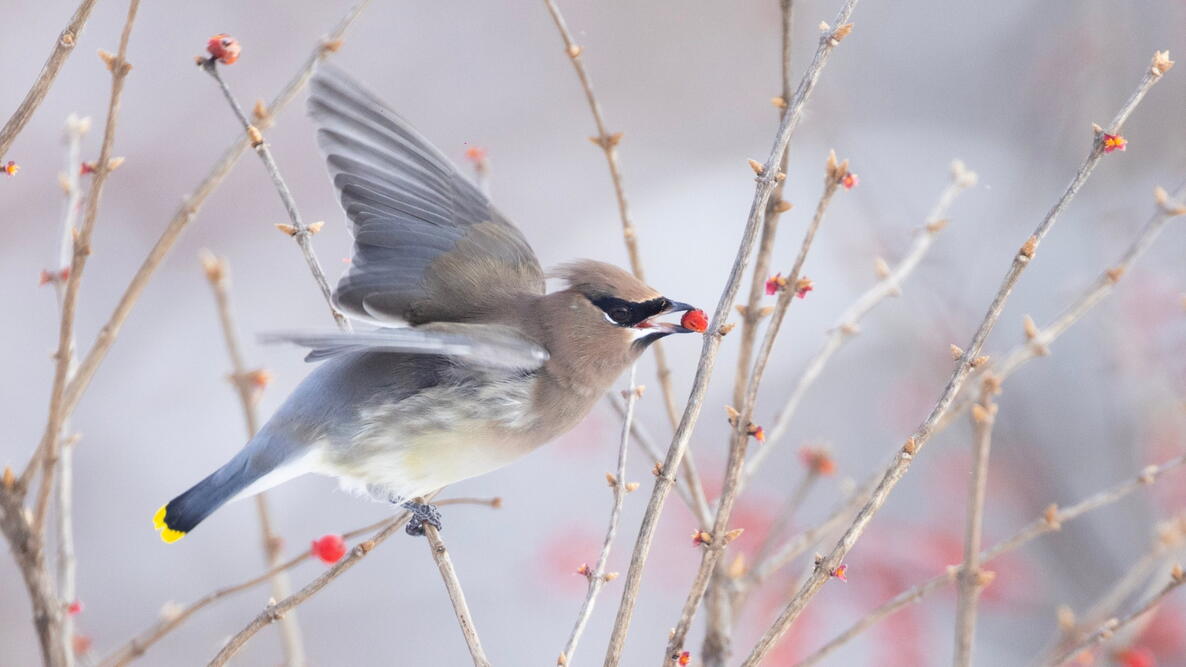

The Cedar Waxwing, with its sleek silhouette and vibrant colors, is a captivating resident of North American skies. This medium-sized songbird boasts a unique blend of silky brown, cool gray, and sunshine yellow, accented by a dashing black mask and a touch of red waxy wing tips. Often seen in flocks flitting through trees or soaring gracefully over meadows, the Cedar Waxwing is a true delight for birdwatchers and nature enthusiasts alike.
Identifying the Cedar Waxwing
Distinctive Features:
- Size and Shape: Measuring around 6-8 inches, the Cedar Waxwing has a large head, short neck, and broad, pointed wings.
- Coloration: The plumage is a beautiful combination of brownish-gray on the head and chest, fading to soft gray on the wings. The belly is pale yellow, and the tail is tipped with bright yellow. The facial features include a black mask outlined in white.
- Unique Traits: Look for the subtle red waxy droplets on the wing feathers, though these may not always be visible.
Beyond the Beauty: The Life of a Cedar Waxwing
Social Butterflies: These birds are highly sociable, rarely venturing out alone. They are often seen in flocks, particularly during the fall and winter months when they gather to feast on berries.
Dietary Delights: Primarily frugivorous, Cedar Waxwings love indulging in a variety of fruits throughout the year. From cherries and strawberries in summer to mountain ash and crabapples in winter, their diet revolves around these sweet treats. They are also known to occasionally catch insects on the wing, showcasing their acrobatic skills.
Breeding Habits: Cedar Waxwings typically build their nests in coniferous or deciduous trees, often forming loose colonies with multiple nests in close proximity. Their young hatch after about two weeks and fledge around 16-18 days old.
_0.jpg)
Where to Find Cedar Waxwings
Cedar Waxwings have a vast range stretching across North America, from southern Canada to Mexico. They prefer habitats with access to fruits, such as woodlands, orchards, parks, and gardens. If you’re lucky enough to spot a flock feasting on berry-laden trees or hear their high-pitched calls echoing through the air, take a moment to appreciate these captivating creatures.
Enhancing your Backyard for Cedar Waxwings
Plant native trees and shrubs that produce fruits they favor, such as dogwood, viburnum, and elderberry.
Provide birdbaths with fresh water for them to drink and bathe.
Avoid using pesticides in your garden, as these can harm their insect prey.
By creating a welcoming environment, you can attract these beautiful birds to your backyard and witness their fascinating behaviors firsthand.
Here, you can identify the sounds and bird songs of the Cedar Waxwing. Compliments of The Macaulay Library at The Cornell Lab of Ornithology.
Click here to listen to the sounds of other birds!
Have you heard a Cedar Waxwing? Add your comments below. Be sure to let us know where you live or where you’ve heard this bird sound before!


Comments