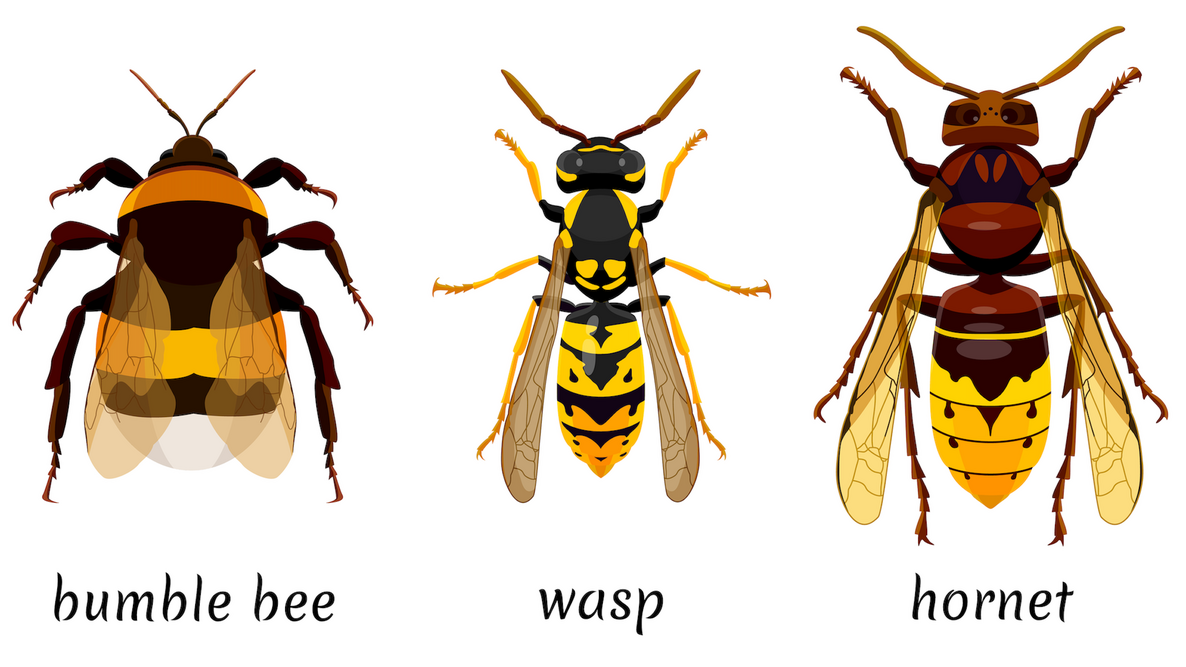
Bees are usually fuzzy and collect pollen. Wasps are sleeker and hunt insects—and hornets are a type of wasp. They can all look similar as they fly around, and they all have useful work to do. So, how can you tell which one is visiting your garden?
Color can fool you, so pay attention to the insect’s shape and what it’s doing. If you see a nest, that can provide another clue. Use the quick comparison chart below to figure out who’s who. Then, keep reading to learn more about these garden friends!
Hornet, Wasp, or Bee? A Quick Comparison
| Insect | Clues to Check |
|---|---|
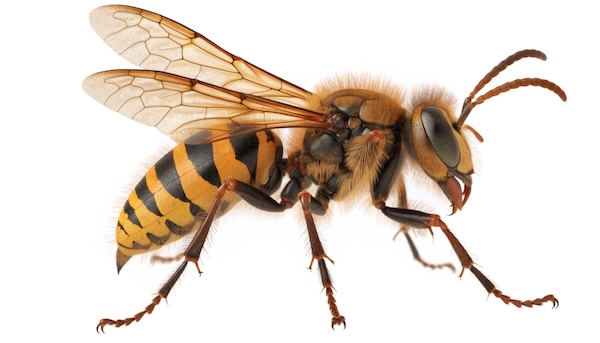
European hornet | Body: A large, robust type of wasp. European hornets have reddish-brown and yellow coloring. Activity: Hunts other insects. Nest: Makes a paper nest, usually in a hidden hole. |
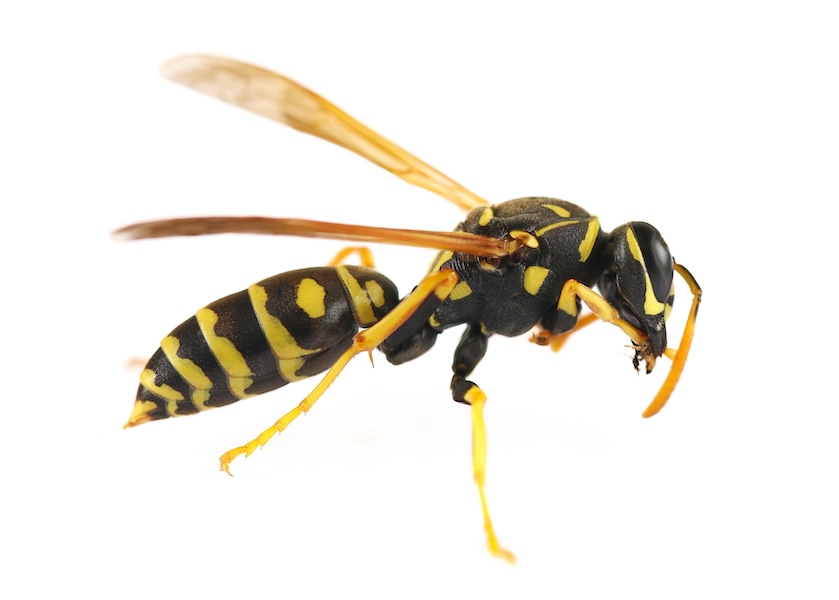
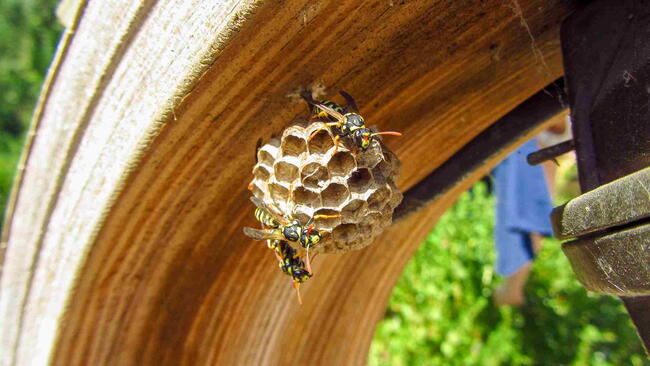
Paper wasp | Body: Slimmer and less hairy than a bee, often with a narrow waist. Activity: Hunts insects and also visits flowers. Nest: Paper wasps make umbrella-shaped paper nests with exposed combs. |
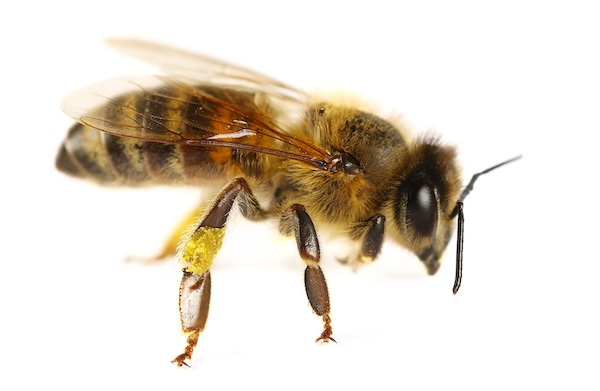
Honey bee | Body: Hairier and sturdier than many familiar wasps. Activity: Gathers pollen and nectar from flowers. Nest: Honey bees make wax combs in a hive or hole. |
How to Tell Hornets, Wasps, and Bees Apart
Certain types of bees, wasps, and hornets can all have black and yellow markings. So if you want to know what’s buzzing in your garden, color alone won’t always help you tell these common backyard insects apart.
Instead, look at the insect’s body shape, hair, and behavior for useful clues.
Hornets
All hornets are actually wasps! For many years, the European hornet was the only true hornet commonly found in North America.
Today, the invasive yellow-legged hornet has also been detected in parts of the Southeast United States, but officials are working to prevent it from spreading.
European hornets are bigger than most bees and wasps. They have smooth bodies and large heads, especially behind the eyes.
Hornets hunt other insects, like flies, grasshoppers, bees, and even other wasps.

Credit: Bruce Marlin
Wasps
Wasps look smooth and sleek. Many wasps have a narrow “waist” between the middle and back of their bodies.
Paper wasps, which you might see buzzing around your yard, have long legs that hang down when they fly. Yellow jackets are more compact, with bold black and yellow markings.
Wasps hunt other insects to feed their young, but some also visit flowers for nectar.
Bees
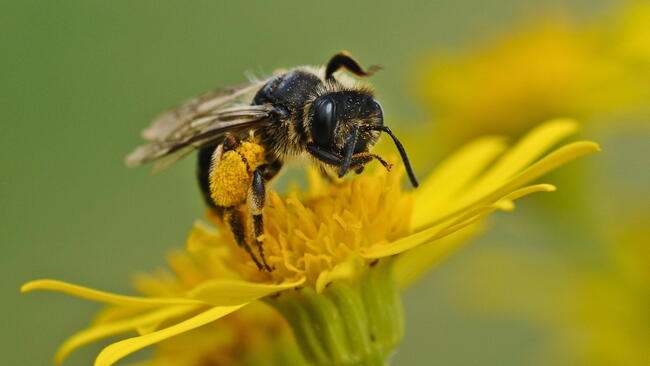
Bees are usually rounder and stockier than most wasps, and their legs appear thicker.
They also tend to look furry because they’re covered in tiny hairs that help them collect pollen.
Bees eat pollen and nectar, so if you see an insect making frequent pit stops on your flowers, there’s a good chance it’s a bee!
How to Identify Bee, Wasp, and Hornet Nests
There’s no single “bee nest” or “wasp nest.” What it looks like and where it’s built can help you tell who lives there.
- Honey bees: Wax combs inside hollow trees, other sheltered cavities, or beekeepers’ hives.
- Bumblebees: Clusters of wax pots and cells tucked into protected spaces, often abandoned rodent burrows.
- Paper wasps: Open, umbrella-shaped paper nests with visible cells, often under eaves or other sheltered surfaces.
- Yellow jackets: Enclosed paper nests, often underground or hidden inside wall voids and other cavities.
- Bald-faced hornets: Large, gray, enclosed paper nests hanging from trees or shrubs.
- European hornets: Paper nests usually hidden inside hollow trees or other sheltered cavities.
- Solitary bees and wasps: Individual nests in ground burrows, existing holes, or other small spaces; some wasps build mud nests.
No matter the nest, don’t poke it to see who’s inside! Keep your distance. If a nest is close to people, see the section below for what to do.

Credit: steven8590

Credit: Alan Eaton
Can Hornets, Wasps, and Bees Sting?
Yes, female bees and wasps—including hornets—can sting. But most aren’t cruising the garden looking for a fight.
The risk of getting stung goes up when you’re near a nest where lots of insects are living together. Honey bees, bumblebees, yellow jackets, paper wasps, bald-faced hornets, and European hornets may sting to protect their home. (Wouldn’t you?!)
If you’ve been stung, see our guide to Bee Stings: Prevention and Treatment. Call 911 for trouble breathing or swelling of the tongue or throat after a sting.
Why Bees, Wasps, and Hornets Are Garden Friends
Bees, wasps, and hornets aren’t “bad bugs.” In fact, they’re helpful! These buzzing visitors all have important jobs in your garden.
Bees are some of the best pollinators for your garden. As they collect pollen and nectar for food, they also move pollen from flower to flower, helping plants grow.
Wasps and hornets help keep pests out of the garden naturally by feeding on annoying bugs that can damage crops. Paper wasps, for example, eat caterpillars that love to munch on vegetables.
That’s why you don’t always have to remove a nest if it’s not bothering anyone. If the insects that live in it are simply hunting in your garden or visiting flowers, it’s best to leave them alone and let them do their job!
Bees and wasps aren’t the only good bugs worth keeping around. Find out which other beneficial insects to look for in your garden.

Credit: Maciej A. Czyzewski
What If a Nest Is Close to People?
Think about where the nest is and how close it is to where people walk or play. A nest high in a tree is less of a problem than one right by your front door, especially if kids or pets are around.
- If the nest is far from where people usually go, just give it space. Social wasps—like paper wasps and yellow jackets—usually only use their nests for one season. If you can live among them for a short time, that specific nest will be abandoned, though new queens may still build a fresh nest in your yard next spring.
- If the nest is somewhere people can’t avoid, it’s best to call a local pest expert for help. Never try to move an active nest by yourself. You may also wish to seal up any structural gaps in the spring so a new queen doesn’t take its place next year.
Most of the time, a little distance is all we need to coexist with these useful garden visitors.
Frequently Asked Questions
Is a hornet a type of wasp?
Yes. All hornets are a kind of wasp, but not all wasps are hornets. Hornets are a special group of wasps in the wasp family.
Is a bald-faced hornet really a hornet?
No. Even though it’s called a hornet, the bald-faced hornet is actually a kind of yellow jacket, not a true hornet. It’s easy to identify because it’s black and white and makes a big gray paper nest.
How can I tell a hornet nest from another wasp nest?
Pay attention to where the nest is and what it looks like. European hornets usually build paper nests inside sheltered holes like hollow trees. Bald-faced hornets (which are really yellow jackets) make big, closed gray paper nests in trees and bushes. Paper wasps build smaller, open nests where you can see the cells.
Sources
- University of Minnesota Extension — Wasps and Bees
- Texas Parks and Wild Life — Bumble Bee Life-Cycle

More Like This
- « Previous
- 1
- 2
- …
- 10
- Next »

Comments