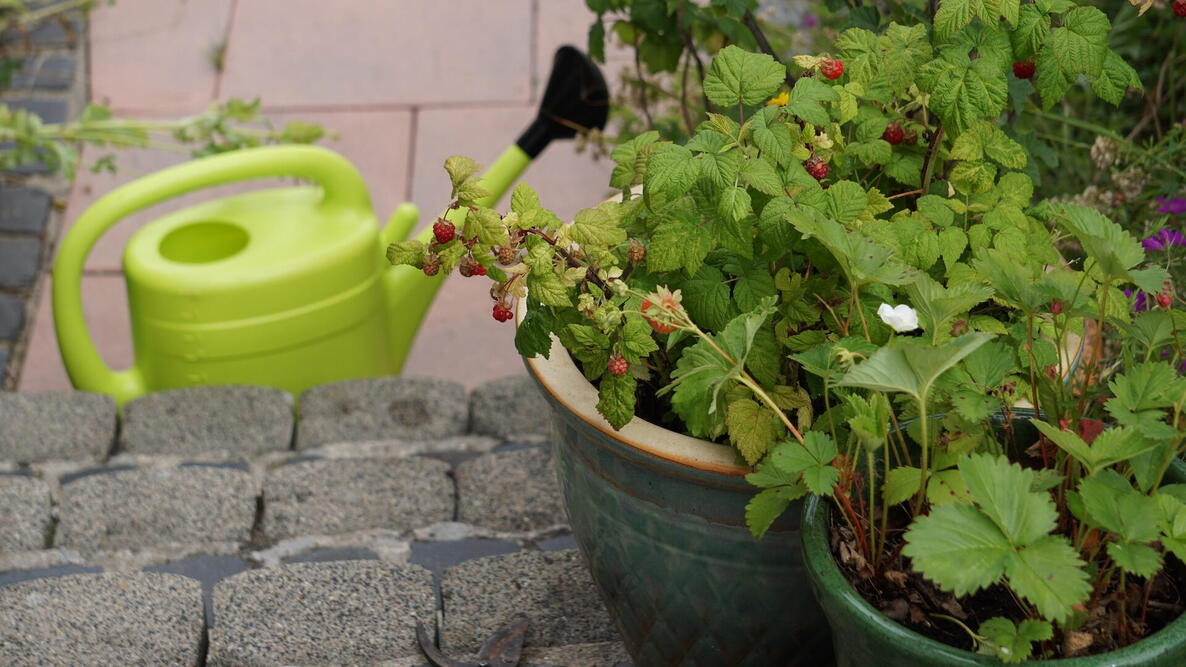
Growing raspberries in containers lets you enjoy homegrown berries even with limited space. Start with a pot that gives the plants room to grow and the right potting mix. Water the plants regularly so the roots don’t dry out.
Some raspberries yield fruit in summer, others in fall. The steps below will help you choose a pot and variety, plant and harvest your raspberries, and care for them year-round, even in winter.
1. Choosing the Right Container
For standard raspberries, choose a 20- to 30-gallon container at least 2 feet deep. Start with one raspberry plant per pot. It will produce multiple canes as it grows, and you don’t need a second plant to produce berries.
Short on space? Compact varieties such as ‘Raspberry Shortcake’ can grow in smaller pots, at least 16 inches wide and 12 inches deep. Check the recommended container size for your variety.
Choose a sturdy, food-safe container with drainage holes. Plastic, terracotta, stone, and metal troughs can all work. Large troughs can hold multiple raspberry plants if spaced appropriately.
Tip: Skip the rocks or pebbles at the bottom of your pot. They don’t improve drainage!
2. Best Raspberry Varieties for Containers
Raspberries come in two main fruiting types:
- Summer-fruiting raspberries develop fruit on canes from last year’s growing season, usually in June or July.
- Autumn-bearing raspberries develop fruit on new canes from the current growing season, usually from around August until the first fall frost. Some may also produce berries the next summer.
While both types can be grown in containers, I like growing autumn-bearing raspberries because the plants often stay smaller than summer-bearing varieties and are easy to prune.
Recommended Raspberry Varieties for Containers | |
| Variety | Best for |
| Autumn Bliss | Large, flavorful red berries for a fall harvest |
| Autumn Treasure | Easy fall picking, thanks to sturdy, thornless canes |
| Malling Jewel | An early to midsummer harvest |
| September | Small spaces—grows to just 3 to 4 feet tall |
| Raspberry Shortcake | Small spaces—grows to just 2 to 3 feet tall |
Start with healthy, certified disease-free raspberry plants from a reputable nursery to reduce the risk of introducing viruses and root diseases into your garden.
3. Preparing the Potting Mix
Raspberries grow best in rich, slightly acidic soil that drains easily. But don’t be tempted to use standard garden soil in your pots.
Although garden soil works well in the ground, it’s too dense for most containers. Using it can create drainage issues and lead to problems like root rot.
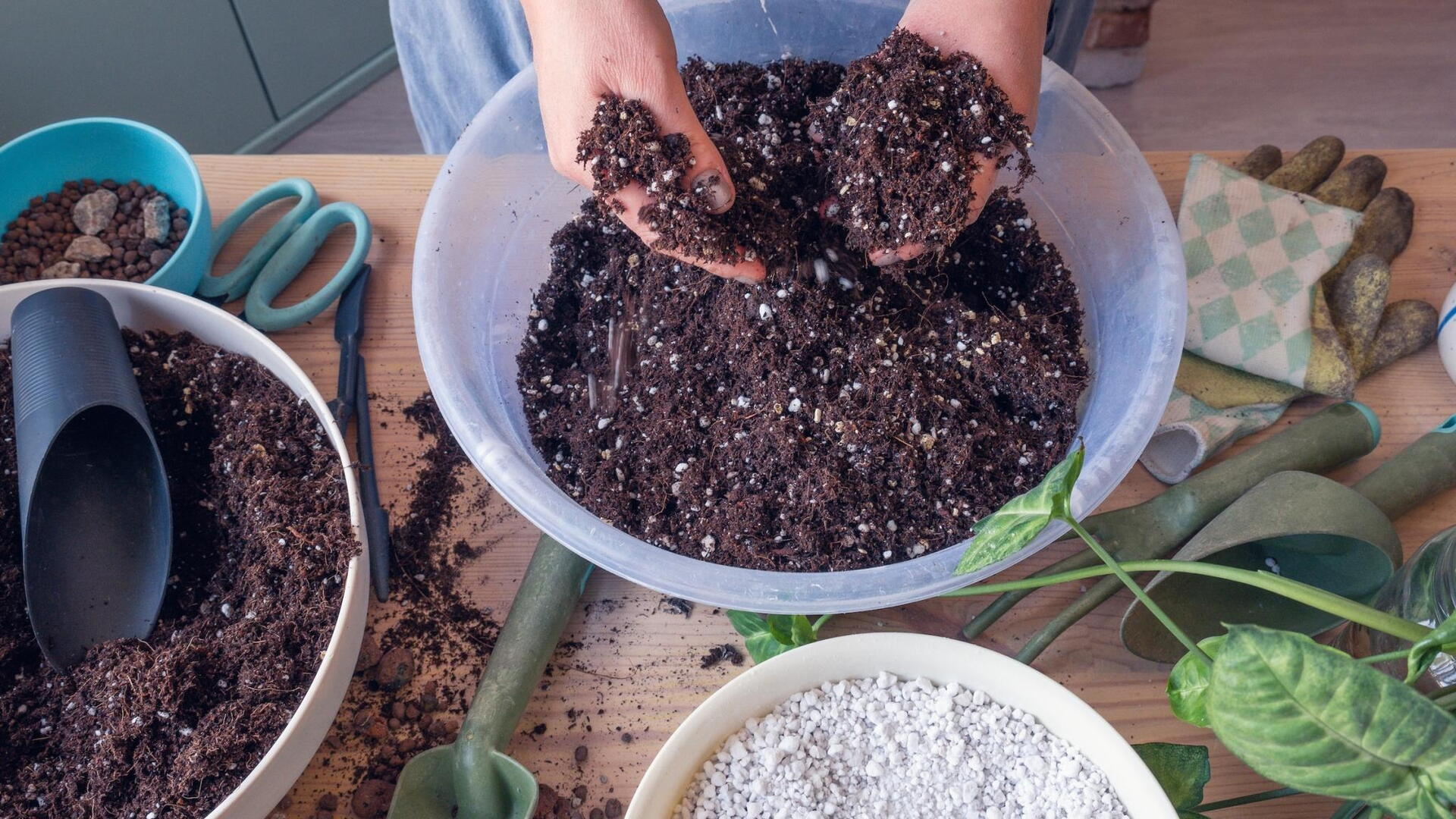
For the healthiest plants, grow raspberries in pots filled with store-bought potting mix or raised-bed mix intended for edible plants.
I like to make my own potting mix using a mixture of compost, coconut coir, perlite, and other natural materials.
Credit: Cem Selvi
4. Choosing a Location
Place containers in a spot that gets 6 to 8 hours of direct sunlight each day. Raspberries produce the sweetest fruits when they get lots of sunshine!
Whichever locations you choose, make sure you don’t block the drainage holes at the bottom of the container. That may mean placing your container on bricks or a plant stand instead of a completely flat surface.
Tip: Rotate your raspberry pots from time to time to help make sure all sides of the plant get the light they need.
5. Planting Raspberries
Early spring is generally the best time to plant raspberries in containers. Dormant, bare-root raspberry plants can be planted in early spring, or in late fall or winter in mild climates.
You can also buy raspberry plants already growing in nursery pots and transfer them to larger containers in spring, after the danger of frost has passed. Planting later in the growing season is possible, but the plants will need extra attention to watering during hot weather.
- Fill containers with potting mix blended with compost. Leave just 1 to 2 inches of space between the soil line and the pot’s rim. A quality container potting mix should provide appropriate drainage.
- If you’re growing bare-root raspberries, soak the roots in water for 30 to 60 minutes. If you’re growing potted raspberries, carefully remove the plant from its pot, and gently pull apart encircling roots.
- For bare-root raspberries, spread out the roots and cover them so the point where the roots join the cane is 1 to 2 inches below the surface. For potted plants, keep the top of the root ball level with the surrounding potting mix. If growing multiple plants in a large planter, space them 18 to 24 inches apart.
- For bare-root plants only, use sharp, clean pruners to trim the old canes to about 10 inches above the soil line.
- Water thoroughly after planting. I also like to add mulch to keep weeds down.
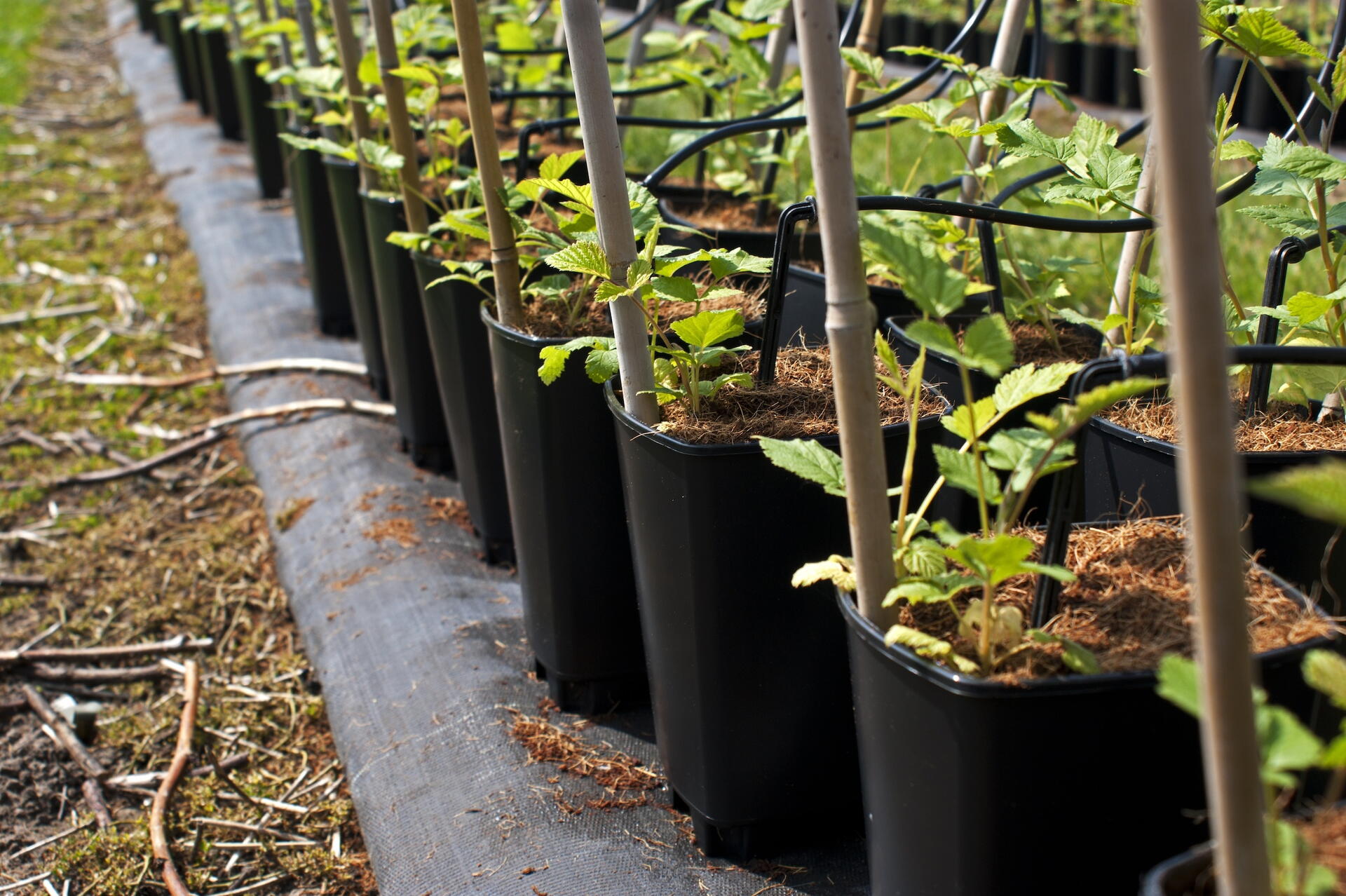
This is also a good time to install a trellis or other support system, which helps keep raspberry canes upright as they grow tall. I like to use three bamboo poles crossed at the top to create a teepee-like trellis.
Credit: Catherine Eckert
6. Watering
Container-grown raspberries need more frequent watering than plants kept in gardens.
Water your raspberries when the top 2 inches of soil feels dry to the touch. This may be daily during hot summer weather!
When watering, allow the water to run freely through the pot until it trickles out the drainage holes. Do your best to keep the plant’s leaves dry to help prevent mold and mildew.
7. Fertilizing
Feed your raspberries with a balanced fertilizer when new growth begins in spring. Follow the product label for container plants, as the amount and frequency will depend on the fertilizer you use. Avoid overfertilizing, which can encourage leafy growth at the expense of fruit.
8. Harvesting Raspberries
Summer-bearing raspberries generally produce their first crop in their second growing season. Fall-bearing varieties can produce berries in their first year, depending on when they’re planted and growing conditions.
The best time to pick raspberries is on a sunny day when they’re dry. Look for berries that are fully colored all over. Hold each berry gently and pull it away from the plant—if it’s ripe, it should come off with hardly any effort.
Don’t yank or pull hard on your raspberries when picking. If a berry is truly ripe, it will fall off easily into your hand.
9. How to Prune Raspberries in Containers
Regular pruning keeps raspberry plants from becoming overcrowded and helps them produce healthy fruit. How you prune depends on the type you’re growing.
- Summer-bearing raspberries: After harvesting, cut the canes that produced fruit down to the soil line. Leave the new, healthy canes to produce next summer’s berries.
- Fall-bearing raspberries: For the simplest approach and one fall harvest, cut all the canes down to just above the soil in late winter, before new growth begins.
Tip: Container raspberries also benefit from thinning during the growing season. Once new canes reach about 2 feet tall, remove weak or crowded growth. In a 20- to 30-gallon pot, aim to keep four to five new canes for summer-bearing varieties or five to eight for fall-bearing varieties.
10. Preparing for Winter
Raspberry plants growing in the ground can usually get through winter just fine in most places. But if you’re growing raspberries in pots, they’re a bit more delicate.
The roots can get too cold, and the pots themselves might crack if the weather gets really chilly, so you’ll need to give them some extra care. You have a few options:
- Move the pots into a spot that’s protected from the cold, like an unheated garage. Check the potting mix occasionally during winter and water lightly when needed so the roots don’t dry out completely.
- Bury the pots right in your garden for the season.
- Group them together and wrap them up with blankets or pile on some straw to keep them warm.
Common Issues
Growing raspberries in containers is easy enough for a beginner. But you may still deal with issues every once in a while:
- Poor fruiting: If your raspberry plants aren’t making many berries, it could be because they’re too hot or not getting watered regularly. Also, raspberries need insects like bees to help pollinate their flowers. You can help your plants make more fruit by planting flowers or herbs nearby to attract pollinators, and by avoiding pesticides around your raspberries.
- Pests: Tiny insects like aphids and thrips might show up on your raspberry canes. Planting strong-smelling herbs (like mint or basil) may help deter pests. Or, use your hose to give the plants a good spray and knock the bugs off.
- Mold and mildew: Crowded plants and wet foliage can encourage fungal diseases. Give raspberry canes room for air to circulate, and water at the base rather than over the leaves. Remove affected growth if disease develops. For powdery mildew, see our Powdery Mildew guide, which includes a traditional milk-spray remedy.
If you’re just starting out with growing fruits and veggies in pots, check out our Container Gardening for Beginners Guide! It’s packed with easy tips on things like watering, feeding, and picking the best containers.
Frequently Asked Questions
-
Can you grow raspberries in a pot?
Yes! Raspberries can grow in different types of containers, including terracotta pots, stone planters, and metal gardening troughs. Compact varieties like Raspberry Shortcake® and ‘September’, are great choices for small spaces.
-
What size pot do raspberries need?
For standard raspberries, choose a 20- to 30-gallon container at least 2 feet deep. Compact varieties such as ‘Raspberry Shortcake’ can grow in smaller pots, at least 16 inches wide and 12 inches deep. Always choose a container with drainage holes.
-
What is the best soil for growing raspberries in pots?
Use a rich, well-draining potting mix intended for edible plants. Avoid ordinary garden soil, which can become too dense in containers and cause drainage problems.
-
How often should you water raspberries in pots?
Water raspberries grown in pots when the top 2 inches of potting mix feels dry. Water at the base of the plant and let extra water flow out of the drainage holes.
-
Can raspberries in pots survive winter?
Yes, but their roots need extra protection from cold temperatures. Move pots into a sheltered, unheated garage; bury them in the garden for winter; or group them together and insulate the containers with straw or blankets to keep them warm!
Sources
- University of Illinois Extension — Growing Berries in Containers—The First Year
- Oregon State University Extension — Growing Raspberries in Your Home Garden




Comments