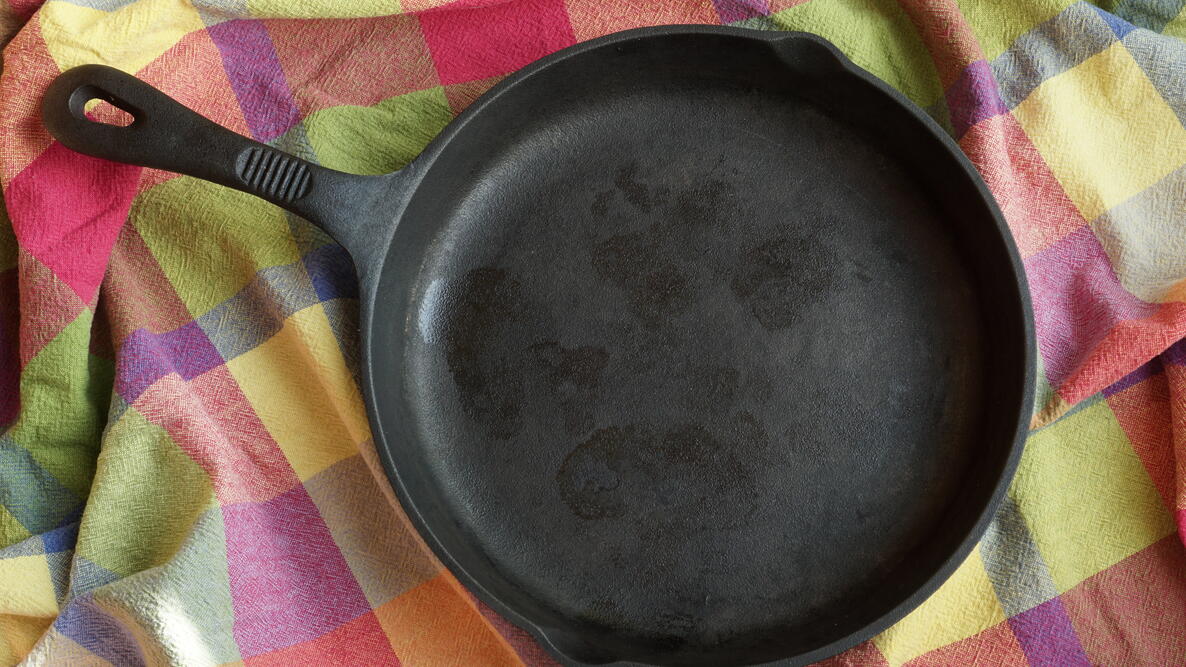
A cast-iron skillet isn’t just cookware—it’s a legacy. Whether it’s brand new or Grandma’s trusty old pan, knowing how to clean and season your cast iron the right way can make it last a lifetime (or several). Forget the myth about soap and rust—this skillet is tougher than you think. With a little care and the right oil, you’ll keep that gorgeous nonstick sheen and maybe even pass it down to the next generation of pancake flippers and cornbread bakers.
Cast iron isn’t just renowned for its durability; cooking with it also has health benefits. Research has shown that cast iron infuses food with a healthy dose of iron. And take it from me—an anemic gal—cooking on a cast-iron skillet is waaaay better than choking back liquid Geritol. It’s the most forgiving cooking utensil, able to withstand neglect and easily restored when it falls into the right hands. Anemic or not, an inexpensive and indestructible cast-iron skillet deserves a space in every cook’s cabinet.
How to Clean a Cast-Iron Skillet
First and foremost, do NOT use soap on cast-iron pans! The soap will break down the pan’s seasoning, dissolving its natural non-stick layer.
Instead, if your pan is in good shape, follow these instructions after each use:
- Wipe the pan clean with a paper towel, preferably while it’s still warm, which will make it easier to remove bits of food.
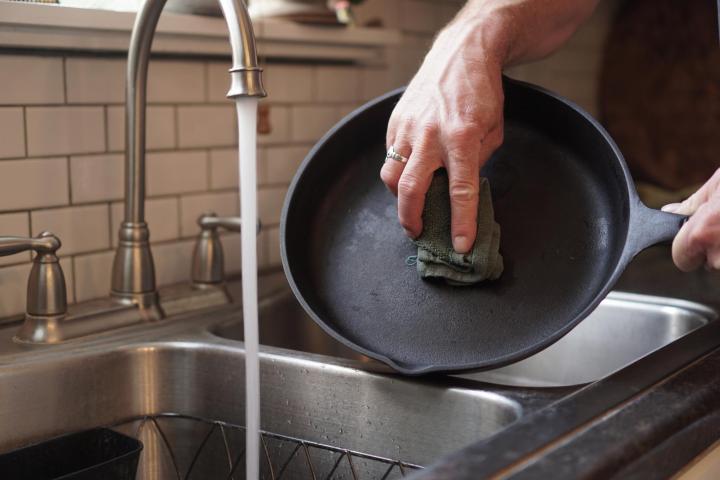
- Using a non-metal brush or non-abrasive scrubber, rinse the pan under hot water (no soap!) and give it a good scrub. Alternatively, use a small handful of coarse salt and scrub with that.
- Dry the skillet thoroughly with a cloth or paper towel—drip drying is a no-no—then heat it on a medium-low burner to evaporate any remaining moisture. (Rust will accumulate if water sits on the pan’s surface.)
- When the pan cools but is still warm to the touch, add a half teaspoon of oil (I use canola).
- Using paper towels, spread the oil around so that the interior is coated. Continue to wipe down the pan with the oiled towels until the entire surface is smooth and there are no pools. Flaxseed oil, sunflower oil, soybean oil, and corn oil will also do the trick.
How to Season a Cast-Iron Skillet
Most cast-iron pans come with a factory seasoning that improves with regular use and proper care. Well-seasoned cast-iron skillets naturally become nonstick. Buh-bye chemicals. Basically, the more you use it, the more nonstick it becomes. How does it work? When heated to its smoke point, oil or fat oxidizes and forms a Teflon-like layer that seeps into the pores of the pan, creating a slick surface known as seasoning. With repeated use, the seasoned layer builds, and less oil is needed for cooking.
Sometimes, a pan will need a bit of TLC, especially if it’s gone unused, to bring its seasoning back up to snuff. Here’s how to breathe new life into an old pan:
- Place the skillet over medium-high heat and get it good and hot.
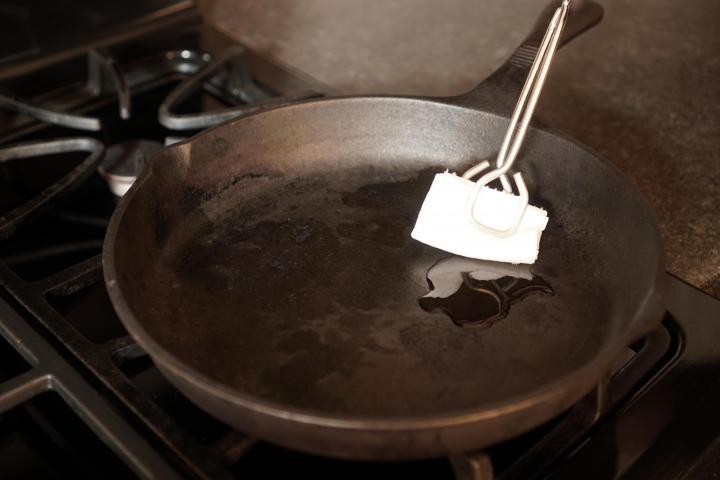
- Using tongs, dip a paper towel in two tablespoons of oil and wipe the interior until it smokes and there’s no residue. Be sure to grasp the handle with a towel or oven glove.
- Repeat the smoking process three times, allowing the pan to cool a little between each application.
Cast Iron Troubleshooting Guide
| Problem | Likely Cause | Quick Fix |
|---|---|---|
| Food is sticking to the pan | Insufficient seasoning or cooking on too low of heat | Scrub lightly, dry completely, apply a thin coat of oil, and re-season in the oven or on the stove. Always preheat your skillet before cooking. |
| Rust spots appearing | Pan was exposed to water or not dried thoroughly | Scrub rust with steel wool or coarse salt, rinse, dry, then re-season by heating with a thin layer of oil. |
| Pan looks dull or gray | Seasoning has worn away over time | Rebuild seasoning: apply oil, heat until smoking, and repeat 2–3 times. Regularly oil after cleaning. |
| Pan feels sticky or gummy | Too much oil was used when seasoning, or oil didn’t reach smoke point | Bake the skillet upside down in a 400°F oven for 1 hour to burn off excess oil. Wipe lightly with oil afterward. |
| Uneven color or patches on the surface | Uneven oil application or cleaning with soap | Strip any flaky coating, then re-season evenly with thin coats of oil. Avoid using soap. |
| Smoky or rancid smell when heating | Old or excess oil buildup | Wash with hot water and salt scrub, dry, and re-season using fresh oil. Store in a dry spot with air circulation. |
| Black residue on food | Built-up carbon from burnt oils | Gently scrub with coarse salt or a chainmail scrubber, rinse, dry, and lightly re-oil. Avoid overheating empty pans. |
| Pan feels rough or gritty | Residue from cleaning agents or rust | Scrub with coarse salt and rinse with hot water. Dry and season again with a small amount of oil. |
| Handles or exterior feel greasy | Oil buildup from seasoning | Wipe the outside clean after seasoning, and use a dry paper towel to remove excess oil while still warm. |
Frequently Asked Questions
Can you use soap on a cast-iron skillet?
It’s best to avoid soap when cleaning cast iron. Soap can strip away the pan’s natural seasoning—the nonstick coating created from baked-on oils. Instead, scrub your skillet with hot water and a stiff brush or coarse salt to remove residue.
What happens if my cast iron rusts?
Don’t panic—rust is fixable! Scrub the rusty spots with steel wool or coarse salt, rinse, and dry completely. Then re-season the skillet by applying oil and heating it until it smokes lightly. Repeat this process two or three times to rebuild the nonstick coating.
What oil should I use to season my cast-iron skillet?
Use oils with a high smoke point, such as canola, flaxseed, grapeseed, sunflower, or soybean oil. Avoid butter or olive oil—they can become sticky and create uneven seasoning.
How often should I season my cast-iron skillet?
If you cook with your skillet regularly, lightly oil it after each cleaning to maintain the seasoning. For pans that aren’t used often, re-season every few months to keep the surface smooth and rust-free.
Can you soak a cast-iron skillet in water?
No—never soak your cast iron. Extended exposure to water can cause rust. If food is stuck, boil a small amount of water in the skillet for a few minutes to loosen it instead.
How do I know if my cast iron needs to be re-seasoned?
If food starts sticking, the surface looks dull or gray, or you see rusty patches, it’s time to re-season. A well-seasoned skillet should be shiny, dark, and slick to the touch.
Is it safe to cook acidic foods in cast iron?
Occasionally, yes—but frequent cooking of acidic foods like tomatoes or vinegar-based dishes can wear down the seasoning. It’s best to use a stainless steel or enameled pan for acidic recipes.
Read more about why we love using cast iron for cooking!

More Like This




Hi, Chris- You can use lacquer thinner to remove the paint. Make sure you wear safety goggles and rubber gloves and it is a good idea to also use a ventilation mask. Once you've removed as much paint as you can and wiped it with a cloth, use a wire brush to scrape the pan.
Hi, Lynne. Some Almanac readers below recommend putting it in the oven on a self-cleaning cycle. We can't say for sure if it works, but if you can't clean your pan maybe it is worth a try.
- « Previous
- 1
- 2
- …
- 10
- Next »

Comments