Planting
When to Plant Aeonium
Spring is a good time to plant aeoniums. In mild, frost-free climates, you can plant them in fall, too. Wait until the danger of frost has passed before moving indoor plants outdoors.
Where to Plant Aeonium
Choose a bright spot indoors or a sunny to partly shaded location outdoors, with protection from strong afternoon sun in hot climates. Outdoor soil should be sandy to loamy and well-draining.
Aeoniums can grow in garden beds where winters are mild. In colder regions, keep them in pots so you can bring them indoors before cold weather arrives. If your garden soil stays wet after rain, containers are a better choice.
How to Plant Aeonium
Check the plant label for its mature spread and recommended spacing; compact varieties need much less room than branching, shrub-sized aeoniums.
- In pots. Small, young aeoniums may fit in 4- to 6-inch-diameter pots, while larger plants may need pots around 10 to 14 inches across. Choose a pot suited to the root ball rather than the plant’s age, with a little room for growth. Make sure it has drainage holes in the base, fill it with a succulent and cactus potting mix or a 1:1 mixture of standard potting mix and perlite or pumice, and plant the aeonium at the same depth it was growing in its nursery pot.
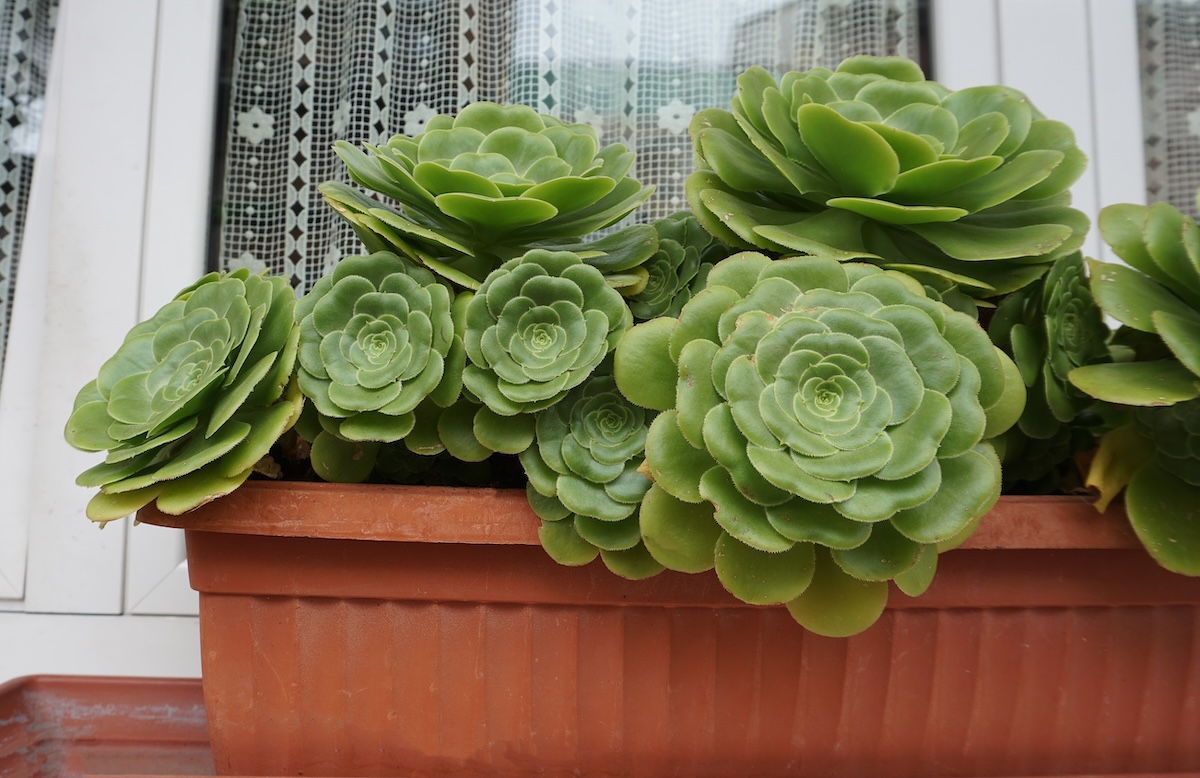
- In the garden. Aeoniums can be grown directly in garden beds, too, but the soil should be sandy to loamy and well-draining. If the planting location doesn’t drain well, consider a raised bed filled with well-draining soil or grow your aeonium in a container. Plant it at the same depth it was growing in its nursery pot, with the roots covered.
Pests and Problems
Common Problems
- White, yellow, or brown markings on upper leaves: Sunscald affects leaves most exposed to the sun. Move plants to afternoon shade and introduce stronger sunlight gradually.
- Lower leaves dropping: This can be completely normal as aeoniums age. If the upper rosettes also close during hot weather, the plant may be taking a seasonal rest. Check the soil before adding water.
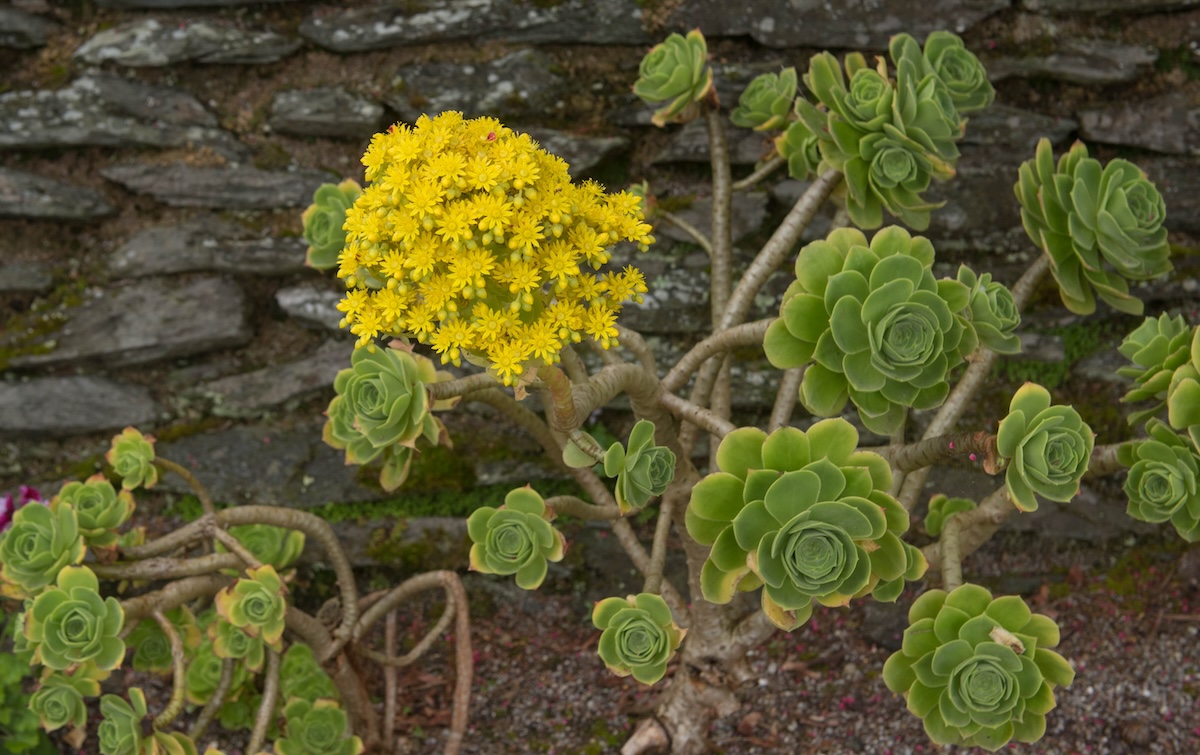
- A rosette dying after flowering: The flowering rosette—the cluster of leaves at a stem’s tip—dies afterward. On branching plants, other rosettes can keep growing. Cut away the flowering stem once it has died back.
Common Pests
Sticky leaves or visiting ants: Mealybugs, soft scale, and aphids can leave a sticky “honeydew” residue that attracts ants. Look for cottony clumps, raised bumps, or tiny insects on leaves and stems.
Move affected houseplants away from others. Wipe or rinse off small infestations. If needed, use an insecticidal soap labeled for the plant and pest, following its instructions. Test a small area first.
Plant Diseases
Wilting or yellowing leaves in wet soil: Too much water can encourage root rot. Check for dark, mushy roots. Remove damaged roots and repot salvageable plants in fresh, well-draining mix. Use a pot with drainage holes and let the soil dry between waterings.
In spring and fall, aeoniums grow a little faster and need a bit more water. Water them deeply, and only water them again when the top 1 to 2 inches of soil is dry. Let excess water drain away.
In winter, reduce watering if cool conditions and low light slow their growth. Aeoniums may continue growing in mild, bright conditions, so check the soil rather than assuming they’re dormant.
Here in Maine where the winters are brutal, I only grow aeoniums indoors as houseplants and find they do best in the bright, filtered light of my south-facing windows.
During the summer heat, it’s a good idea to position aeoniums where they receive morning sun and afternoon shade. This helps reduce heat stress and keeps them from drying out too quickly.
Aeoniums of any age should not be fertilized while they’re resting and not producing new growth!
Types
There are many species and varieties of aeoniums, with differences in color, size, and branching habit. Here are three to know:
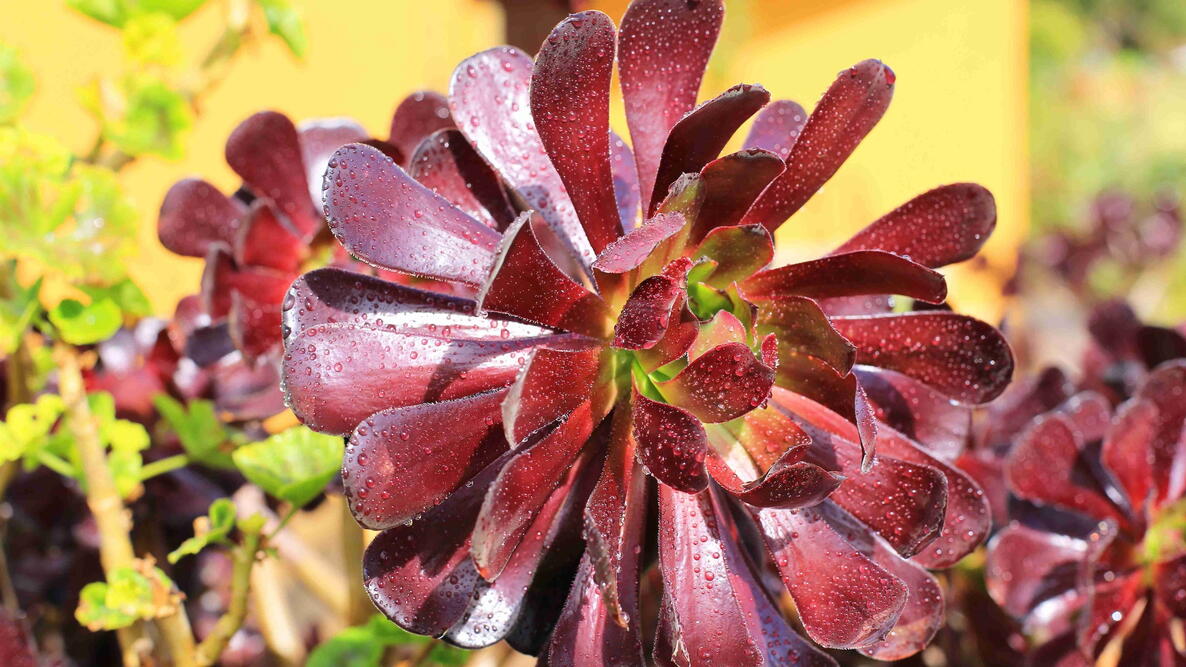
- Aeonium arboreum ‘Atropurpureum’: Growing up to 3 feet tall, ‘Atropurpureum’ grows deep, purplish-red leaves in bright light but greener leaves in shadier spots.
- Aeonium decorum: A branching aeonium, this plant grows 1 to 3 feet tall and has pink flowers and showy leaves with bright red margins.
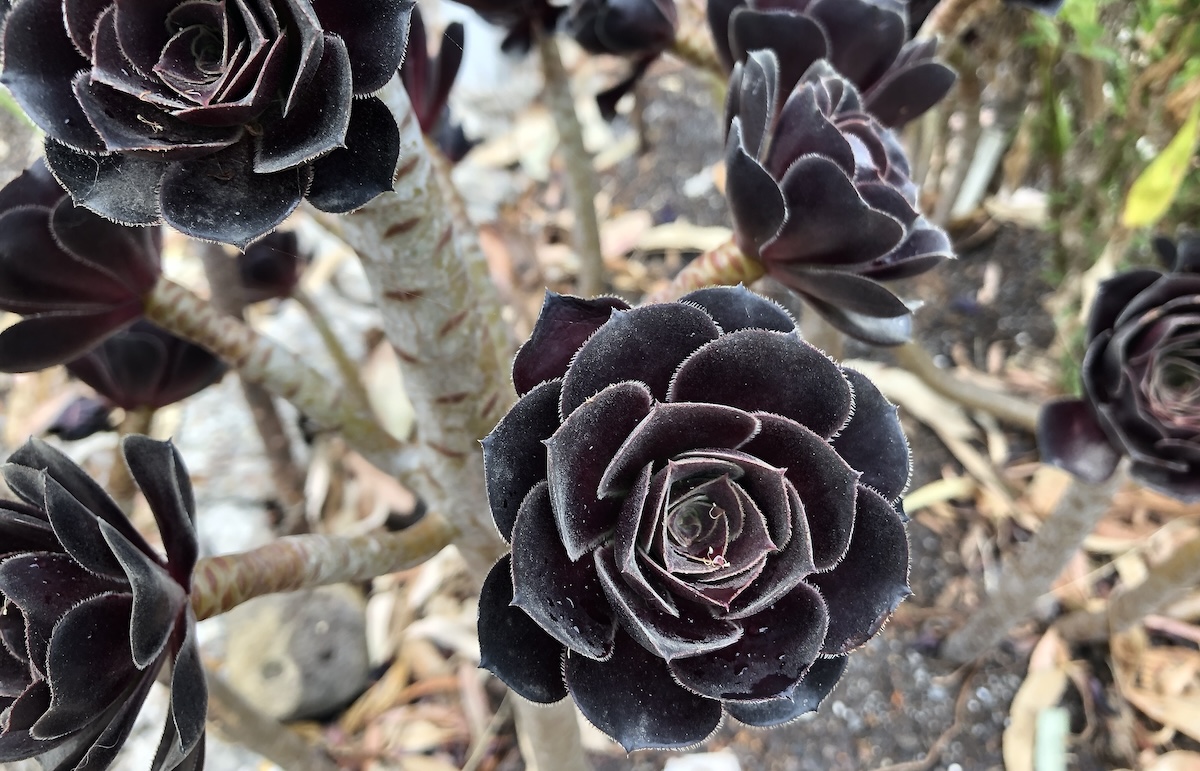
- Aeonium arboreum ‘Zwartkop’: Also known as the Black Rose aeonium, this dreamy beauty has deep purple leaves that appear nearly black in bright light!
Seasonal Care: Once they reach maturity, many aeoniums flower just once from each rosette—the cluster of leaves at the end of a stem. That rosette then dies back. On branching plants, the other rosettes can continue growing, so don’t discard the whole plant!
After the flowering stem has died back, cut it away with clean, sharp pruners, leaving healthy branches in place.
Propagation
If you’d like to create more plants, branching aeoniums can be grown from stem cuttings. In spring, cut off a healthy branch with a rosette—the cluster of leaves at its tip—using clean, sharp pruners. Let the cut end dry and seal over for several days, then plant the stem in a small pot with drainage holes and succulent potting mix. Keep it in bright, indirect light and the mix barely moist while roots develop.

More Like This

Comments