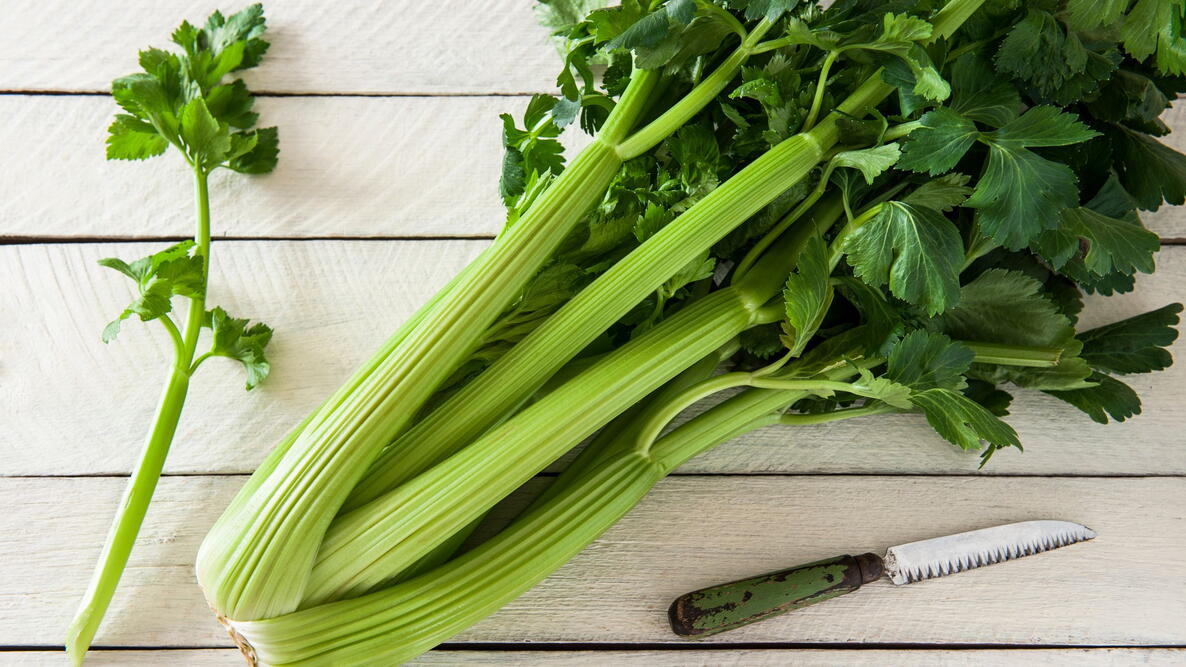
Image Credit:
Alfredo Maiquez/Shutterstock
Botanical Name
Apium graveolens
Grown as
Toxicity
Sun Exposure
Water Needs
Height
Spread
Soil pH
Special Features
Resilience
Plant Type
Growing
To grow well, celery has three critical needs:
- Cool weather; celery won’t tolerate high temperatures.
- Constant water; stalks will be small, stringy, tough, and/or hollow if they go without water.
- Soil that’s rich in organic matter and—because its roots are shallow (just a few inches deep)—fertilizer applied on top of the soil.
- Make sure to provide plenty of water during the entire growing season, especially during hot, dry weather.
- Use row covers for the first 4 to 5 weeks in order to protect from pests.
- When plants are 6 inches tall, mulch around them to keep the soil moist and roots cool.
- Side-dress with compost. Comfrey pellets are great, as are coffee grounds, tickled into the soil between plants.
- In the second and third months of growth, side-dress with 1 tablespoon of a 5-10-10 fertilizer 3 to 4 inches from each plant.
- Keep celery weed-free, but be careful when weeding, as celery has shallow roots that could easily get disturbed.
- Tie growing celery stalks together to keep them from sprawling.
- Start earthing up trenching varieties once the stems reach about a foot tall, banking the soil up by about 3 inches (8 cm) each time until you can hill up no more.
- Blanch (wrap or cover) stalks to eliminate any bitter taste and to produce pale green stalks. Use anything that will keep out light: brown bag paper or cardboard (secure with old nylon stockings, string, vegetable wires), half-gallon milk cartons (cut-out tops and bottoms), or the like. Do not cover the celery’s leaves.

Types
There are two main types of celery available:
Trenching celery needs soil mounded up against the stems as they grow to produce crisp, pale stems. To make this easier, trenching celery is typically planted into trenches, hence the name, but some gardeners aid this blanching process using cardboard tubes, pipes, or collars.
Self-blanching celery requires none of these extra steps. This makes it much easier to grow, and the stems are just as tasty!

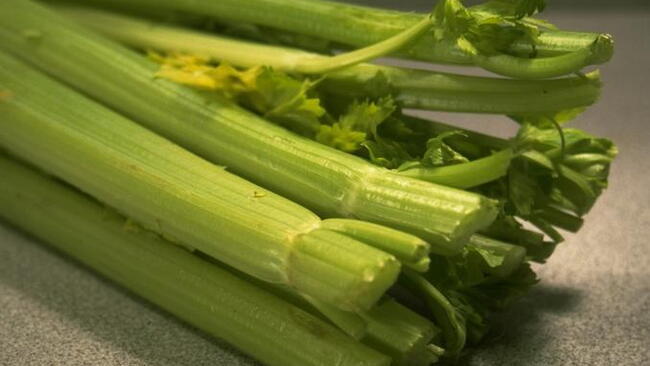
Is it a perennial or should it be replanted each season? Our second year produced nice stalks but the texture was woody - had a good taste but not very palatable.

Celery is a "biennial." It produces edible stalks in its first year and seed stalks during the second year. It has a fairly long growing season and gets harvested about 90 days after transplanting, but if the plant were left to grow for the second year and were exposed to low temperatures, it would produce a longer stem and a seed head.
Thank you for this comment. I grew a celery stalk from a store bought one last year and left it out all winter. We had a very cold winter and it stayed green all winter. This year is is full of seeds. Very bushy and pretty in my flower garden.I will let it continue to grow, and harvest the seeds and see what happens next year.
I planted celery this year in my little garden for the first time. One plant is going to seed while the others are not and I was wondering why. Now I know. Thank you.
Thanks..enjoyed reading up on celery as I am going to plant it for the first time this season :)
I type I buy is almost sweet tasting.
I usually eat the stalks raw but every once in awhile steam them and then add a bit of grapeseed oil........just wonderful
I have planted about 12 peatmoss pods with celery over a month ago and the temp is at 68 and not one has even sprouted. What am I doing wrong?
You are not necessarily doing anything wrong; celery is not an easy crop to grow. You do not indicate where you are, but a temp of 68°F seems a little high, based on our sources. You also do not mention your soil conditions; celery likes lots of organic matter, which means good compost. Peat holds moisture but also brings a certain amount of acidity, which could be too much for celery, which prefers soil of neutral pH. You might consult your local extension service for specific advice for your area. We hope this helps.
I would love to grow celery and collard greens, kale and rhubarb. But all these plants don't toleerate heat and drought well, both which we will have more of with global warming. Those climate change deniers must not be gardeners.
I am an avid gardener in an area where we have heat waves and then cool weather. I have successfully grown kale, celery, broccoli, and other plants that "don't tolerate heat and drought well". I also believe global warming is a farse. There goes your theory.
- « Previous
- 1
- 2
- …
- 10
- Next »
📣The Gardening Club Just Got Better! 3 Deliveries, 10% Store Discount, and more!

Comments