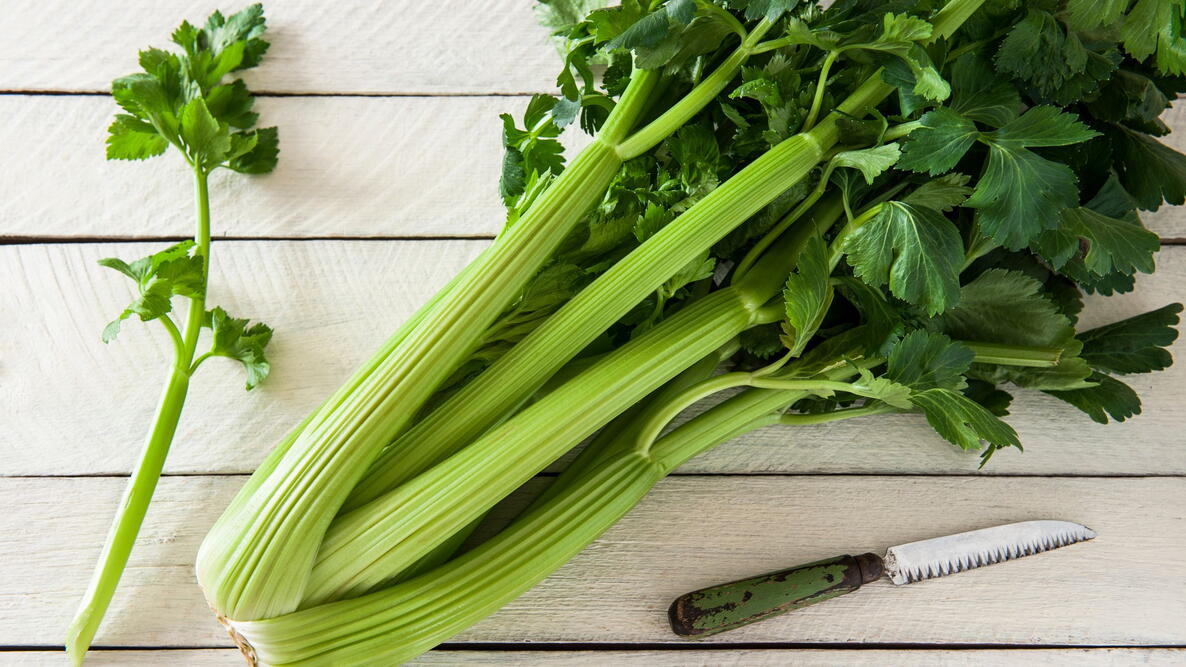
Growing
To grow well, celery has three critical needs:
- Cool weather; celery won’t tolerate high temperatures.
- Constant water; stalks will be small, stringy, tough, and/or hollow if they go without water.
- Soil that’s rich in organic matter and—because its roots are shallow (just a few inches deep)—fertilizer applied on top of the soil.
- Make sure to provide plenty of water during the entire growing season, especially during hot, dry weather.
- Use row covers for the first 4 to 5 weeks in order to protect from pests.
- When plants are 6 inches tall, mulch around them to keep the soil moist and roots cool.
- Side-dress with compost. Comfrey pellets are great, as are coffee grounds, tickled into the soil between plants.
- In the second and third months of growth, side-dress with 1 tablespoon of a 5-10-10 fertilizer 3 to 4 inches from each plant.
- Keep celery weed-free, but be careful when weeding, as celery has shallow roots that could easily get disturbed.
- Tie growing celery stalks together to keep them from sprawling.
- Start earthing up trenching varieties once the stems reach about a foot tall, banking the soil up by about 3 inches (8 cm) each time until you can hill up no more.
- Blanch (wrap or cover) stalks to eliminate any bitter taste and to produce pale green stalks. Use anything that will keep out light: brown bag paper or cardboard (secure with old nylon stockings, string, vegetable wires), half-gallon milk cartons (cut-out tops and bottoms), or the like. Do not cover the celery’s leaves.

Types
There are two main types of celery available:
Trenching celery needs soil mounded up against the stems as they grow to produce crisp, pale stems. To make this easier, trenching celery is typically planted into trenches, hence the name, but some gardeners aid this blanching process using cardboard tubes, pipes, or collars.
Self-blanching celery requires none of these extra steps. This makes it much easier to grow, and the stems are just as tasty!

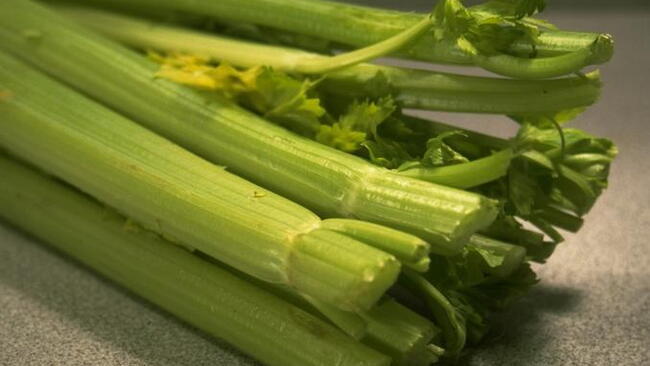
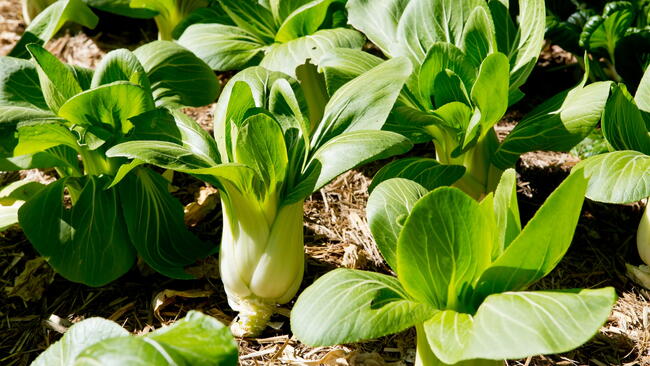
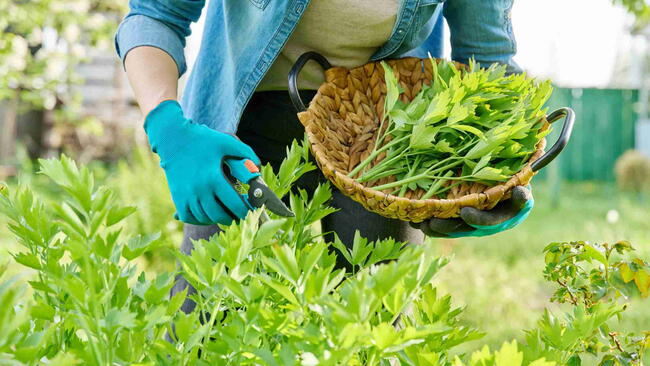

We'll be frank. Celery is one of the more difficult vegetables at home. It is a cool-season crops that prefer temperatures in the 60 to 70 degree range for best performance. At higher temperatures, celery will produce tough woody stalks. So consider your climate. Also, celery likes moist soil. Do not let the soil dry out. Moisture stress is the main cause of stringy, tough stalks. Celery also requires large amounts of fertilizer. Apply a complete fertilizer with the compost and then after transplanting, apply one half tablespoon of nitrogen fertilizer per four plants every two weeks throughout the summer. Too little fertilizer will not allow the stalks to grow tall and succulent.
Celery leaves tend to be more bitter than the stalks in general, but bitterness can be intensified by all the conditions you mentioned, including high temperatures, inconsistent moisture, and poor soil. The bitter taste also gets stronger as the plant matures, so consider harvesting the shoots when they're younger. Also look into blanching your celery before harvest—this can reduce bitterness, too. To blanch, loosely wrap the celery stalks with paper (newspaper works well) 2 to 3 weeks prior to harvesting. The stalks will lose their green color, but should also not be as bitter.
- « Previous
- 1
- 2
- …
- 10
- Next »

Comments