Image Credit:
pisitpong2017/Shutterstock
Botanical Name
Codiadeum variegatum
Toxicity
Sun Exposure
Soil pH
Bloom Time
Flower Color
Plant Type
Growing
How to Care for Croton
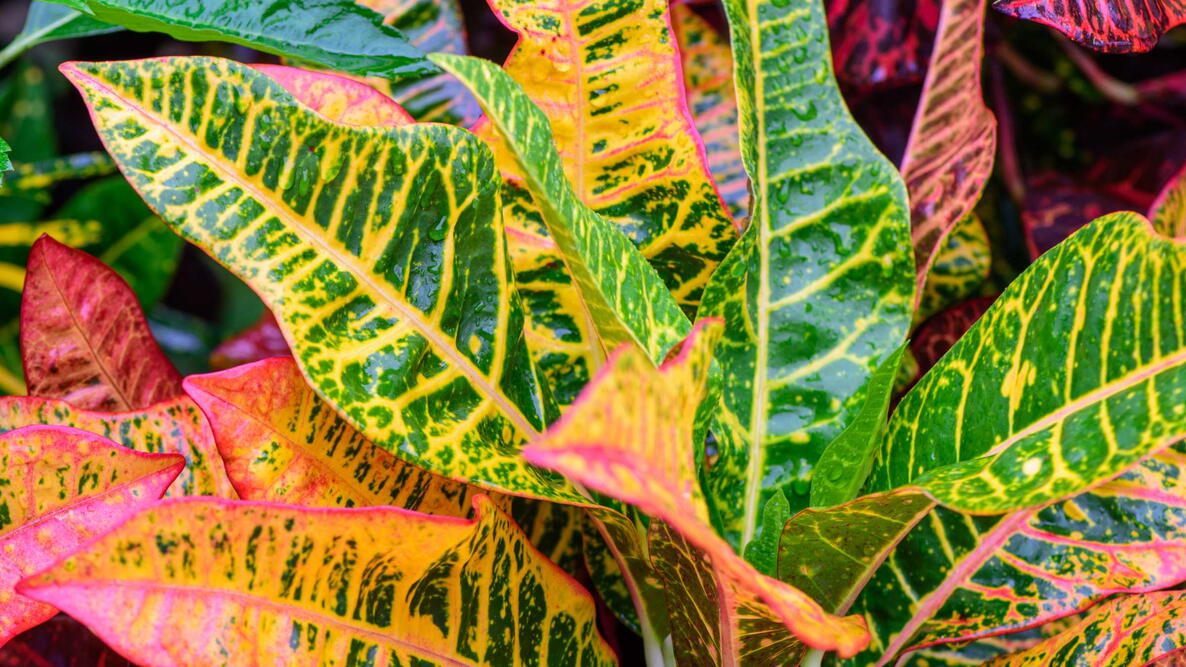
- Place croton in a sunny location such as an eastern, southern, or western window. If croton is getting too little light, its newer leaves will be less colorful.
- Keep the soil evenly moist, but let it dry out between waterings.
- If humidity is low in your home, mist around the leaves with water once a week or keep a tray of wet gravel near the plant.
- Croton leaves are dust magnets. Gently wipe the leaves with a moist cloth twice a month to keep them clean and dust-free.
- Fertilize the plant in spring and summer while the plant is actively growing. In fall and winter, fertilize more sparingly or refrain from fertilizing altogether.
- New croton plants can be started with 4- to 6-inch stem cuttings. Remove the bottom leaves and place the cutting in a glass of water. After roots have formed, plant them in a small pot.
- Repot the plant in the spring if it has grown too large for its current pot.
Types
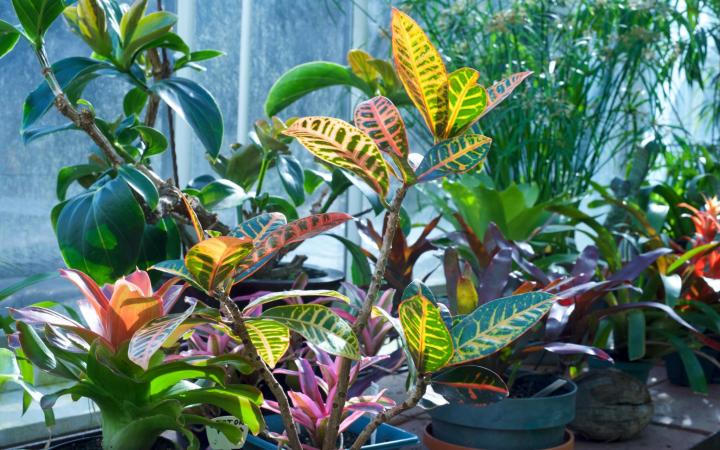
- ‘Petra’ is a popular cultivar. It has green leaves with red, orange, and yellow veins.
- ‘Gold Star’ has green leaves that are splashed with bright gold “stars.”
- ‘Eleanor Roosevelt’ has skinny leaves that range in color from burgundy to lime green. The leaves are mottled with bright yellow as if they were spray painted.
- ‘Oakleaf’ has oak leaf–shaped dark green or bronze leaves with veins in yellow, orange, and red.

More Like This



📣The Gardening Club Just Got Better! 3 Deliveries, 10% Store Discount, and more!

Comments