Types
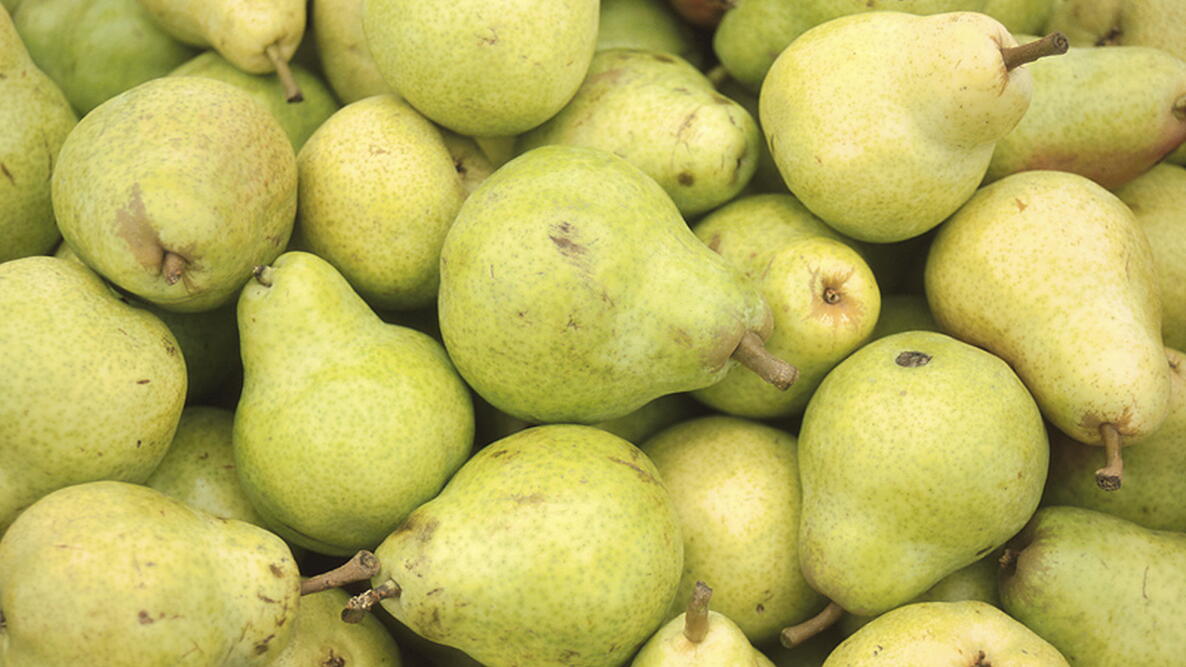
- ‘Bartlett’, which is the standard choice for pear trees. This tree type is average-size and produces medium to large fruits. These pears ripen to a yellow color. However, this variety is very vulnerable to fire blight.
- ‘Kieffer’, which is resistant to fire blight. This type produces medium fruit and can be used in canning.
- ‘Anjou’, which produces light-green fruit with a sweet flavor. This type is a good choice for late-blooming pears. Good for canning and fresh use. This type can store for up to 6 months with little loss in quality.

Comments

If it's not a pollination problem then maybe you have too many pears on your tree. Excessive fruit compete with each other and remain small. Pears produce a cluster of flowers and fruit from each bud. When fruit starts to develop thin to about 1 fruit per bud and about 6 inches between fruit. Your tree will also benefit from some pruning in late winter.
Here are a few thoughts to get you started:
First of all, an overgrown older pear tree can be renovated with selective pruning. Here is a good fact sheet on pruning a mature pear tree: http://ohioline.osu.edu/hyg-fact/1000/1150.html
Also, you need to test your soil to make sure the soil continues to be fertile; sometimes nitrogen needs to be added on an annual basis. Contact your local county Extension office for a free (or low-cost) soil testing kit.
When the tree starts to develop small fruits, you'll want to thin the pears so that they don't weight down the tree (and cause broken limbs or damage). We think to one fruit per cluster or eight inches between fruits on any branch. This will improve your harvest and size.
Finally, you'll need to implement a pest management program. Pear trees need pesticide applications at different points during the season. Also, keep the area near your pear tree free from debris; promptly remove fallen fruit and leaves.
As a next step, we recommend that you contact your local cooperative extension as pesticide programs vary state-to-state and are often changing.
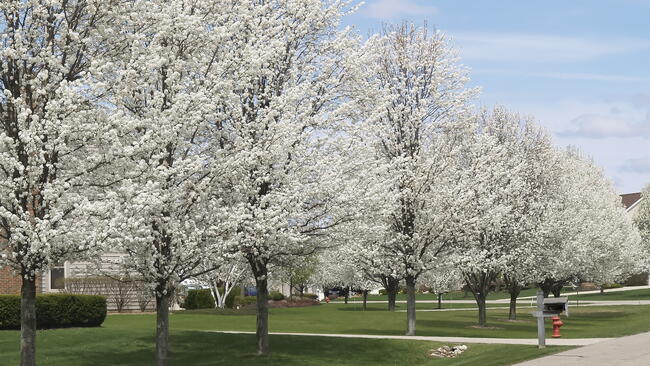
The most common reason for flowering pear trees to have fruit failure is lack of pollinating. Pears need pollinators, i.e. bees. Do you see lots of bees around the flowers?

Most likely, undeveloped fruit is due to lack of pollination from a shortage of bees.