Planting
When to Plant Phlox
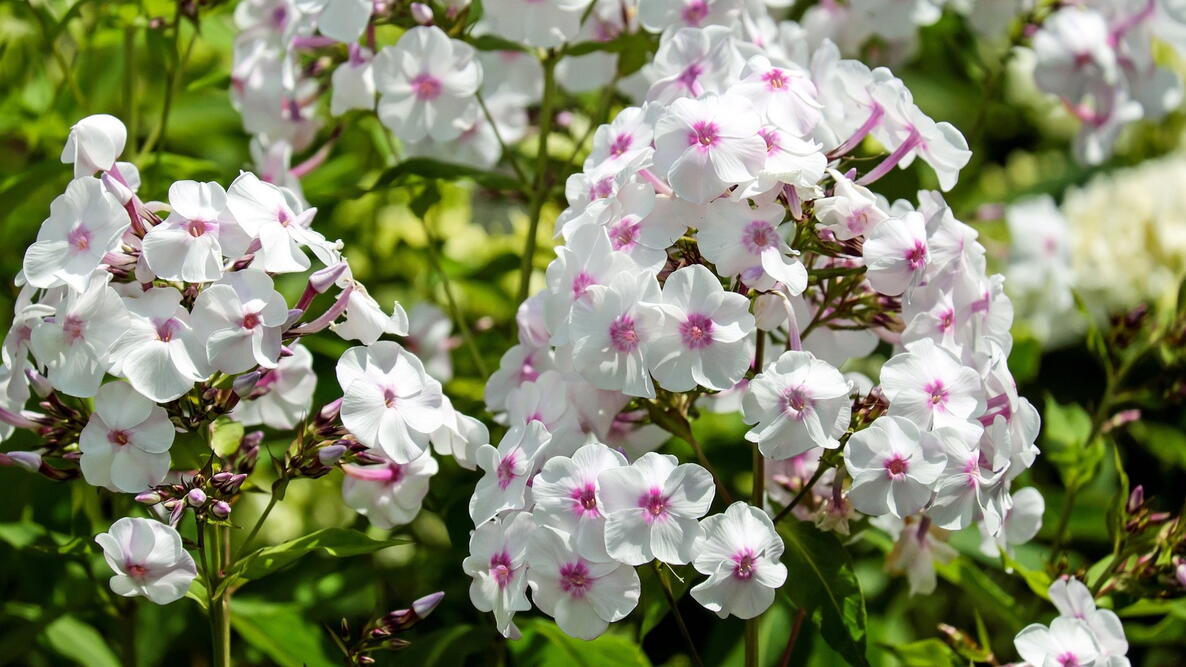
Plant phlox in the spring after the threat of frost has passed, or plant in the fall at least a month before your first frost.
Where to Plant Phlox
Because there are so many different types of phlox, sunlight requirements vary. Tall garden phlox do best in full sun, while woodland species thrive in partial shade.
In general, phlox prefer soil that is nutrient-rich and evenly moist. They do not like to sit in wet soil, however. Use a garden fork or tiller to prepare your garden bed prior to planting. Loosen the soil to about 12 to 15 inches deep, then mix in a 2- to 4-inch layer of compost to improve soil consistency and fertility.
How to Plant Phlox
- It is easier to grow phlox from cuttings/transplants than from seeds, although established plants will readily spread by seed in the garden.
- Space plants according to their mature size.
- If you are transplanting a plant from a pot, dig a hole about twice the size of the pot’s diameter and place the plant so that the top of the root ball is even with the soil’s surface. Fill in around the root ball, and remember to water it thoroughly.
Types
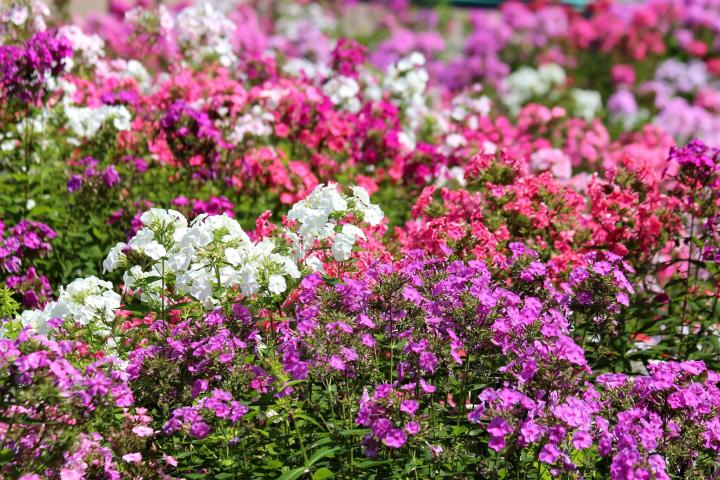
These perennials sport copious star-shaped, colorful flowers from spring through summer, depending on the variety. Because there are so many types (many of which are native to North America), you can find a phlox for almost any garden. Truly, their versatility can’t be overstated.
- Low-growing creeping phlox works great as ground cover in sunny yards.
- Ankle-high woodland phlox is perfect for dappled, shady beds.
- Medium-height garden phlox is often the “backbone” of the perennial garden, providing a layer of color midway through the garden and filling in gaps.
- Tall garden phlox is excellent as a colorful backdrop, with large, often-fragrant flower clusters.

Comments

It's hard to tell what caused the plants to die. There are three common diseases of phlox. Oedema causes rusty blisters on leaves and petals. Parasitic nematodes (roundworms) turn foliage and stems brown and mottled. Powdery mildew creates a dusty white covering on leaves, stems and flowers.
I planted phlox [orange perfection and Neon] in March. Now it's May 30. I don't see any thing coming from ground. I got them from Costco and I live in Northern Virginia. I noticed that the lot we moved into has lot of clay. Is the phlox dead by now?
Hi Anju,
The phlox should be growing by now. Are the plants brown with now green showing? If you decide to replant amend the soil with compost and a bit of sand for better drainage.
You can cut the phlox back for bushier growth. Early in the season May/early June cut about half off. If you want to experiment cut some less and some more to see how high they will grow.
Good for you! Phlox are so pretty! A lot of this has to do with what type of phlox, where you are, and how much salt we are actually talking about, but in general most phloxes are at least moderately salt tolerant. We have about 15 feet of creeping phlox along our New Hampshire uphill (well, from the bottom) driveway, the bottom end of which is about 8 feet from the road. Over the course of the winter, we shovel and/or snow blow at least a moderate amount of road salt on the lower part of the phlox bed, and it never seems to be any the worse for wear. Give your plants some help. Make sure the bed is well drained to make it easier for any salt to leach through and not hang around. Ask the maintenance men to shovel in the other direction if there’s salt around—maybe bribe them with a muffin a month or whatever? If you foresee a period of above-freezing temps with at least some sun, you can wash salt off your phlox, too—that can be of help. Finally, consider doing a little test: Cover a small part for the winter and see if it makes any difference. Then you’ll know what to do the next year. Good luck!
- « Previous
- 1
- 2
- …
- 10
- Next »

You can still plant your phlox. It will likely grow new stems from the roots.
You can also try to root the broken stem. Shorten the stem to about 3 to 6 inches long with 2 to 6 leaf nodes. Cut the stem with a sharp knife at an angle just below a leaf node. Remove flowers, buds and lower leaves. Plant the cutting in a pot with equal parts moist coarse sand and vermiculite or perlite. Make sure the lowest leaf node just above the surface.