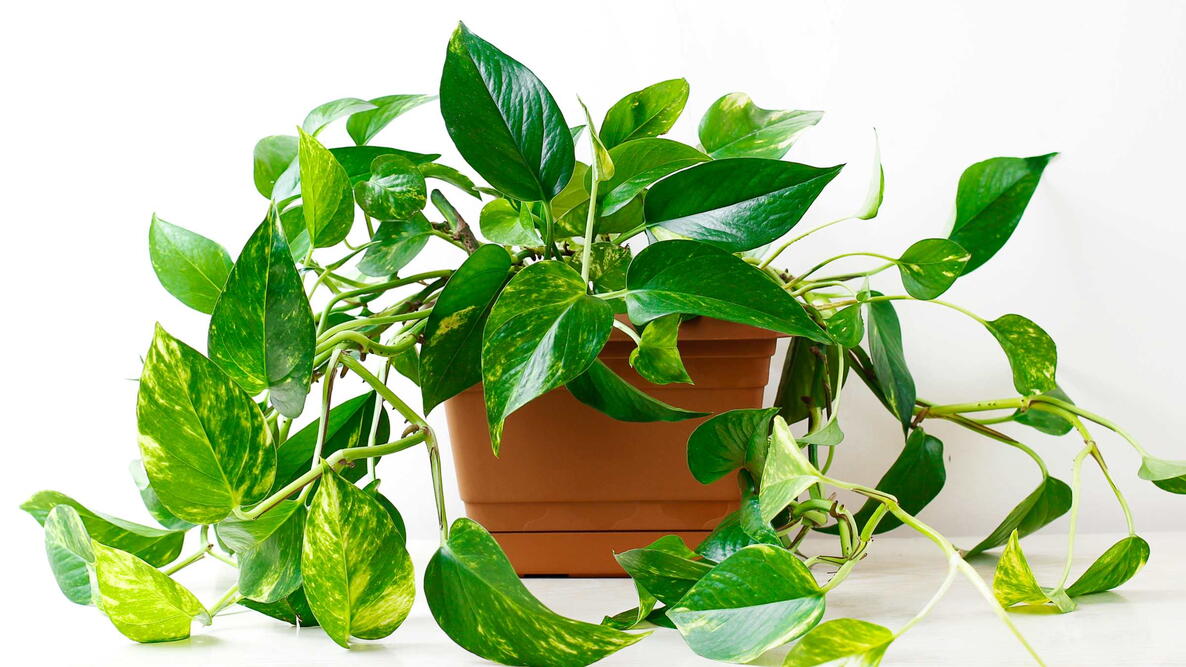
Image Credit:
usmee/Shutterstock
Planting
Potting Pothos Plants
- Choose a pot with a drainage hole in the bottom. Pothos plants do not like to sit in wet soil; their roots will rot.
- Plant pothos in a general well-draining potting mix (or a soilless mix). If you have it on hand, feel free to mix in a few handfuls of perlite or coco coir to increase the drainage capacity of your potting mix.
- Pothos does well in a hanging basket to show off the vines or in a regular pot on a plant stand. They can be allowed to grow up walls, though their aerial roots—which they use to attach themselves to surfaces like trees or other vertical structures—can strip paint, so keep an eye on where their vines are growing.

Types
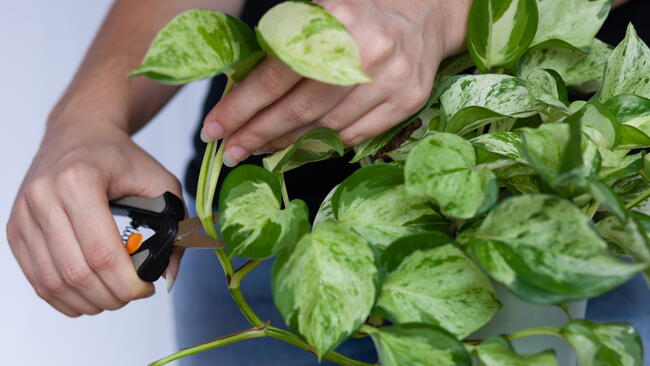
- Epipremnum aureum ‘Marble Queen’ is one of the most common pothos varieties today. It has smooth green leaves variegated with white and gray.
- E. aureum ‘Golden Pothos’ has dark green heart-shaped leaves with white or yellow variegation.
- E. aureum ‘Jade Pothos’ is all green with no variegation.
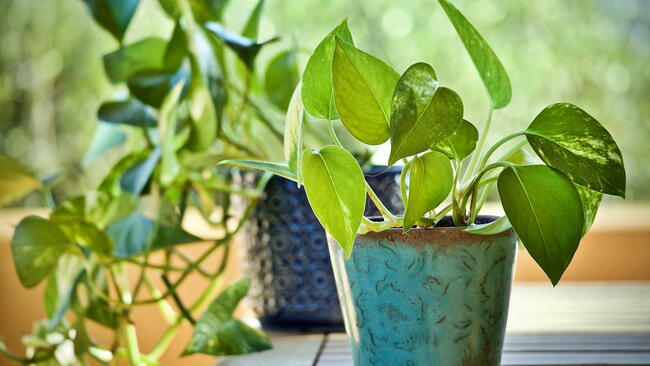
- E. aureum ’Neon’ has showy, bright, light-green leaves.

More Like This

📣The Gardening Club Just Got Better! 3 Deliveries, 10% Store Discount, and more!

Comments