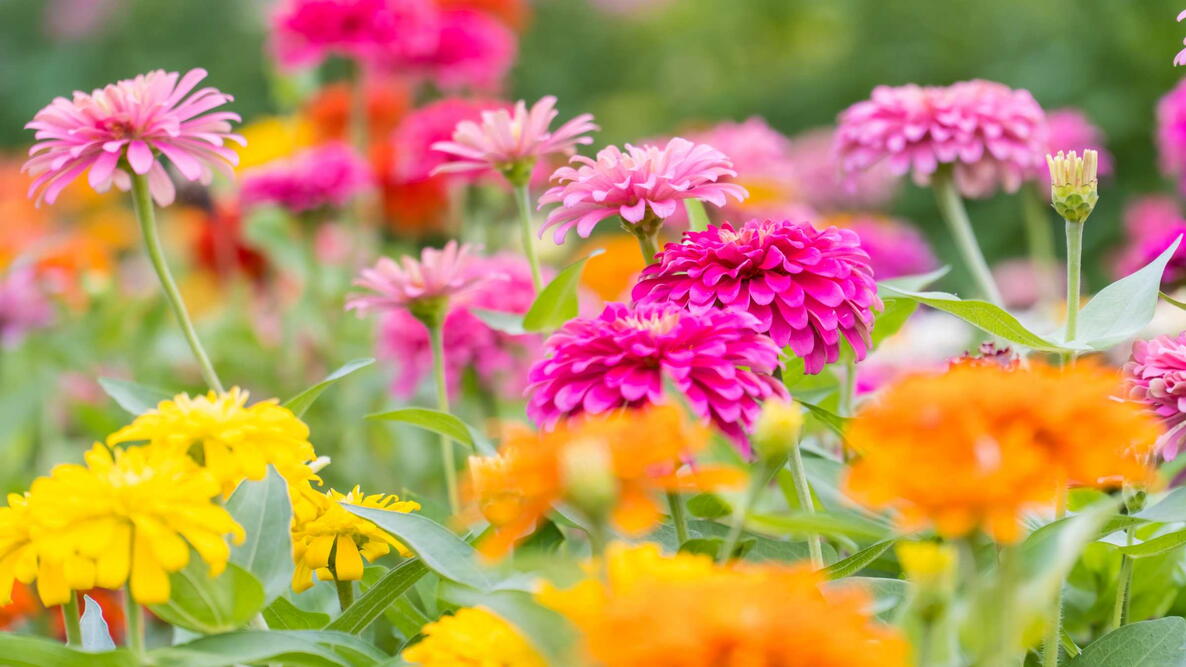
Caption
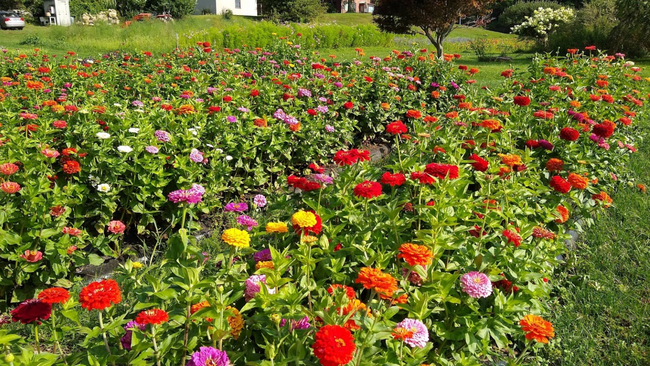
Zinnias bloom nonstop from summer to frost in bright, cheerful colors.
Looking to add a punch of color to your garden with zero fuss? Zinnias are fast-growing annual flowers that thrive in full sun and bloom nonstop from summer to frost. In this guide, you’ll learn when to plant, how to grow, and how to keep them blooming beautifully all season long.
Zinnias are often the first flower beginners grow—and they rarely disappoint. Easy, colorful, and generous, they’re also among the very best flowers for cutting and filling summer bouquets.
Most varieties grow 1 to 3 feet tall, depending on the type, and branch freely once established. Bloom size and form vary widely—from simple daisy shapes to full, dahlia-like doubles—but all benefit from full sun, warm soil, and good spacing for airflow.

Planting
When to Plant Zinnias
Zinnias are true heat lovers. Do not plant until all danger of frost has passed in your area. Use the Almanac frost date tool to determine your average last frost date.
For best results, wait an additional 1 to 2 weeks after your last frost date so the soil has time to warm. Zinnias germinate and grow best when soil temperatures are consistently around 70°F. Planting into cool soil often leads to stalled growth or seed rot.
There is no advantage to rushing the season—once warm weather settles in, zinnias grow quickly and bloom all summer.
Where to Plant Zinnias
Choose a location with full sun—at least 6 to 8 hours of direct sunlight daily. The more sun they receive, the stronger the stems and the more abundant the blooms.
Good airflow is essential. Avoid tight planting areas or spots where humidity lingers, as crowded conditions increase the risk of mildew.
Zinnias perform well in garden beds, borders, cutting gardens, and large containers—as long as drainage is good.
How to Plant Zinnias
Zinnias are best grown from seed. They germinate quickly and generally do not transplant well once established, so direct sowing outdoors into warm garden soil is the simplest and strongest method. Do not use nursery plants.
Zinnias are not heavy feeders, but healthy soil makes all the difference for strong stems and abundant blooms. Prepare the soil before sowing. Simply work some organic matter, such as compost, into the bed before planting to support strong stems and abundant blooms. I use diluted organic fertilizer, such as fish emulsion, at planting time.
- Sow seeds about 1/4 inch deep in warm soil.
- Space plants about 12 inches apart in home gardens to encourage branching and airflow.
- Water gently after sowing and keep the soil lightly moist until the seeds sprout.
Spacing is often the number one issue. In my own garden, I prefer a full foot between plants so they have room to breathe, stretch, and branch properly.
Seeds typically germinate in 4 to 7 days under warm conditions.

Types
Zinnias come in three main bloom styles: single (daisy-like), semi-double, and fully double or dahlia-like. All are easy to grow when planted in warm soil and given full sun.
If your flowers don’t look like the dramatic, layered blooms you see online, it may be the variety. Most garden-center seed packets contain simple, single-flowered types, while fuller cutting varieties often come from online seed companies.
Compact varieties handle wind and heavy rain better, while taller types may need staking. In humid climates, look for varieties bred for improved resistance to mildew.
Wit and Wisdom
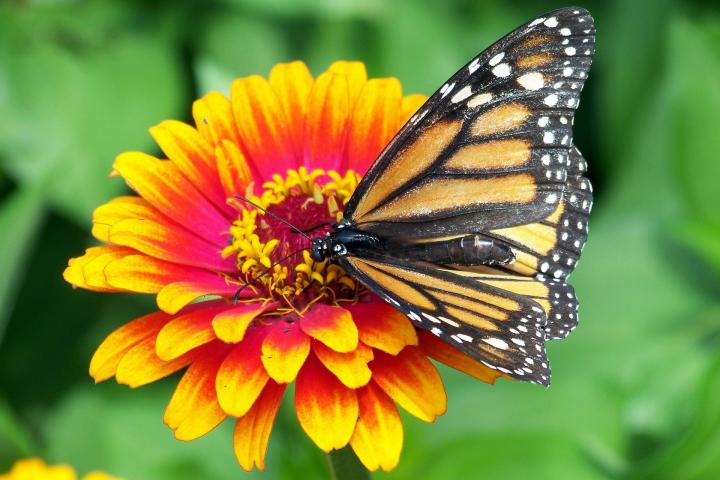
- Butterflies flock to zinnias, making them one of the easiest ways to add pollinator life to a sunny bed.
- Zinnias are said to symbolize thoughts of absent friends and lasting affection — fitting for a flower that keeps blooming all summer long. Learn about more flower meanings here.
- Zinnias were the first flowers to successfully bloom in space (aboard the International Space Station)! Despite battling mold from high humidity, astronauts carefully adjusted their care—and the plants pulled through.

More Like This
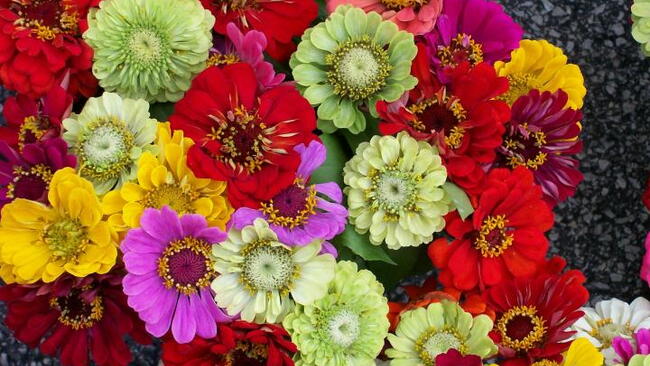

There are many varieties of medium-size zinnias that are still tall enough for cutting flowers. "Cut and Come Again" is a popular variety. "Jazzy Mix" is pretty. "Candy Cane Mix" is something different. To have bushier-shaped zinnia plants, you need to pinch off an inch or so from the tips of the main stems while the plant is still young.
Another reader, below, was attempting to grow zinnias in winter, too. As George responds there, you're not going to have a whole lot of luck indoors, even with a grow light. They are bound to be spindly and generally weak specimens. And that's even if you have proper pH and soil, light, heat, etc. (see above; do you have all the recommended basic growing conditions?).
Zinnias are a sun-loving summer annual. If you are starting them for summer planting, you may be just a little early (you do not say where you are). If you can keep them going until your area is consistently warm, you might be able to transplant them; if you do, make sure you minimize the disturbance to the roots. Zinnias generally prefer to be sown: grown from seed in soil in the ground or in pot.
- « Previous
- 1
- 2
- …
- 10
- Next »

Comments