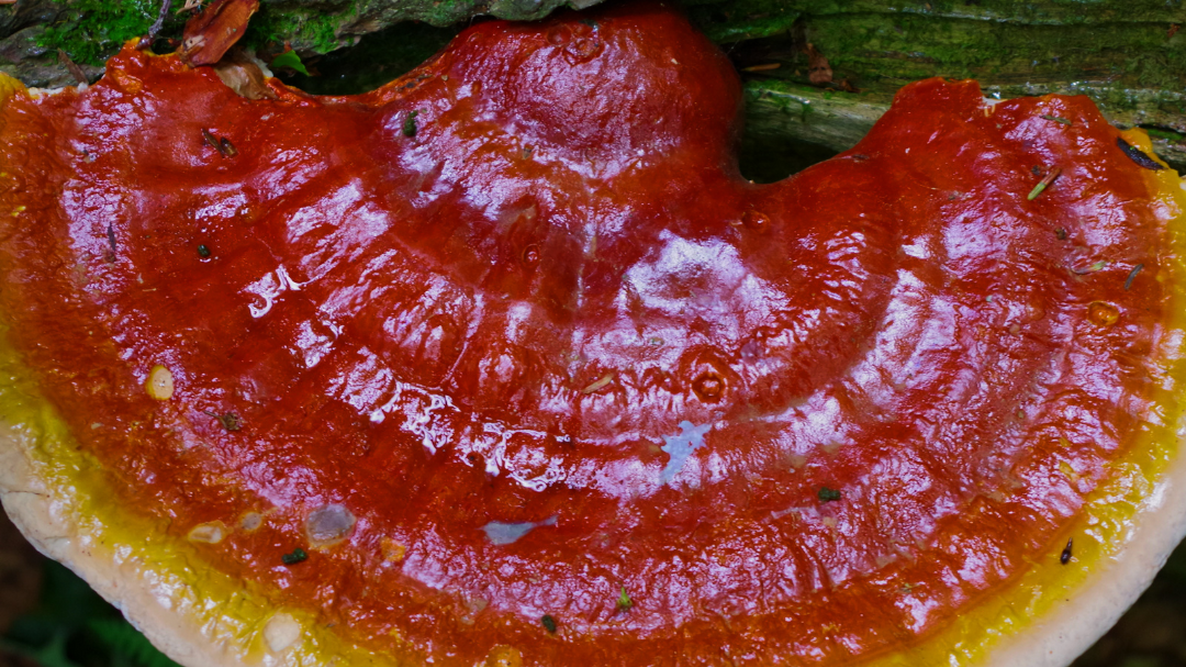
Ready to start the new year with a boost for your mind, body, and spirit? Enter Reishi, the “mushroom of immortality” revered by emperors, monks, and herbalists alike. This ancient medicinal fungus is making a comeback—and for good reason. From stress relief and immune support to cardiovascular health, reishi has a lot to offer. Read on to learn how to forage, dry, and brew your own reishi tea to sip your way to wellness.
What Are Reishi Mushrooms?
The reishi mushroom is a very well-known herbal remedy in Asian culture, with a recorded history with humans that spans thousands of years.
In 2011, I had the honor of studying in person with Ron Teeguarden of Dragon Herbs, who talked about the deep relationship the Chinese culture has with reishi and how centuries of Chinese use and record-keeping have helped us understand well the benefits of using this mushroom.

Emperors in China revered this mushroom so deeply that depictions of the mushroom can be found on paintings of their robes and in carvings on the throne. It was known that reishi offered strength, longevity, and spiritual connection—so much so that the mushroom was elevated to mythical status. Ling Zhi, reishi’s Chinese name, translates to “spirit plant.” Reishi was known to be the herb of longevity.
We are now seeing a comeback of this love and reverence for reishi (along with medicinal mushrooms as a whole) as interest in nature’s medicine expands through human consciousness yet again.
Today, reishi mushrooms can be found in different formats (from powders to capsules) across the country, from natural health stores to big box stores. You can even buy mushroom plug spawn from a seed catalog to grow yourself.
The Medicinal Benefits of Reishi
- Clinical Herbalist, Terri Willard, says that reishi has an “entourage” effect, meaning it can work on many different areas of the body simultaneously. This speaks to its abilities as an adaptogen. Mild yet accumulative, reishi supports the adrenals and can help relieve stress. (David Winston, Adaptogens).
- Ron Teeguarden highlights in his book, The Ancient Wisdom of Chinese Tonic Herbs, that reishi’s ability to support the spirit is great. Hermits, monks, and spiritual seekers throughout Asia used this herb to help calm the mind, ease tension, strengthen the nerves, improve memory, and even help build wisdom. Reishi truly is an herb that can help improve quality of life.
- As an immunomodulator, reishi is capable of strengthening the immune system as well as down-regulating the overactivity of the immune system, such as with autoimmune disease.
- Reishi helps to support cardiovascular function. Regular use helps lower blood pressure and lower levels of cholesterol.
- Reishi also offers anti-inflammatory benefits as well as liver support and antiviral activity.
- Reishi can be beneficial for allergies such as hay fever, hives, and even bronchial asthma.
See three more ways to boost your immune system naturally.
Foraging Reishi Mushrooms
Deep in a valley of the Blue Ridge Mountains, with the rush of a wild stream at my feet, I met reishi mushroom for the first time in its wild habitat. For years, I had been using reishi to support my health and that of my family, and at this moment, I felt such gratitude for meeting it in this quiet forest and witnessing this mushroom in all her majestic glory.
From that moment years ago, foraging for reishi has become a favorite hobby of mine. I trek into the temperate rainforest of Western North Carolina and harvest this medicine for myself and our apothecary customers at Wild Moon Acres.
Where to Find Reishi Mushrooms
You can find varieties of reishi mushrooms growing across the world—in Asia, Europe, North America, and the Amazon rainforest. Depending on the variety of reishi and the area of the world, it can be found growing on oak, maple, and eastern hemlock.
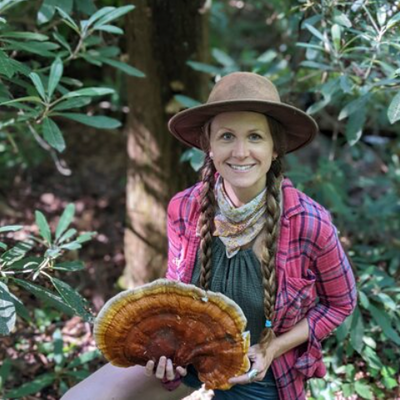
I have experience harvesting the Ganoderma tsugae variety that grows on the eastern hemlock in the Southeast United States. They can grow incredibly large, some close to 2 feet wide.

Reishi will flush in late spring to early summer, growing out of the tree like a shelf. This scene always reminds me of Alice in Wonderland and never ceases to stop me in my tracks in wonder and gratitude. As with most mushrooms, reishi enjoys cool, dark, and humid climates under the shade of trees; they prefer temperatures between 55° and 75°F.
Harvesting Reishi
The reishi mushroom is brightly colored with a shiny surface. They come in hues of red, maroon, brown, and even some orange and yellow, depending on the stage of growth. They emerge with a knobby, bright cap, with a white, tightly-pored surface beneath.
As with all wild food and medicine I harvest, I take my time. I like to leave enough for the animals and insects and for the mushrooms to spore and come back again and again. I have left many reishi to spore. Often, where you find one, you will find many in the area. I have seen trunks with 20 to 30 reishi growing. What a blessing of abundance! I leave plenty for the forest and give thanks as I fill my foraging basket.

One of the beautiful things about reishi is that it is a fast grower, compared to a fellow medicinal mushroom, Chaga. Reishi will come back year after year if allowed to spore and spread.
Drying Reishi Mushrooms
I like to slice my reishi as soon as I get it home. The longer you wait, the harder it becomes to slice. It is helpful to have a large, very sharp knife for this process. I like to lay the reishi slices out in the sunshine to dry for a day, to soak in the Sun’s rays and energy. I will then finish the dehydration in either a dehydrator or in the oven on the lowest setting.
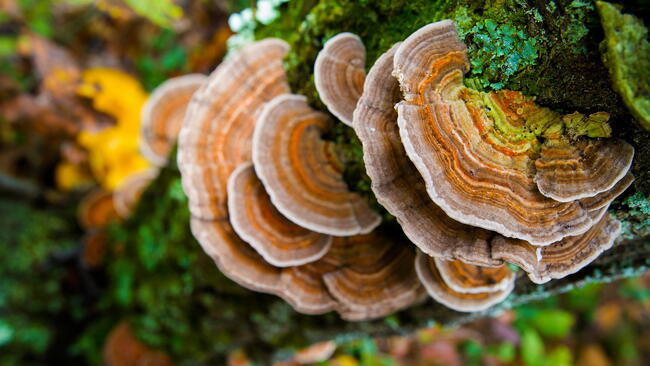
I take the extra step of putting the dried reishi into ziplock bags and then into the freezer for 3 days. I was told by a fellow reishi hunter that freezing the dried reishi for 3 days kills any remaining insect eggs in the mushroom that can hatch and slowly eat away the mushroom. I have had this happen to my Turkey Tail in the past. reishi is a food and medicine not just for humans. So far, the freezing trick has worked!


How to Use Reishi
My favorite way to use reishi is to make an herbal decoction with the dried mushroom or, in our house, a “mushroom brew.” I will add one or two large slices of reishi into 6 to 8 cups of water in my glass or ceramic pot and simmer for 45 minutes up to 2 hours. The long simmer allows the mushroom’s water-soluble properties to slowly infuse into the water, creating a medicinal beverage. I often add a bit of cinnamon, clove, and perhaps some star anise to flavor the brew. When making a brew like this, you can add a variety of medicinal mushrooms or medicinal roots. I like to drink 3 to 4 cups per day for the best results.
I then cool and strain the liquid and then refrigerate. I teach my students in my Medicine Woman program that you can use this medicinal brew to add to your daily water or to cook with. Our medicine is our food, and our food is our medicine.
I like to add the brew to my liquid when making rice, soups, or even sautéing veggies. You can add a brew like this to the water when making oatmeal or even a smoothie.
Reishi can also be used as a tincture, if it is preserved in a blend of alcohol and water. This can be a much easier way to use reishi as it doesn’t require any decocting.

Reishi is an herb that needs to be used regularly. The benefits come from a cumulative effect on the body. I use reishi every day, taking breaks occasionally. Even with herbs like reishi, it is important to give the body a break every once in a while to allow the body to “reset,” if you will.
The good news is that reishi is a very safe herb. Some folks with mushroom allergies could have issues. There have been some reports of people experiencing sleeplessness when taking large amounts of this herb.
Enjoy learning about Reishi? Discover another medicinal mushroom, Turkey Tail.
Frequently Asked Questions
What are Reishi mushrooms used for?
Reishi mushrooms are used as a medicinal mushroom to support the immune system, reduce stress, aid cardiovascular health, and provide anti-inflammatory benefits.
Can I eat Reishi mushrooms raw?
Reishi is very tough and bitter, so it’s typically not eaten raw. It is best consumed as a tea, decoction, tincture, or powder.
How do I make Reishi tea or a mushroom brew?
Simmer sliced dried reishi in water for 45 minutes to 2 hours. You can add spices like cinnamon, clove, or star anise for flavor. Strain and drink or use in cooking.
Where can I find Reishi mushrooms?
Reishi grows worldwide, especially in Asia, North America, and Europe. In the U.S., Ganoderma tsugae grows on eastern hemlock trees in the Southeast.
Can I grow Reishi mushrooms at home?
Yes! Reishi can be grown indoors using mushroom plug spawn or on logs outdoors in shady, humid environments.
Are Reishi mushrooms safe?
Reishi is generally safe for most people. Some may experience mild side effects, and those with mushroom allergies should avoid them. Consult a healthcare provider before use.
What is the best way to store Reishi mushrooms?
After drying, store reishi in an airtight container. For extra protection, freeze dried slices for 3 days to kill any insect eggs.
How often should I take Reishi?
Reishi is most effective when used regularly. Many take it daily in tea or as a tincture, with occasional breaks to allow the body to “reset.”
Note: I am an herbalist, not a medical doctor, and this is not medical advice. With any new herb, it is a good idea to check with your healthcare provider before adding it to your life. It is possible to be allergic to any herb. Listen to your body and only take something if it feels good to you. You are the #1 expert of your own body.
More Like This


Comments