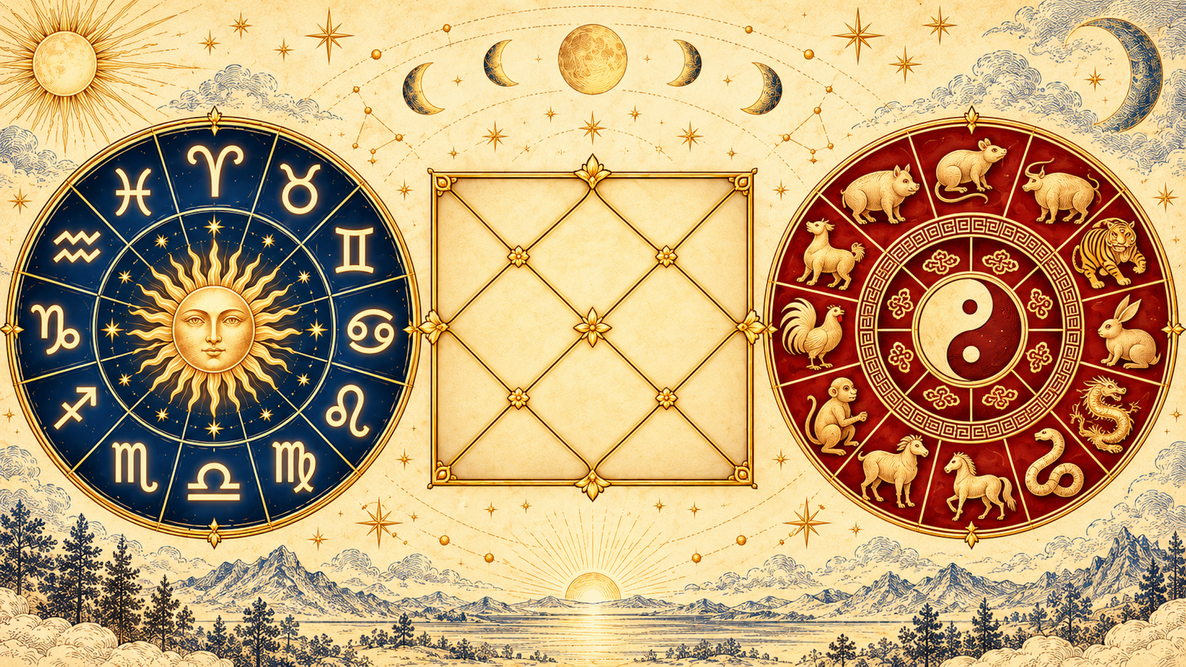
Want to explore your soul’s evolution, predict what’s ahead, or track down a lost set of keys? There’s probably a type of astrology for that! From Vedic, Chinese, and Western astrology traditions to popular kinds of Western astrology like Hellenistic and Horary, find out what sets each one apart—and which might be worth exploring.
Astrology is an ancient practice woven through thousands of years of human history and cultures around the world. It was part of the Almanac from the start, with the Moon’s position in the zodiac appearing in the first 1792 edition.
Types of Astrology at a Glance
Astrology goes far beyond your Sun sign!
Use this chart to see some of the different types of astrology and what each one is used for.
| Type of Astrology | Try It If You Want To Explore … |
|---|---|
| Major Astrology Traditions | |
| Western | A tradition that includes both traditional and modern approaches |
| Vedic (Jyotish) | Periods of your life and past karma through an Indian astrological tradition |
| Chinese | The Chinese zodiac, five elements, and birth-time systems |
| Traditional Western Astrology | |
| Hellenistic | Fate and life circumstances through an ancient Western system |
| Arabic | The Arabic Parts and a different version of the Lunar Mansions |
| Medieval | Timing, magic, and prediction |
| Modern Western Astrology | |
| Evolutionary | The soul’s evolution across lifetimes |
| Harmonic | The mathematical relationships between planets |
| Uranian | Creating “energy” and getting a situation moving |
| Specialty Branches of Astrology | |
| Electional | The best date for an event or action |
| Astrocartography | Places on Earth where you’re likely to thrive |
| Horary | Answers to specific questions or help locating a lost object |
| Mundane | The world around you, including events, governments, and leaders |
Why are there so many types of astrology? Because different cultures and eras developed their own ways of interpreting the sky. Across India, China, the Mediterranean, and Europe, those traditions evolved along different paths, creating the many systems astrologers use today.
Together, they’re part of a much larger human story of looking to the Moon, planets, zodiac, and seasons for meaning and guidance.
Major Astrology Traditions
Western Astrology
Western astrology is the broad astrological tradition most familiar to readers in the United States and Canada. It includes both traditional and modern approaches.
Learn about different types of traditional and modern Western astrology below.
Most Western astrology uses the tropical zodiac, which determines zodiac signs based on the seasons. For example, the spring equinox marks the beginning of Aries.
Vedic Astrology (Jyotish)
Vedic astrology, also called Jyotish or Indian astrology, is an Indian astrological tradition based on Hindu scriptures that uses the sidereal zodiac.
The sidereal zodiac determines zodiac signs based on the fixed stars in the sky and recognizes the slow wobble of the Earth’s axis, known as axial precession.
Vedic astrology also uses a system of constellations called the Nakshatras, or 27 Lunar Mansions. The Lunar Nodes, called Ketu and Rahu, also play a role.
Time periods, referred to as Dashas, indicate which planets are dominant during different periods of your life. This system is predictive, but it also focuses on past karma.
Chinese Astrology
If you’ve ever eaten at a Chinese restaurant, you might have seen a placemat with the 12 Chinese zodiac signs, which are based on the year you were born. However, Chinese astrology is more complicated than that!
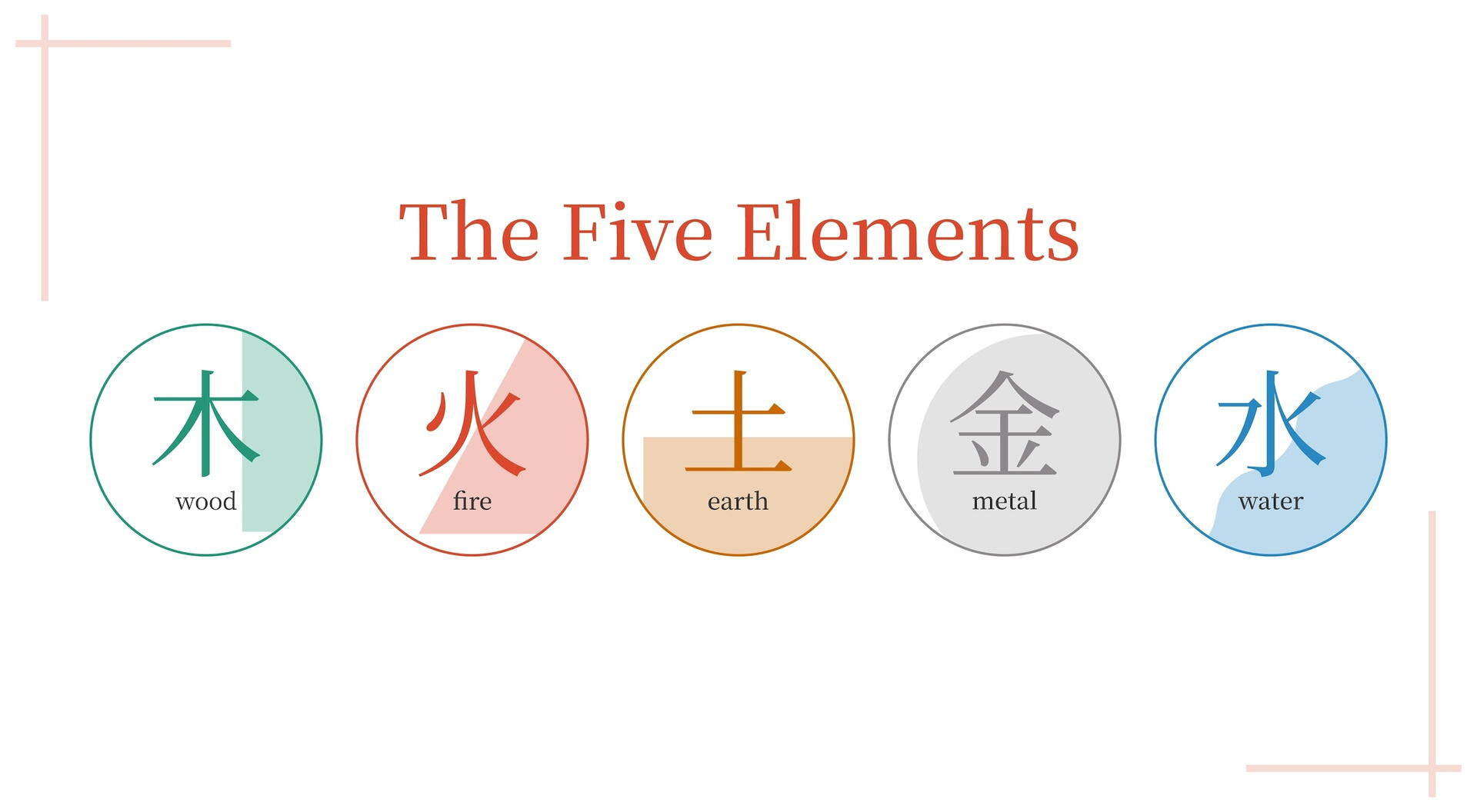
Rooted in Chinese philosophy, it incorporates the five elements, Buddhism, Taoism, lunar timing, and the Four Pillars of Destiny (aka Ba Zi). Many years ago, I had a proper Chinese astrology reading and was astounded at the depth and accuracy.
Credit: SweetRenie
Traditional Western Astrology
Traditional Western astrology approaches are predictive in nature. They recognize the seven classical planets (Sun, Moon, Mercury, Venus, Mars, Jupiter, and Saturn).
“Traditional astrology is sometimes perceived as fatalistic or rigid, but at its heart it is a thorough and systematic practice built upon coherent principles,” says astrologer Shaheen Miro.
“Rather than viewing the natal chart solely as a psychological map, I think of it as a garden of conditions in which we find ourselves, conditions we participate in, but do not entirely create. Traditional astrology gives us a rich language for understanding that garden through the planets, their condition, and the areas of life they govern.”
Hellenistic Astrology
Hellenistic astrology is an ancient Western astrological tradition that developed in the Mediterranean world. It’s one of the oldest astrological systems, influenced by Babylonian and Egyptian traditions.
Hellenistic astrology uses Whole Sign Houses—a system that assigns an entire zodiac sign to each house—along with the seven classical planets. It also divides charts into “day or night charts,” also called sects, and uses predictive methods like the time-mapping technique known as annual profections.
The focus is on fate. Although Hellenistic astrology fell out of favor for some time due to a lack of translations of the ancient texts, it has enjoyed a renaissance in the 21st century, thanks to the work of astrologers such as Chris Brennan and Demetra George.
Arabic Astrology
Arabic cultures developed this branch of traditional astrology. Like Hellenistic astrology, it works only with the seven classical planets, but it also includes additional points known as the Arabic Parts and a different version of the Lunar Mansions.
Medieval Astrology
Another classical form of astrology, Medieval astrology was commonly practiced between the 8th and 14th centuries. Medieval astrology focuses on timing, magic, and prediction. It is still used today, though not as widely as some other traditional practices.
Modern Western Astrology
Modern astrology aligns with free will—the belief that people make their own choices. Like traditional astrology, it incorporates the seven classical planets, as well as Uranus, Neptune, and Pluto, which were discovered later.
Many forms of astrology fall under the modern umbrella. Remember, these are still rooted in ancient practices. The major differences are the addition of the three outer planets.
“Modern astrology reminds us to approach that map with curiosity, intuition, and awareness, empowering us to engage consciously with what we find there,” says Shaheen.
Evolutionary Astrology
Evolutionary astrology emphasizes past lives and purpose to understand the soul’s evolution. According to astrologer Chris Zydel, each person is viewed as “an evolving soul on a many-lifetimes journey of growth, healing, transformation, and discovery.”
Chris adds, “What your birth chart shows you is where you are on this particular evolutionary journey. Every symbol in your chart reveals something about your soul, giving insight into your soul’s strengths, shadows, challenges, and gifts, as well as where it’s been, what it’s experienced, and what it needs to learn to continue to grow.”
Harmonic Astrology
This thoroughly modern method has roots in the ancient teachings of Greek philosopher and mathematician Pythagoras, who believed that numbers were part of everything. The modern technique was developed in the 20th century, particularly through the work of British astrologer John Addey.
Harmonic Astrology examines the numerical and mathematical relationships among the planets to reveal patterns that may be less obvious in a standard chart. As astrologer Clarissa Dolphin says,
“The chart lives like literal music; it is alive, resonating, with advanced symmetries, subatomic particles, strings, and waveforms. You can feel it all, and the math is simple. It’s a refreshing and stunningly accurate form of astrology.”
Uranian Astrology
Uranian astrology was developed by German astrologers Friedrich Sieggrün and Alfred Witte. In most Western astrology, the Midheaven—the highest point in the birth chart—represents external factors like your public image and status. Uranian astrology, on the other hand, interprets it as the essence of the soul and inner purpose.
Uranian astrology also uses “midpoints,” the middle degrees between two planets. Midpoints function like spark plugs, creating “energy” and getting a situation moving. They can also trigger emotions.
Specialty Branches of Astrology
These approaches to astrology focus on particular questions or purposes. Astrologers may practice them using methods from different traditions or approaches.
Electional Astrology
Electional astrology is found in many astrological practices. It’s used to determine the most favorable date for a particular event or action. Different schools of astrology might consider different criteria.
Astrocartography (Locational Astrology)
Created by astrologer Jim Lewis in the 1970s, astrocartography (also called locational astrology) is an increasingly popular practice that helps people find locations, cities, towns, and vacation spots that resonate with them.
“We are using the stars (or planets) to map where you might best live and thrive,” says astrocartographer Clarisse Monahan of Venus in Retrograde. “Astrocartography does this by identifying what we call ‘planetary lines,’ which crisscross the globe. Places along one’s Venus line, for example, will tend to better activate romance, love, and art, which is to say, Venusian themes in one’s life.”
“We’ve all been to cities that click with us, and others that don’t. Astrocartography helps explain these place-based attractions. It matches us to our hot spots on Earth. As such, I like to think of it as Tinder for places, but without the bad hook-ups,” she adds.
Horary Astrology
Horary astrology answers specific questions and helps find lost objects by casting a chart at the exact moment the question is asked. Basically, ask your question, cast the chart, and get your answer by gazing at how the planets interact.
I’ve used this to locate missing mail (turns out it was on my desk)!
Mundane Astrology
This branch of astrology is used to understand political events, nations, governments, states, cities, and leaders. Instead of looking at the individual chart, the focus shifts outward to the world around us.
Although I’ve listed quite a few, believe it or not, there are more types of astrology! But that’s probably enough for now.
Which Kind of Astrology Should I Choose?
Choose whichever astrology type sounds the most interesting to you, and feel free to use more than one. There’s no wrong answer!
Assess Your Purpose
Do you want to understand yourself? Interested in karma? Does prediction fascinate you? Once you are clear on your interest, you can choose the astrology type (or types) that best align with your intentions.
Try Multiple Methods
It’s common for astrologers to work with multiple methods. Shaheen explains that his practice is rooted in traditional Hellenistic astrology, blended with aspects of modern astrology, to create a holistic approach.
“I weave these branches together because traditional astrology offers a philosophical depth and coherence that modern astrology can sometimes lack, while modern astrology brings an openness and ingenuity that our evolving human experience requires,” Shaheen tells me.
For him, this approach provides a deep respect for the ancient structure of astrology alongside the freedom to grow and let the language of astrology continue to evolve. “I believe this is what allows the sky to truly speak,” Shaheen says.
Make It Your Own
Astrologers everywhere add their own spin, and you can too. Astrologer Rachel Lang’s approach looks something like this:
“I incorporate the outer planets, asteroids, black holes, and other space objects. At the same time, I prefer to use traditional governing planets for astrological signs, and not the outer ones like some modern astrologers do,” she says. “I work with forecasting techniques, but I do so within a worldview that believes we have some agency in the shaping of our futures.”
As you can see, the sky is unlimited—and so are your astrological options!
Frequently Asked Questions
-
What’s the difference between Vedic and Western astrology?
Western astrology usually uses the tropical zodiac, which is tied to the seasons. Vedic astrology, also called Jyotish, generally uses the sidereal zodiac, which is aligned more closely with the stars. Because the two systems calculate the zodiac differently, your sign may be different in each.
-
What are the different kinds of astrology?
Western, Vedic, and Chinese astrology are three of the major traditions. We mainly use Western astrology in North America, which is broken down into traditional and modern types. Traditional astrology is predictive and includes Hellenistic, Arabic, and Medieval astrology. Modern astrology emphasizes free will and includes Evolutionary, Harmonic, and Uranian astrology. There are also specialty branches, like Electional, Locational (Astrocartography), Horary, and Mundane astrology.
-
What is the most accurate type of astrology?
No single type of astrology is the most accurate. The better question to ask is which type aligns with what you want to learn.
-
How many types of astrology are there?
There’s no fixed number. This article covers three main astrology traditions (Western, Vedic, and Chinese), and some of the different kinds of Western astrology. But there are many different kinds, and new approaches keep developing as practitioners combine traditional and modern methods.
-
Which type of astrology is best for beginners?
Lots of people in the United States and Canada start with Western astrology because it’s what they already know from horoscopes, and it has the most beginner-friendly books, apps, and chart calculators. Once you’re comfortable reading your birth chart, it’s easier to branch out and explore the different kinds of astrology.
Sources
- The Regents of the University of California — Precession of the Equinoxes
- Internet Encyclopedia of Philosophy — Hellenistic Astrology
- Virginia Tech — Origin of the Universe and Our Solar Systems
- Stanford Encyclopedia of Philosophy — Pythagoras

More Like This


Comments