Picture a farmer, and you may imagine someone working the same land and growing the same crops their family has raised for generations. That farmer certainly still exists—but it is only part of the picture.
Today’s farmers include women, Indigenous growers, immigrant and multigenerational farm families, young people entering agriculture, and farmers building new kinds of operations in cities, on the water, and in some of the coldest growing regions on the continent.
Their challenges are just as varied. Some are trying to afford land. Others are adapting to extreme weather, finding new markets, or figuring out how to keep a family operation viable for the next generation.
The best way to understand modern farming is to meet the people doing it.
Virginia Muswagon: Growing Fresh Food in a Sub-Arctic Community
Life Water Gardens | Norway House, Manitoba
Growing fresh vegetables in Norway House presents an obvious challenge: the weather.
The Cree Nation community in northern Manitoba has long relied on fishing, trapping, logging, and hardy root crops. Temperatures can fall below freezing even in June, and another frost can arrive by early September.
In 2019, concerns about access to secure, affordable fresh food helped inspire Virginia Muswagon and Ian Maxwell to start Life Water Gardens.
As co-managers, they tend a prefabricated growing container where lettuces, kale, pak choi, herbs, and other greens can be grown hydroponically throughout the year.

Muswagon still remembers learning to handle the tiny seeds. Mint seeds were so small that she fashioned a drinking straw into a miniature shovel for planting them.
Those early experiments have grown into the routine harvest of about 450 herb and greens plants each week. The local hospital and school are now among the customers for the fresh produce.
In a place where the outdoor growing season is measured carefully, Life Water Gardens has created something remarkable: a harvest that does not have to wait for summer.
Karen Cooper: From Lobsters to Kelp
Tidal 9 Fisheries | North Haven, Maine
The first time Karen Cooper saw someone eating seaweed salad, she was not impressed.
Then she tasted it.
Years later, seaweed would become part of her livelihood.
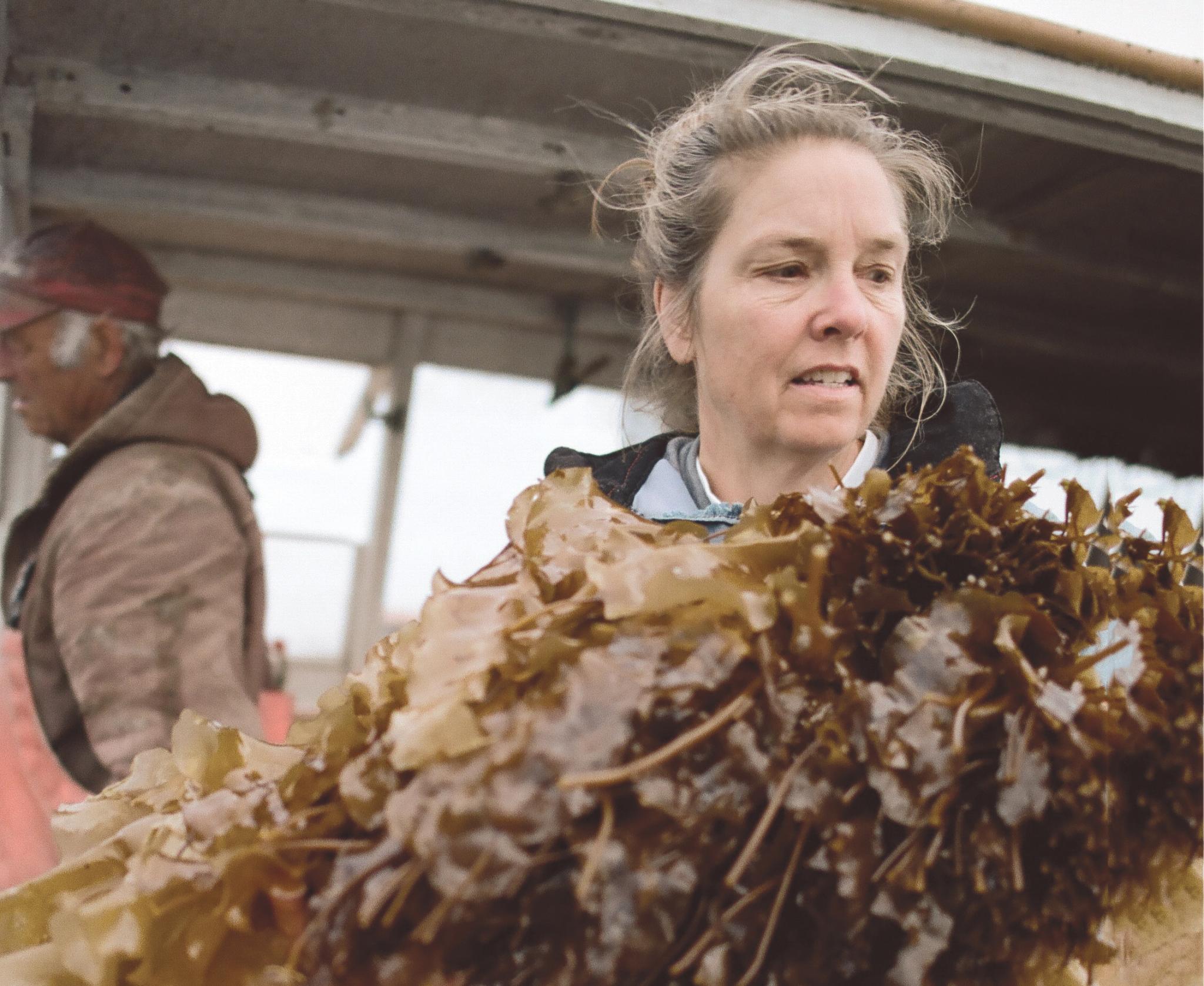
Cooper is a third-generation lobsterman who has fished Maine’s Penobscot Bay for about 30 years, tending as many as 200 traps.
“I can’t grow anything, but if it has to do with the ocean, I can probably do it,” she says.
Looking for income during the lobster off-season, Cooper obtained an aquaculture lease and began growing kelp. The seasons fit together almost perfectly: Lobstering runs from June through October, while kelp is seeded in November and harvested in May.
Today, she harvests and sells about 15,000 pounds of kelp annually. She has also added sea salt, sold in jars at local gift shops.
For Cooper, diversification is not simply an interesting sideline. It is part of preparing for an uncertain future in a changing fishery.
“He loves lobster fishing,” she says of her nephew, who helps with the kelp harvest, “but it’s not going to be around forever.”
Mani Gill: Returning to the Family Farm
Gill Family Orchards | Kelowna, British Columbia
In 2018, Mani Gill left a 10-year career in banking and returned to his family’s agricultural roots.

His parents had immigrated from India’s Punjab region to British Columbia’s Okanagan Valley in the 1980s and worked as agricultural laborers before acquiring land of their own.
Gill remembers picking cherries, changing water pivots, and driving a tractor as a teenager. Today, he and his brother Jasmeet manage more than 100 acres of vineyards and orchards at Gill Family Orchards.
Farming has also put the family on the front line of increasingly extreme weather.
During the extraordinary heat of 2021, temperatures in the Okanagan Valley climbed to 45°C (113°F) for several days. Some growers saw early cherry varieties effectively bake on the trees.
The Gill family used microjet sprinklers to cool their orchards, while the east-west orientation of the trees helped the canopies protect the ripening fruit.
“Climate change is happening,” Gill says. “We’ve never seen these temperatures in Kelowna before.”
The work can be unpredictable, but Gill has no regrets about returning.
“This is what I was meant to do,” he says. “It’s not work—it’s a passion.”
No two of these farms look alike. One grows greens year-round in a sub-Arctic community. Another combines lobster fishing with kelp. Another is adapting a family orchard to extreme heat.
What they share is a willingness to change—diversifying, adopting new methods, finding new markets, and building businesses that respond to the needs around them.
Sage Askin: Finding Another Way Into Ranching
Askin Land and Livestock | Lusk, Wyoming
Sage Askin had the education and experience to become a rancher. What he did not have was land.
After college, Askin had about $1,000 from his last paycheck, a paid-for pickup, a trailer, and a horse. He also had a degree in rangeland ecology and watershed management and years of experience raising steers and working on ranches.

Purchasing a ranch proved far more difficult. With little equity and soaring land prices, traditional financing was out of reach.
So Askin tried another route: He placed a newspaper advertisement reading, “Ranch lease wanted—Young aspiring rancher.”
Today, Sage and Faith Askin operate on about 75,000 acres of leased land. Their diversified business includes custom grazing and three bands of sheep spread across seven ranches.
They also practice intensive adaptive grazing, moving cattle frequently during the spring and sometimes resting pastures for an entire year.
“We can make the soil better, which makes the plants better, which benefits us all,” Askin says.
His path into ranching was not the one he originally imagined.
“The dream didn’t change,” he says, “but the road has not been the way that I’d envisioned.”
Ann-Marie Saunders: Farming by Working With Nature
Saunders Family Farm & Vineyard | Beamsville, Ontario
At Saunders Family Farm & Vineyard, the guiding idea is simple: Keep the farm alive from the soil up.
The certified-organic, 12-acre vineyard was purchased by Ann-Marie Saunders’s parents in the mid-1960s. Today, the family continues moving the property toward regenerative practices.

Instead of relying only on treatments for weeds and pests, Saunders focuses on strengthening the farm’s biological systems.
Grapevines, brush, and leaves are shredded and composted. The finished compost is used to brew a microbe-rich compost tea that is sprayed onto the soil. Cover crops such as daikon radishes, clovers, and buckwheat help break up soil, add nitrogen, attract pollinators, and reduce erosion.
What might look at first like a rather untidy vineyard is, on closer inspection, full of life.
“Do no harm, embrace life,” Saunders says.
Don Bustos: Growing More Farmers
Santa Cruz Farm | Santa Cruz, New Mexico
Don Bustos farms land in northern New Mexico that his family has worked for centuries.
As a child, he remembers walking behind a mule as his grandfather plowed the family farm. Today, 72 varieties of organic produce grow on just 3½ acres.
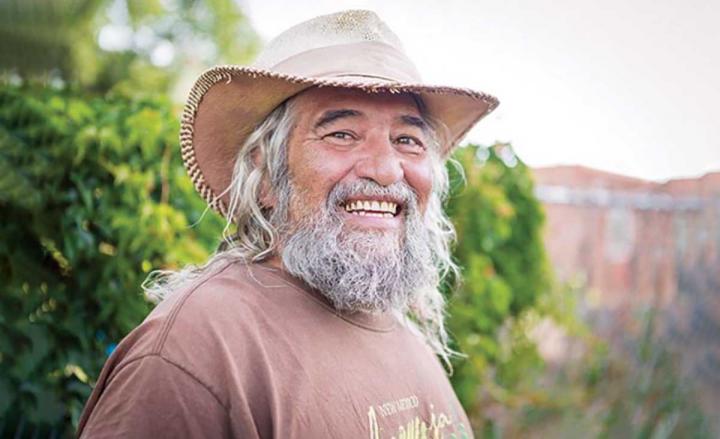
Bustos gradually transformed a much larger row-crop operation into a small, intensive farm producing fruits and vegetables throughout the year.
High tunnels extend the growing season, and a root-zone heating system dramatically reduced greenhouse heating costs. The farm sells much of its produce directly at nearby farmers’ markets.
But Bustos measures success by more than the size of his own operation.
“My philosophy is not to grow the farm, but to grow more people to farm,” he says. “It’s not about just one person. It’s about the whole community flourishing.”
Germaine Jenkins: Growing Food—and a Community
Fresh Future Farm | North Charleston, South Carolina
Germaine Jenkins once promised her children that they would have a garden someday.
When she finally had a home of her own, she began by removing the azaleas from the front yard and replacing them with blueberries, orange trees, and sweet potatoes. Chickens went into the backyard.
Neighborhood children riding past on bicycles would stop and ask, “Is this a farm?”
Eventually, it was.
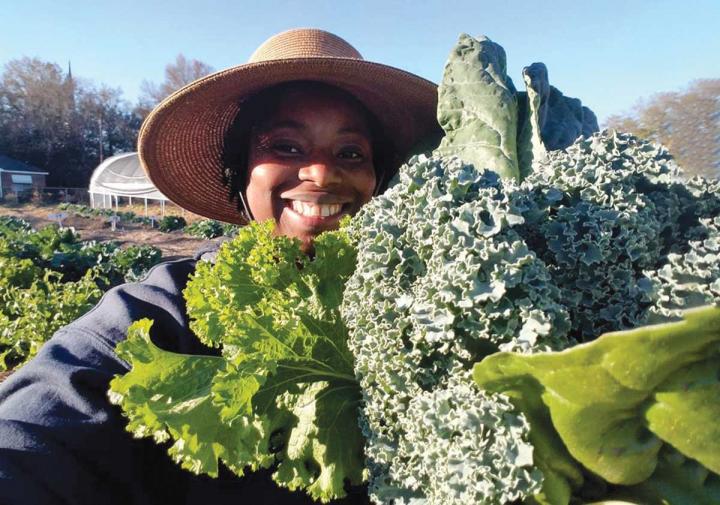
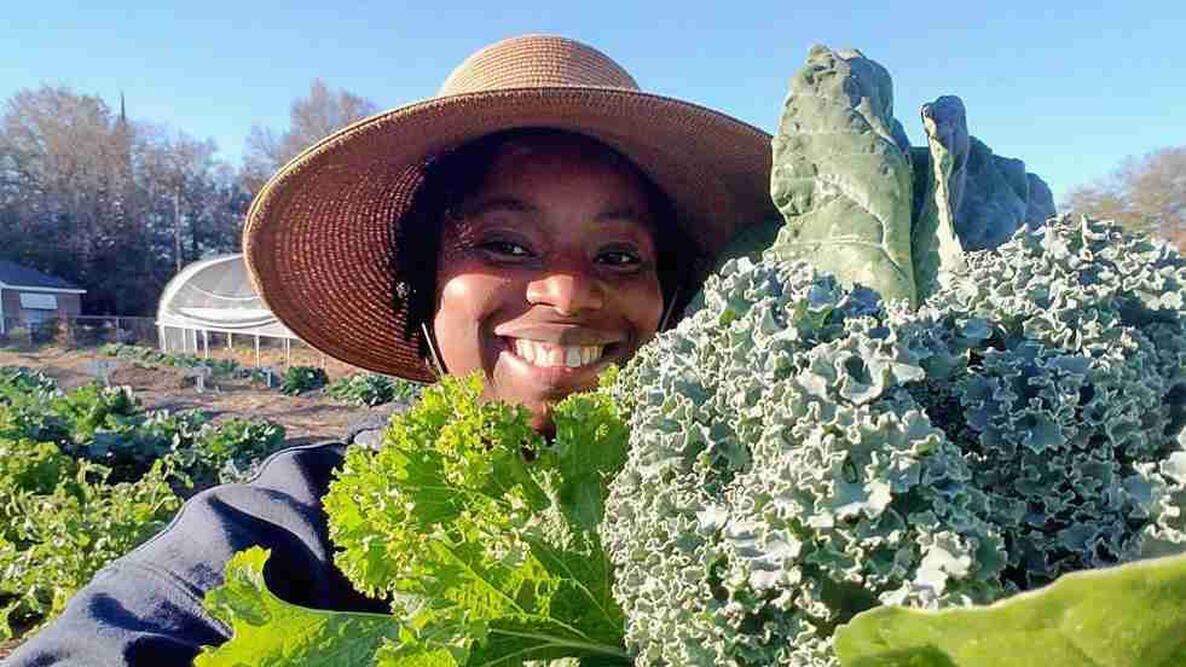
Jenkins convinced North Charleston officials to lease her a vacant .81-acre lot. Over time, it became Fresh Future Farm, producing fresh food for the surrounding community.
The operation has grown through ingenuity and local support. Garden waste becomes compost. Cardboard boxes from a nearby business become mulch. Volunteers help prepare, plant, and harvest the fields.
Families, students, and visitors also come to learn about rainwater collection, pollination, sustainable growing, and agricultural entrepreneurship.
Jenkins wants the lessons learned at Fresh Future Farm to travel farther than the food itself.
“We don’t just want to grow food,” she says. “We want to grow gardeners!”
Miles Hooper: Making a Family Farm Worth Inheriting
Ayers Brook Goat Dairy | Randolph, Vermont
At Ayers Brook Goat Dairy, farmers have learned to goat-proof almost everything.
Light switches. Doorknobs. Even the grain auger.
“Goats are curious by nature,” says owner Miles Hooper. “If you look away for 5 seconds, you will have a cleanup project on your hands that will consume your entire afternoon.”
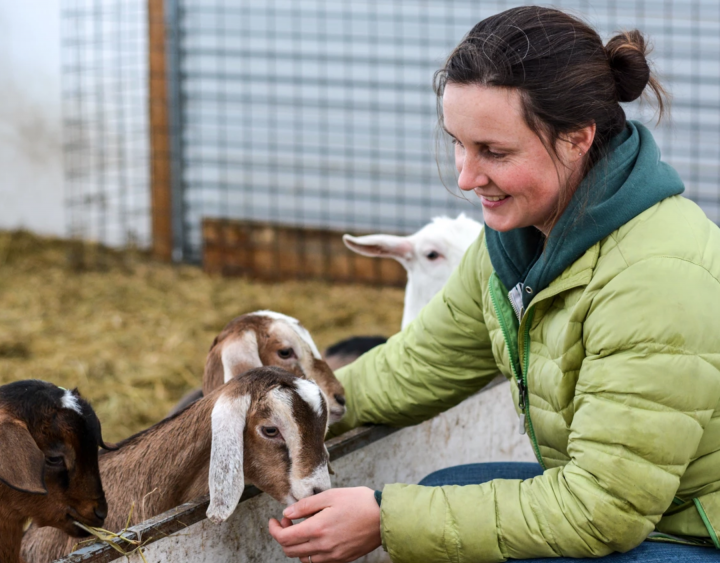
Humor helps, because running a dairy herd of about 1,000 does is serious business. The farm supplies milk for cheesemaking and other specialty products while also working to improve the genetics, health, and efficiency of its animals.
Hooper has invested in the farm’s long-term future as well. He preserved land through a conservation easement and added solar panels capable of supplying the 266-acre farm’s electricity.
But one of his most important measures of sustainability is whether his children might actually want the farm someday.
After seeing farmers in rural France take time for an unrushed midday meal, Hooper began thinking differently about the culture he wanted to create at home.
“We are trying to keep the farm fun and lighthearted enough that they might actually be inclined to take it on.”
The Baldwin Family: When Corn Became Popcorn
Baldwin Farms | McPherson, Kansas
Before the Baldwin family’s first popcorn harvest, one question kept everyone awake:
Would it pop?
Their first test did not go well. An ear went into a paper bag in the microwave. Nothing popped. The house simply filled with smoke from the damp, overheated cob.
A few days later, after more drying in the field, they tried again.
This time the kernels popped.
“We all did a high five—and then we ate it,” recalls Cindy Baldwin.
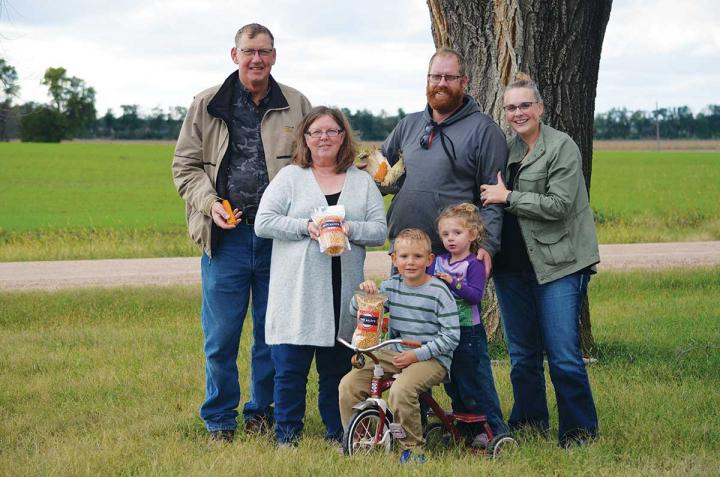
For four decades, the farm had concentrated on wheat, field corn, and soybeans. Falling commodity prices persuaded the family to experiment with a higher-value crop.
They devoted five acres to ‘Jumbo Mushroom’ popcorn and began selling it under the name Papa Baldy’s Popcorn.
It was a small experiment with a larger lesson: Sometimes keeping a farm going means being willing to grow something entirely new.
Ruben Houweling: Farming Under Glass
The Houweling Group | Delta, British Columbia
Modern farming does not always begin with a seed placed directly into soil.
At the Houweling Group, tomato seedlings are propagated through a highly controlled process involving grafting, humidity chambers, rock wool, greenhouse nurseries, irrigation, and carefully managed light.
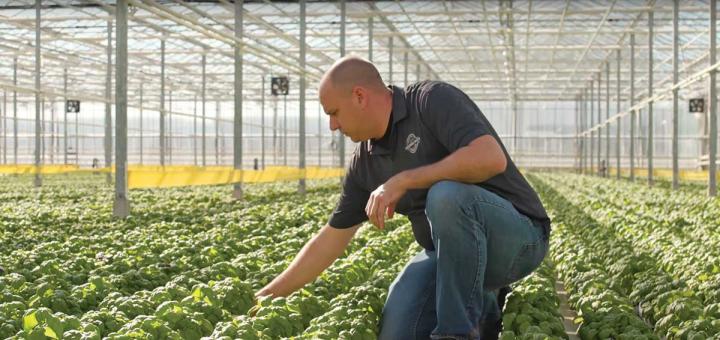
Ruben Houweling, the propagation manager, helps produce young tomato plants for commercial greenhouse growers in the United States and Canada.
Technology plays an enormous role, but nature still sets the terms.
“Especially through the fall, winter, and spring, we are aware of available light and the angle of the Sun,” Houweling says. “We still need to harvest as much free solar energy as possible.”
Even in one of agriculture’s most controlled environments, the farmer is still watching the sky.
The Future of Farming Is Already Here
There is no single description of today’s farmer.
One farms land tended by his ancestors for centuries. Another grows lettuce inside a container in the sub-Arctic. One left banking to return to an orchard. Another could not afford to buy a ranch, so he found thousands of acres to lease. A lobsterman grows kelp. An urban farmer turns a vacant lot into a source of fresh food and new gardeners.
Their methods differ, but the pattern is clear: Today’s farmers are remarkably resourceful. They are finding new ways to grow, adapt, serve their communities, and keep agriculture viable for the next generation.
One way to support that future is close to home: Buy from local farmers and farmers’ markets, join a CSA, visit a pick-your-own farm, or support restaurants and businesses that purchase from local growers.
And perhaps take a moment to get to know the people behind your food. Today’s farmer may not look quite the way you expected.





Comments