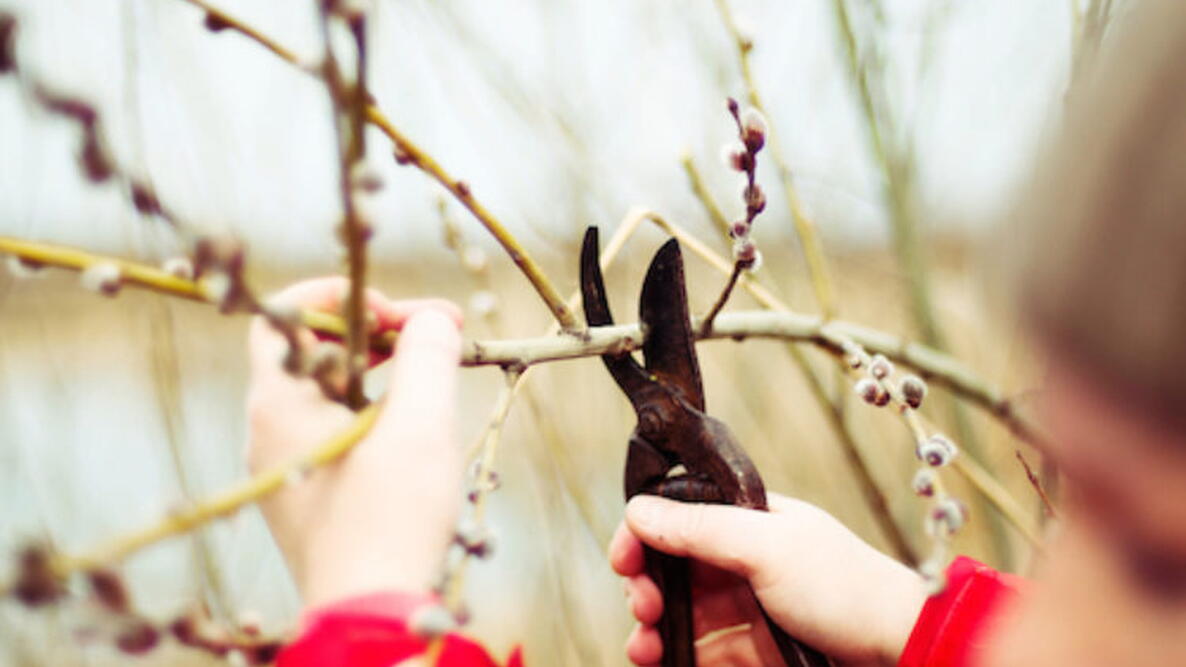
Winter is the best time to prune most deciduous trees and shrubs, but not all. See our list of which ones to prune during the dormant months—and get some general pruning tips for the season!
Why Prune in Late Winter or Early Spring?
In temperate regions, most plants go dormant during the winter. This is the time of year when they’ve halted active growth and have hunkered down for the cold weather. Because of this dormancy, late winter and early spring are typically the best times to adjust the shapes of many trees and shrubs. Why?
- Pruning while a plant is dormant makes it easier for the plant to recover, which is vital for next year’s flowers.
- By pruning before any new growth starts, the plant puts energy towards producing new, healthy growth when the warmer temperatures of spring roll around.
- Practically speaking, it’s also a lot easier to see the true shape of deciduous plants in the winter, since their foliage is gone.

When to Prune Flowering Shrubs
When you should prune is often tied to one question: When do your shrubs flower? The spring-flowering shrubs, such as azaleas, get pruned after they bloom in late spring or summer. The summer-flowering shrubs, such as butterfly bush, can be pruned in winter or early spring. Why? It’s related to whether flowers bud on “old” wood or “new” wood:
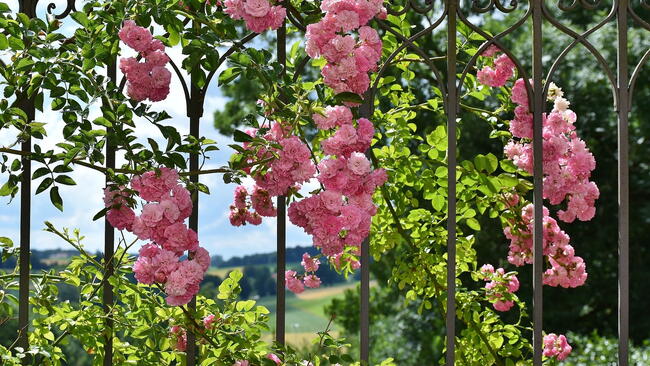
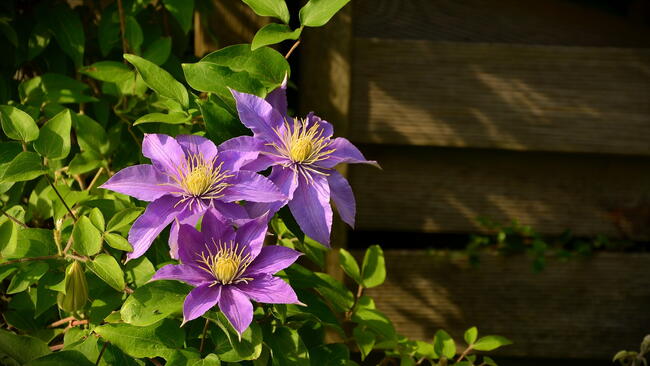
- In late winter and early spring, prune shrubs that form their flower buds on “new” wood (i.e., growth that will occur in the coming spring). Examples include abelia, beautyberry, butterfly bush, summer- or fall-blooming clematis, smooth hydrangeas, panicle hydrangeas, potentilla, roses, rose of Sharon, dogwoods, Japanese spirea, St. Johnswort, and summersweet.
- Wait until late spring or early summer (after flowers fade) to prune shrubs that bloom on “old” wood (i.e., growth from the previous year). Examples are azalea, beautybush, bridalwreath spirea, spring-blooming clematis, cotoneaster, deutzia, enkianthus, flowering almond, forsythia, mophead hydrangeas, lilacs, mock orange, mountain laurel, ninebark, oakleaf hydrangea, pieris, rhododendron, viburnum, Virginia sweetspire, weigela, wisteria, and witch hazel. If you cut them too early, you’ll cut off the buds that would’ve opened this spring! The best time to prune spring-blooming shrubs is right after the spring blooms fade.
When to Prune Trees and Evergreens
- Prune evergreen shrubs (yew, holly, and boxwoods) and evergreen trees (spruce, fir) in late winter or early spring when they are still dormant and before new growth begins. Pines are pruned in early June to early July.
- Prune shade trees, such as oak, sweetgum, maple, katsura, and hornbeam, in late winter or early spring.
- Wait to prune spring-flowering trees, such as dogwood, redbud, cherry, pear, and magnolia, until after they flower.
Sometimes, it’s hard to tell if a tree has dead branches higher up unless you climb it. For this reason, it may be prudent to hire a tree trimmer to prune any dead trees once every 3 years. To prune shorter trees yourself, look into tree pruners with long-reach poles to keep your feet safely on the ground.
| WHEN | HOW | |
|---|---|---|
| Apple | Late winter to early spring | Prune moderately. Keep tree open with the main branches well-spaced. Avoid sharp V-shaped crotches. |
| Abelia | Late winter to early spring | Maintain a graceful arching form by cutting away some of the oldest stems at ground level. Pinch growing shoots in spring if you want bushier growth. |
| Azalea | Late winter or during the growing season | Before growth begins for the season, improve the form of the bush by shortening stems that jut out of place. During the growing season, pinch growing shoot tips where you want bushier growth. |
| Butterfly bush | Late winter | Cut all stems to the ground. |
| Chaste tree | Late winter to early spring | Evergreen species need little pruning beyond cutting out weak, twiggy, dead, or broken branches. |
| Cherry | Late winter to early spring | Prune the most vigorous shoots moderately. |
| Clethra (Summersweet) | Early spring | Prune moderately. Keep the tree open with the main branches well spaced. Avoid sharp V-shaped crotches. |
| Crape myrtle | Late winter | Wherever the plant is not totally winter-hardy, cut off winter-killed wood or cut the whole plant to the ground. Little pruning is needed where this plant is cold-hardy. |
| Dogwood | Late winter to early spring | Prune the most vigorous shoots moderately. |
| Hibiscus (Rose of Sharon) | Early spring | Prune moderately. Keep the tree open with the main branches well-spaced. Avoid sharp V-shaped crotches. |
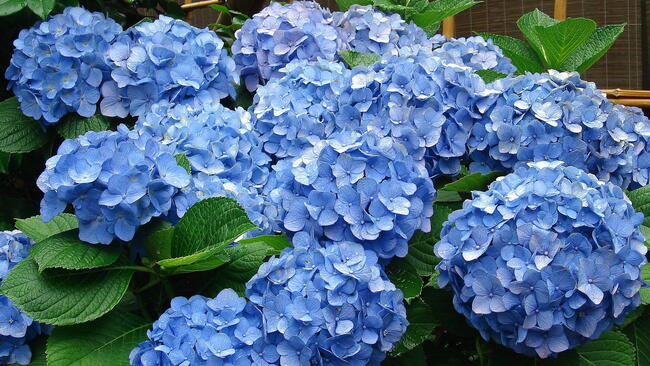
| Hydrangea | Mostly late winter, but it depends on the species | For smooth hydrangea, cut all stems to the ground. For bigleaf or oakleaf hydrangea, cut stems with old flowers still attached back to fat flower buds. Some hydrangea are NOT pruned in late winter. To avoid cutting off future flower buds, see our guide to pruning hydrangea varieties. |
| Peach | Late winter to early spring | Remove half of last year’s growth. Keep tree headed low. |
| Plum | Late winter to early spring | Cut dead, diseased branches; trim rank growth moderately. |
| Roses | Early spring | Cut dead and weak growth; cut branches or canes to four or five buds. See our article about pruning roses for more information. |
| Smoke bush | Late winter or early spring, before growth begins | Needs little pruning unless you grow it for its purple leaves rather than for its flowers. In this case, prune severely to stimulate vigorous new growth each spring. |
General Cold-Weather Pruning Tips
- Prune on a mild, dry day. Not only is this more pleasant for you, the gardener, but it also helps to prevent the spreading of waterborne plant diseases or damage from cold temperatures.
- Never prune too early in the winter, as incisions can dry out if the temperature drops well below freezing.
- When pruning, first prune out dead and diseased branches, especially those caused by the winter’s snow and ice.
- Unwanted lower branches on all evergreen shrubs and trees should also be removed in late winter.
- Remove overgrown and smaller branches to increase light and air at the tree’s crown.
- Your goal is to keep the branches that develop or maintain the tree’s structure.
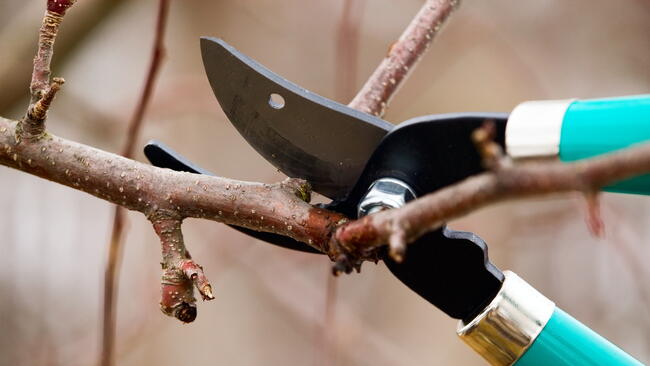
- Cut branches at the node, the point at which one branch or twig attaches to another.


Comments