Caption
Witch Hazel
When the rest of the garden takes a long winter nap, witch hazel decides it’s showtime. Those bright, tassel-like blooms—bursting in shades of yellow, orange, or red—light up the cold landscape just when we need a reminder that spring isn’t far off. Add in its spicy fragrance and long history as a natural remedy, and it’s no wonder witch hazel has earned a reputation as one of the most magical shrubs you can grow (no spells required!). Whether you’re planting for winter color, fall foliage, or old-fashioned medicinal charm, witch hazel brings year-round interest with almost no fuss.
What is Witch Hazel?
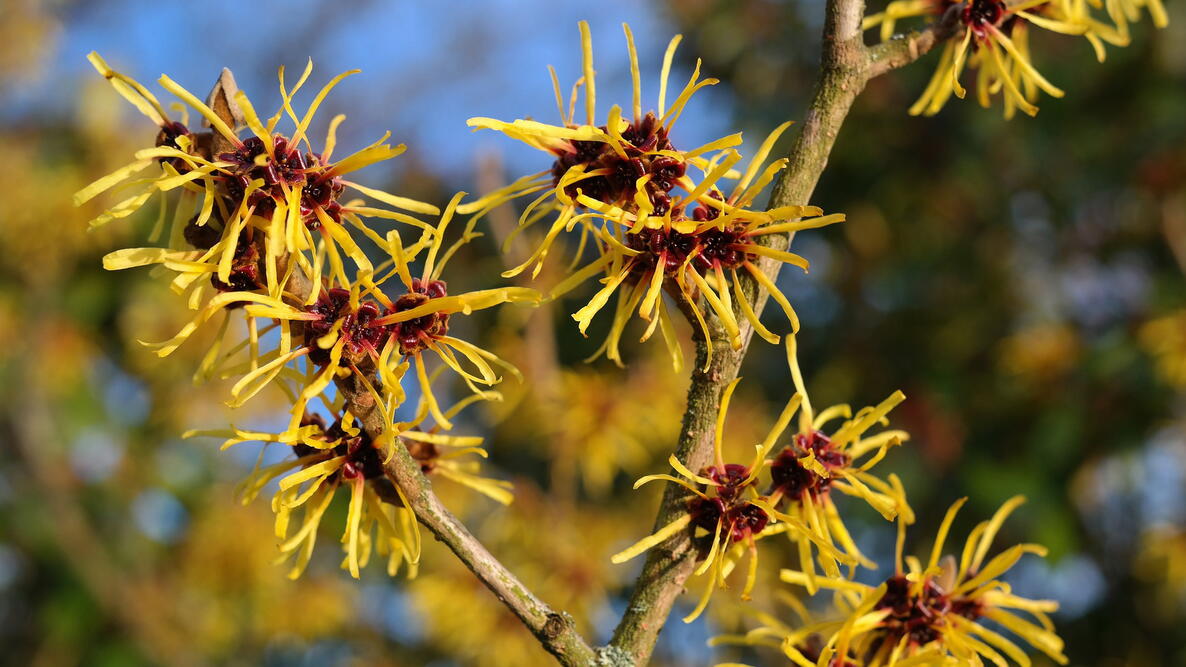
The witch hazel(Hamamelis spp.) plant, also called winterbloom, is a large native flowering shrub or small tree with dazzling, yellow flowers that bloom in late fall or winter (depending on the variety)—adding color and fragrance during a time when much of Earth is dormant.
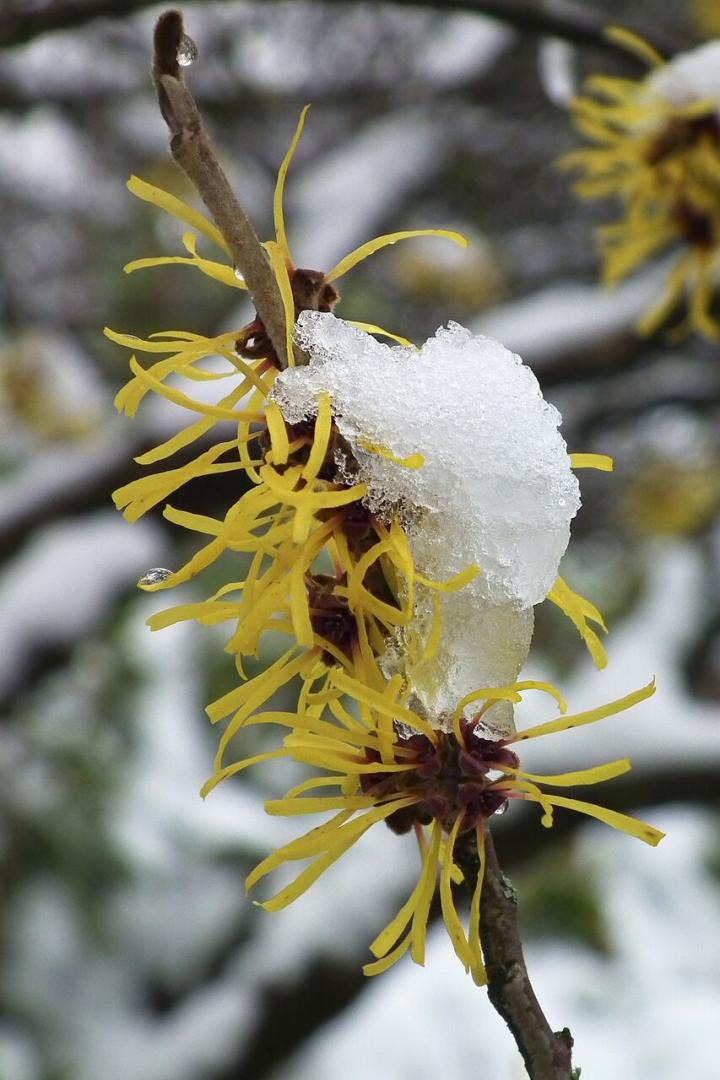
For much of the year, witch hazel is a shrub that grows mostly unnoticed along shaded stream banks and in damp woods from Georgia to southern Canada. Its light gray bark and rounded green leaves blend in well with its surroundings. But when witch hazel blossoms, the fragrant, tasseled, yellow blossoms often appear against a background of early snow.
The botanical name, Hamamelis, translates to “together with fruit,” which refers to the fact that the fruit and flowers simultaneously occur on the same plant. This is a unique feature of native North American trees. As the shrub blooms, its previous year’s fruit matures. The seed capsules explode with an audible pop, shooting their two hard, shiny black seeds several yards from the parent plant.
Witch hazel not only pops with color, but also blooms with a wonderfully spicy fragrance. They’re very hardy and are not prone to a lot of diseases.
Why is it Called Witch Hazel?
The plant’s name does not refer to witchcraft, but comes from the Middle English word wych or wyche, meaning “pliant” or “flexible,” which refers to the plant’s very flexible branches. The “hazel” in the name comes from the plant’s similarity to the common hazelnut.
Types of Witch Hazel (Native and Non-Native)
If for no other reason than its time of winter bloom, witch hazel is a valuable landscaping plant—but it’s also attractive in the spring and summer with its dark green leaves and graceful, spreading vase shape. Often, it’s used as a large border shrub, thriving under the canopy of larger trees. Plants are typically upright-spreading and rather loosely branched. The somewhat zigzagging branches offer interesting forms, and their upright nature allows underplanting with bulbs or small perennials.
There are a couple of popular species native to North America (H. virginiana, H. vernalis) and non-natives from Asia.
- The common witch hazel (H. virginiana) is noted for its good fall color, which is usually bright yellow, blooming from October to December.
- The vernal witch hazel (H. vernalis) is similar to the common witch hazel except that its features are generally smaller. The most significant difference between these native species is their flowering time. This one usually blooms in late winter/early spring.
Planting Witch Hazel (Zones 3–9)
Choose its planting site carefully, because common witch hazel (H. virginiana) can grow 25 feet tall and just as wide. Vernal witch hazel (H. vernalis) is generally of smaller stature, maturing at a height of 6 to 10 feet. Witch hazels can be kept smaller with pruning once they are finished blooming. However, they really do best in large planting areas for average growth. With their shallow, slow-growing root systems, you should provide plenty of room.
Being shade-tolerant, witch hazel is often used for naturalizing wooded areas. However, these plants perform best in full sun (or, filtered shade in hot zones) and develop brighter fall foliage when planted in the open.
They prefer moist, well-amended, and well-draining soil and regular water; they are tolerant of both acid and alkaline conditions. Its extreme cold hardiness and resistance to insects and disease make witch hazel a good choice for an easy-care planting. They are moderately resistant to drought once established.
Witch hazel doesn’t require pruning. Due to their spreading growth habit, however, they may need to be occasionally pruned to maintain an upright form, or to allow for clearance beneath the canopy. The common witch hazel (H. virginiana) is especially prone to suckering as it colonizes, and these suckers should be removed to maintain a tidy appearance if so desired.
Learn more about shrubs for fall landscaping.
Witch Hazel as a Natural Remedy
Native Americans used the plant’s springy wood to make bows. The shrub is also valued for its medicinal qualities: The astringent leaves and bark were used to control bleeding and take the sting out of insect bites. A tea could also be made from witch hazel, working as a mild sedative.
Today, witch hazel is still used as an astringent for treating skin inflammations and irritations; the plant contains tannins that help decrease swelling and fight bacteria. In fact, it is one of the very few American medicinal plants approved as an ingredient in nonprescription drugs by the U.S. Food and Drug Administration.
The witch hazel that we find in the medicine cabinet today is made by distilling the bark of twigs and roots with alcohol, which creates a soothing lotion that reduces swelling and relieves aching joints. More than a million gallons of witch hazel are sold yearly in the United States, making it one of the most popular natural remedies.
Frequently Asked Questions
When does witch hazel bloom?
Depending on the species, witch hazel blooms from late fall through early spring. Common witch hazel (H. virginiana) flowers in fall, while vernal witch hazel (H. vernalis) blooms in late winter.
How big does witch hazel get?
Size varies by species. Common witch hazel can reach 20–25 feet tall, while vernal witch hazel stays smaller, usually 6–10 feet. Both can spread widely if not pruned.
Does witch hazel grow in shade?
Yes! Witch hazel tolerates part shade to full sun. It grows fine in shade but produces brighter fall color and more blooms when planted in full sun or lightly filtered light.
Is witch hazel hard to care for?
Not at all. It prefers moist, well-drained soil, regular watering, and minimal pruning. It’s also cold-hardy and generally pest-free, making it an easy low-maintenance shrub.
Can I grow witch hazel in a small yard?
You can—just choose the right species. Vernal witch hazel is more compact, but even it needs several feet of space. Witch hazel is best for border plantings or open garden areas.
Does witch hazel attract wildlife?
Yes—its seeds and structure provide habitat for birds and small animals. It also adds late-season nectar for pollinators when few other plants are blooming.
Whether you’re drawn to its ribbon-like winter blooms, its brilliant fall color, or its time-honored medicinal uses, this hardy shrub brings year-round value to any landscape. With minimal care and maximum impact, witch hazel proves that even in the quietest months of the year, the garden can still surprise you. Plant one now, give it a little room to grow, and enjoy a burst of color and a hint of magic just when you need it most.

More Like This
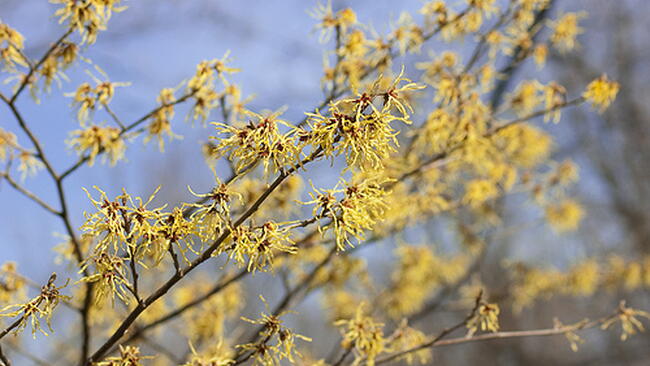

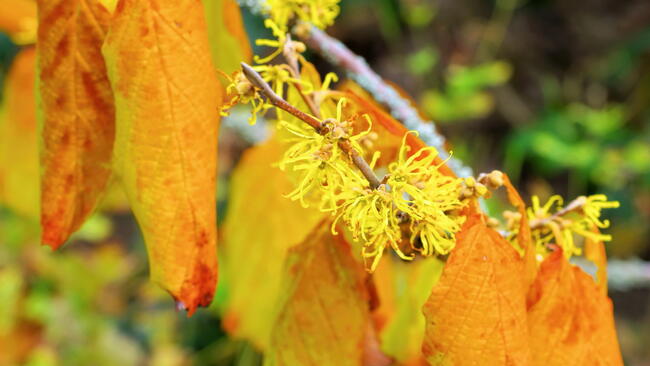


The effect that you describe is called leaf marcescence; it’s the trait of deciduous and refers to retaining plant parts after they (the parts) are dead and dry. It’s not clear why some trees and shrubs do this. Normally, the leaves come “unglued” (not the technical term) and fall off in autumn. Sometimes an early cold spell may interrupt the leaf drop. Reduced sunlight might inhibit it, causing leaves to remain attached. There are other possibilies, but know that when new growth appears in spring, it will release the leaves and you will forget it ever happened.
It's hard to say for sure why they're not doing well, as there are a lot of things that factor in to a plant's success in the garden. Clay soil could certainly be a culprit, however. Witch hazel prefers to grow in rich, moist soil in partial shade, but clay soil may be a step too far in the "compacted" direction.
Another factor could be the pH of the soil. Witch hazel grows best in slightly acidic soils, so if yours leans more towards basic, it could be prohibiting proper growth.
We would recommend doing a soil test through your state's cooperative extension, which will tell you what kind of soil you have already and what's missing. They may also be able to give you more advice for getting your witch hazel back on track!

Comments