Squash & Zucchini

PrintPrintEmailEmail
Your rating: None Average: 3.9 of 5 (19 votes)

Botanical name: Cucurbita

Plant type: Vegetable

USDA Hardiness Zones: Varies

Sun exposure: Full Sun

Soil type: Loamy

Squash is a seasonal vegetable. It is very susceptible to frost and heat damage, but with proper care it will produce a bumper crop with very few plants.

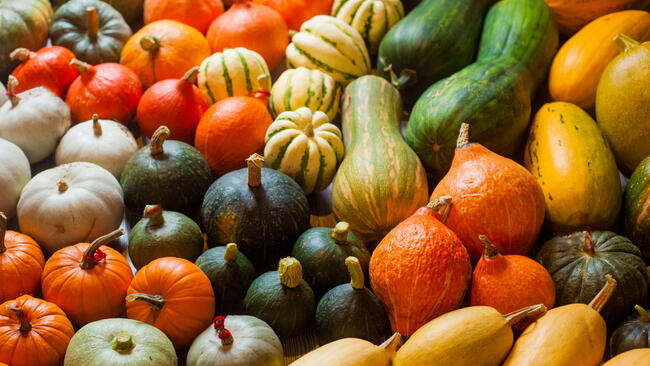
There are many varieties of summer squash to choose from, including zucchini. The main difference between winter and summer varieties is their harvest time; the longer growing period gives winter squash a tougher, inedible skin. Here are their various botanical names: Cucurbita pepo (Summer squash/Zucchini), C. maxima (True winter), C. pepo (Acorn, delicata, spaghetti) , C. moschata (butternut).
 

Planting

  • Start seeds indoors 2 to 4 weeks before last spring frost in peat pots.
  • Do not seed or tranplant seeds outside until the soil temperature is 55 to 60º F for successful germination. Usually, you can seed any time from one week after the last spring frost to midsummer.  You may be able to have two crops per season if you time it right.
  • The outside planting site needs to receive full sun; the soil should be moist and well-drained, but not soggy
  • Work compost or aged manure into the soil before planting for a rich soil base.
  • To germinate outside, use cloche or frame protection in cold climates for the first few weeks.
  • When you transplant, take care not to damage the root ball.
  • Plant seeds one inch deep and 2 to 3 feet apart.
  • Most summer squashes now come in bush varieties, but winter squash is a vine plant and needs more space. They will need to be thinned in early stages of development.

Care

  • Mulch plants to protect shallow roots, discourage weeds, and retain moisture.
  • Plants love lots of compost and will produce better if well fed. When the first blooms appear, apply a small amount of fertilizer as a side dress application and water thoroughly.
  • After harvest begins, fertilize occasionally for vigorous growth and lots of fruits.
  • For all type of squash, frequent and consistent watering is recommended. Water most diligently when fruits form and throughout their growth period.
  • To know when to water, use the finger method. Put your finger in the soil and if it's dry beyond the first joint, it needs watering.
  • If your fruits are misshapen, they might not have received enough water or fertilization.

Pests

  • If your zucchini blooms flowers but never bears actual zucchini, or it bears fruit that stops growing when it's very small, then it's a pollination issue. Most squashes have separate male and female flowers on the same plant. To produce fruit, pollen from male flowers must be physically transferred to the female flowers by bees. If you do not have enough bees, you can manually pollinate with a Q-tip—or, add nearby plants that attract bees!
  • Cucumber Beetle (link to pest page)
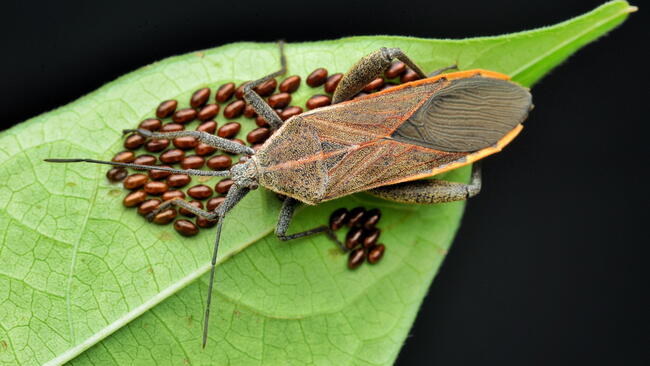
  • Squash Bug (link to pest page)
  • Squash Vine Borer (link to pest page)
  • Blossom End Rot: If the blossom ends of your squash turn black and rot, then your squash have blossom-end rot. This condition is caused by uneven soil moisture levels, often wide fluctuations between wet and dry soil. It can also be caused by calcium levels. To correct the problem, water deeply and apply a thick mulch over the soil surface to keep evaporation at a minimum.  Keep the soil evenly moist like a wrung out sponge, not wet and not completely dried out.
  • Stink Bug: If your squash looks distorted with dippled area, the stink bugs overwintered in your yard. You need to spray or dust with approved insecticides and hand pick in the morning. Clean up nearby weeds and garden debris at the end of the season to avoid this problem.
  • Aphids (link to pest page)


Harvest/Storage

  • Harvest summer squash when small and tender for best flavor. Most varieties average 60 days to maturity, and are ready as soon as a week after flowering.
  • Check plants everyday for new produce.
  • Cut the gourds off the vine rather than breaking them off.
  • Fresh summer squash can be stored in the refrigerator for up to ten days.
  • Harvest winter squash when rind is hard and deep in color, usually late September through October.
  • Winter squash can be stored in a cool, dark place until needed. It will last for most of the winter. If you have a cool bedroom, stashing them under the bed works well. They like a temperature of about 50 to 65 degrees F.
  • Freezing Summer squash: Wash it, cut off the ends, and slice or cube the squash. Blanch for three minutes, then immediately immerse in cold water and drain. Pack in freezer containers and freeze.
  • Freezing Winter squash: Cook as you normally would, then mash. Pack in freezer containers.
  • Pull up those vines and compost them after you've picked everything or after a frost has killed them. Then till the soil to stir up the insects a bit.

Recommended Varieties

  • ‘Goldbar’ (yellow summer)
  • ‘Cocozelle’ (zucchini) dark green, slender
  • ‘Butterbush’ (butternut)
  • ‘Cream of the Crop’ (acorn hybrid, prize winning)
     

Recipes

Wit & Wisdom

Squash flowers make a tasty treat when fried in a light batter.

Comments

Flower

I was looking at the flower on my squash and it tore. Does that mean the squash wont grow?

Squash is turning purple

I harvested yellow squash in the summer. Now the plant is producing purple fruit in the fall. Is it edible

purple fruit

Not being able to see the fruit, we can not identify it, and therefore would advise not eating it. We haven't heard of yellow squash turning purple later in the season (although we suppose it is possible if it had a cultural or pest/disease problem). It might be that you have an heirloom type that exhibits this trait, although a particular cultivar doesn't come to mind at the moment. Could it be possible that the original plant has died back and a volunteer is now growing in its place? It could be an edible vegetable, such as eggplant, but it may also be an inedible weed. To be safe--don't eat it! You might want to bring a sample to your local Cooperative Extension (if in the USA) for identification. To find your Extension, go to:
http://www.almanac.com/content/cooperative-extension-services

Hope this helps!

White zucchini

I thought I planted a regular zucchini, but it turns out to be white, and not light green like what I've been reign about, but white. I was going to shred it up into some bread, but the outer skin is kind of tough papery. Is this actually still a zucchini or some other kind of vegetable.

It is probably a zucchini.

It is probably a zucchini. Sometimes a plant grows a mutation and the color and texture can be different. See link below.
www.garden.org/boards/index.php?q=view&id=19514&board=20&top=19514

weird unknown plant in garden

These are growing on a vine that looks like a zucchini plant. At first the fruit looked like a big fat round cucumber, then they turned orange. I have picture but not sure a can post them here.
Does anyone know what these are?

There are SO many types of

There are SO many types of squash. For example, the "banana squash" is orange and oblong. Also, you'll find that squash will cross-pollinate with other nearby squash varieties, creating some interesting results! However, cucumbers belong to different species and will not cross with each other or squash. Here's a web site with photo IDs of different squash varieties. Hope this helps!
http://www.thenibble.com/reviews/main/vegetables/squash-glossary3.asp

I have squash idk what kind

Is big and white and I keep on hearing I should harvest when small help plz

We're not sure what variety

We're not sure what variety you have, but most squash varieties taste best when small and tender. The larger squash may be a bit bitter, but pick it and see how it tastes for yourself!

pumpkin suash also known as calbasa

I planted the seeds from the squash I ate and now have flowers and vins growing allover.I now have huge green long squash growing want to know if edible. We ate the flowers. DGree12@comcast.netplease e-mail

If you saved your seeds to

If you saved your seeds to replant and new squash grew, you can eat it! Congrats!

Zucchini relish

My local newspaper printed a recipe for zucchini relish in 2009. The recipe was from Sonoma-Williams company book of recipes.

I make it every year..Better than pickle relish. Delicious on hot dogs, burgers, deviled eggs, tuna and chicken salad. Also top cream cheese on basil/tomato wheat thins..delicious for appetizer or snack.

Squash bacterial wilt

Can I eat the squash from plants that have bacterial wilt

You need to remove or destroy

You need to remove or destroy the infected vines, but I suppose if you had fruit that formed before the virus (which kills the plant), then you could pick it off, wash, and eat it.

squash

We have tried both zuccini and summer squash but one produced only male flowers and one only female.Have seen bees on the blossoms many times.

Only flowers, no squash

My plants look healthy and are producing flowers like crazy, but no squash. What can I do?

Sounds like a pollination

Sounds like a pollination issue. Do you have a lot of bees in your garden? If not, you can try planting some flowers that will attract more or you can physically pollinate your plants with a Q-tip.

In general, all of the early

In general, all of the early flowers are males. Female flowers often develop many days later once the climate is ready for them. The females can be identified by the miniature fruit at the flower base. Both females and males will need to be blooming for pollination and keep your fingers crossed that the pollinators (bees) aren't deterred by fluky weather as timing is important; otherwise, you can hand pollinate.

Ants

I have a ton of ants on my squash plant. They don't seem to be doing any damage yet but I am concerned they are going to hurt the plant. Should I leave them or get rid of them?

Ants are generally harmless,

Ants are generally harmless, but they are often a sign that your plant has other sucking insects that are NOT harmless. We suggest spraying in the early morning with an insecticidal soap.

Zucchini flowers

How do you get large zucchini flowers to grow?

Are you interested in large

Are you interested in large flowers because you wish to cook them? If so, perhaps select a variety known for large blossoms such as "Butter Blossom."

Do you know where I can get

Do you know where I can get butter blossom seeds?

We apologize. ‘Butter

We apologize. ‘Butter Blossom’ is mentioned at
http://urbanext.illinois.edu/veggies/ssquash.cfm
But we couldn’t find a source for ‘Butter Blossom’ seeds.
Costata Romanesca is also great for blossoms and you can find seeds at
http://www.johnnyseeds.com/p-7655-costata-romanesco.aspx

Thank you very much!

Thank you very much!

Do you pick the yellow zuccini flowers off or leave them for the

Pick the zuccini flower off or leave it on?

We recommend leaving them

If you wish to cook the blossoms, harvest only the male blossoms, but leave some on the vine for pollination. (The male blossoms have a thin stem; the female blossoms have a thick stem with a bulb at the base which develops into the squash.)

Spaghetti Squash

How do you know when to harvest
spaghetti squash? Mine are turning yellow and are very hard. The stems are very tough and green.

Harvesting Squash

A good indicator of when to harvest your squash is when the color turns a nice, golden yellow. Eat them when they're small; they're more tender.

SQUASH

I planted three squash plants they have nice vines lots of blooms, but the squash only get about 2 inches long and stay that size. what do i need to do?

Squash

The most common reason for this problem is lack of pollination. There are female and male flowers. Sometimes the females bloom before any male flowers have bloomed and so the female flowers do not get pollinated. Usually, if you wait, you'll find that the males start blooming and you're getting TONS of squash! If not, there's a lack of pollinators in your garden and you can do it yourself with a Q-tip.

It sounds like they're not

It sounds like they're not getting pollinated. You could try hand pollinating them. Use a q-tip to transfer some pollen from a male flower to a female. The male flower will have narrow stems and pollen-bearing stamens in the flower, and the female flower has a fattened stem and a nubby-looking pistil in the center.

squash

the leaves on my squash plants are so big the are blocking the sun from getting to the plants beside them.. is it safe to break some of the bigger, overlaping leaves or will it kill my plants?

Squash leaves

Breaking some of the leaves may cause root damage to the plant. We don't recommend doing this.

However, you could use small garden posts to help reposition the leaves away from the other plants. No damage done!

Thank you for your interest in the Old Farmer's Almanac and our Web site.

Butternut squash

How can I tell when butternut squash is ready for harvest?

When ripe, the rind of

When ripe, the rind of butternut squash will change color from light beige to deep tan or what some people call a deep flesh color. Then the skin will be hardened. Be sure to harvest before frost. When you harvest, use pruning shears and cut 1/2 inch above the fruit. Do not break off the stem. Happy harvest!

Straight neck yellow squash dying

I harvested my first squash and a few hours later about a quarter of the plant is wilting and looks to be dying. What could cause this? I tried to be as careful as possible when harvesting with shears. Could I have cut part of the main stem by accident?

If your plant is wilting, the

If your plant is wilting, the common reason is the squash vine borer. Slit open a stem lengthwise and look inside for grubs. If a plant wilts but there is no evidence of borers, it may be bacterial wilt infection or root feeding by larval cucumber beetles. See our pest library for more information: www.almanac.com/topics/gardening/pests-and-problems

After reviewing the pests

After reviewing the pests section, the brown balls look like the eggs of the squash bug. Any organic solutions? If not, is it OK to put Sevin on the flowers too or just the leaves?

Good sleuthing. Yes, small,

Good sleuthing. Yes, small, reddish-brownish eggs on the underside of leaves in evenly spaced groups indicate squash bugs. Frankly, this is the most loathsome of pests and there is not a lot you can do once your plants are attacked. Control in organic gardening is done before seeds are even planted by removing overwintering sites with post-harvest tillage, removing and even burning all vines and debris, cover cropping, rotating crops, using tightly secured row covers until flowering starts, planting resistant types (e.g, 'Butternut'), interplanting buckwheat to attract a predator fly, companion planting with bug-repellant flowers (e.g., marigolds, nasturiums), and planting nearby "trap" crops of plants that squash bugs prefer (e.g., Hubbard). If you catch the pest early --on just a few vines--hand pick the pests and crush the eggs daily. Some organic gardeners say using diatomaceous earth (DE) slows them down. Others say to spray with Neem oil, a natural pesticide; spray on all leaf and stem surfaces. One expert gardener recommends Bayer Advanced Fruit & Vegetable Insect Control. Ask your local garden center about these products and follow directions very carefully. One of our readers says to put the squash bugs in a blender, add some water, wait a day, and spray THAT on the pests and it works. Warning: they are very smelly!
Now, Sevin is a chemical. I believe it's for the base of the plant, below the flowers, but follow the directions very carefully. Note that Sevin is extremely toxic to honeybees (our dear pollinators). Many farmers use pesticides and will tell you timing is critical. Application must happen early during maximum egg hatch. Otherwise, it may be back to those preventative controls.

Squash pollination

How do you tell the difference between male and female flowers?

Great question. Once you

Great question. Once you know, it's easy to tell the difference. Female flowers look as if they have a miniature fruit right under the petals. Male flowers have a slender stalk below the petals and that's it. It's normal for the male flowers to fall off, especially at the beginning when there may not be females yet. If the females start to fall off, then there may be a pollination issue.

Yellow squash

I picked my first squash May 1, now it looks like the plants are starting to die. Is this normal? How many weeks should you get squash from the plant?

It's hard to say why they are

It's hard to say why they are dying. Do you have any frass? It's possible that it's the squash vine borer pest, especially if the soil's been too wet. Take a knife and slit the stem lengthwise and look for those grubs. If they're there, you need to quickly pull those plants as it is too late for treatment. In the future, row covers may help.

DYING SQUASH

My squash plants are producing quite a bit but the squash are beginning to die off after a short growth, Is this a pollenation issue?

squash problems

If the squash fruit gets an inch or two long and then dies, it is probably related to pollination. Female and male flowers need to blossom at the same time. So, it may just be a question of waiting until both are blossoming. Tips: To attract bees, avoid spraying pesticides as well as covering the squash during morning pollination. Avoid overhead sprinklers. If the weather's been too rainy or overly hot, you may also need to wait for conditions improve. Finally, you can always attract more bees with nearby plants (example: plant bee balm).

What time of plants

I have plants where I just moved to and I was told they are squash. I for some reason dont think so I thought all squash had yellow blooms? These have black almost really dark purpleish blooms and the other has like a dark pink with purple in the middle on the bloom what kind of plants are these could anyone tell me I have pictures on my phone but no way to post them on here!

Eggplant?

Hmmm... Hard to say without a picture, but eggplants have deep purple blooms. You could always bring a sample to your local garden center.

Additional pests, pollinating, flowers, etc.

PESTS - In the south (Texas), I've run into problems with cabbage loopers and melonworms. I had to spray Bt (an approved organic solution) to get them to go away.

POLLINATION - It's possible to pollinate the flowers without bees. Basically, you carefully open the flowers (if they haven't already), remove the "dusty" component (male?), and rub it against the other one.

FLOWERS - The flowers are great to eat straight from the plant. The fruits (veggies) also! In fact, I've had to do that to keep them from the squirrels, who have done damage to the nearby stems, being clumsy in their gnawing.

Zucchini

One pest you left out is the squash vine borer, which has killed many plants I have in Indiana. If you plant radish seed with it and start them later in the season, you have a better chance of live plants. I feed the extra large ones to my sheep.

Post new comment

By submitting this form, you accept the Mollom privacy policy.