Planting
When to Plant Salvia
Salvia is usually planted in the spring or fall, but the exact timing depends on the frost dates where you live.
- Potted salvia: Plant outside in spring, after the last frost. If your salvia can survive winters where you live, you can also plant it in fall, several weeks before the first frost.
- Salvia seeds: Plant your seeds indoors about 10-12 weeks before the last spring frost so you’re ready to move them into the ground outside once the final frost has passed.
Find the first and last frost dates for your area using our Frost Dates Calculator.
Where to Plant Salvia
- Sunny location: Most salvias are happiest in spots that get at least 6 to 8 hours of sunshine a day. Some types with lighter-colored flowers can handle part-shade, but you might see fewer blooms.
- Well-draining soil: Soil that allows water and oxygen to flow freely is important for salvias. Avoid planting yours in low spots where excess water has nowhere to go and where roof runoff regularly flows.
How to Plant Salvia
To grow salvia from potted plants:
- Start by loosening the soil to about 12 inches deep. Remove any large stones or roots you come across. Mix in a 3-inch layer of compost to help your salvia thrive.
- If you’re planting in a container, use a potting mix that drains well. You can mix in some perlite or coarse sand to help the water drain out. Small, annual salvias can be kept in containers that are 8-10 inches wide, but I recommend pots that are at least 3 to 5 gallons for bigger plants. Whatever you use, make sure the container has drainage holes!
- If you’re planting in the garden, dig a hole that’s twice as wide as the plant’s pot. Take the plant out of the pot and place it in the hole so the top of the root ball is even with the soil surface. If you’re growing multiple plants together, leave about 1-3 feet of space between each one.
- Carefully fill in around the plant, pressing the soil down gently. Add a layer of mulch, and water thoroughly.
To grow salvia from seeds:
- Plant the seeds indoors about 10 to 12 weeks before the last spring frost. Lightly press the seeds into the top of your seed-starting mix—don’t cover them up!
- Keep the soil evenly moist. The seeds will begin to sprout soon.
- When your seedlings are ready, help them adjust to outdoor life—this is known as “hardening off”—before planting them outside for good after the final frost has passed.
Credit: Mark Herreid
Harvesting
When to Harvest
- Salvia flowers can be harvested for cut flowers and bouquets as soon as they begin to open.
- Harvest your salvias in the early morning if you can—flowers harvested then tend to last the longest!
Credit: agatchen
How to Harvest
- Use sharp, clean pruners to snip the long flower stems free.
- Keep as many leaves in place as you can so the plants stay healthy.
- Never harvest more than 1/3 of your plant’s blooms in one go. Pollinators like bees and butterflies rely on salvia flowers for nectar, so they need their share, too!
Storage
- Place your cut salvia flowers in a vase of fresh water as soon as you can, removing any leaves or blooms that would be underwater.
- Refresh the water daily and keep the flowers out of direct sunlight.
- Your salvia flowers should look lovely for about 5 to 7 days after harvesting!
Types
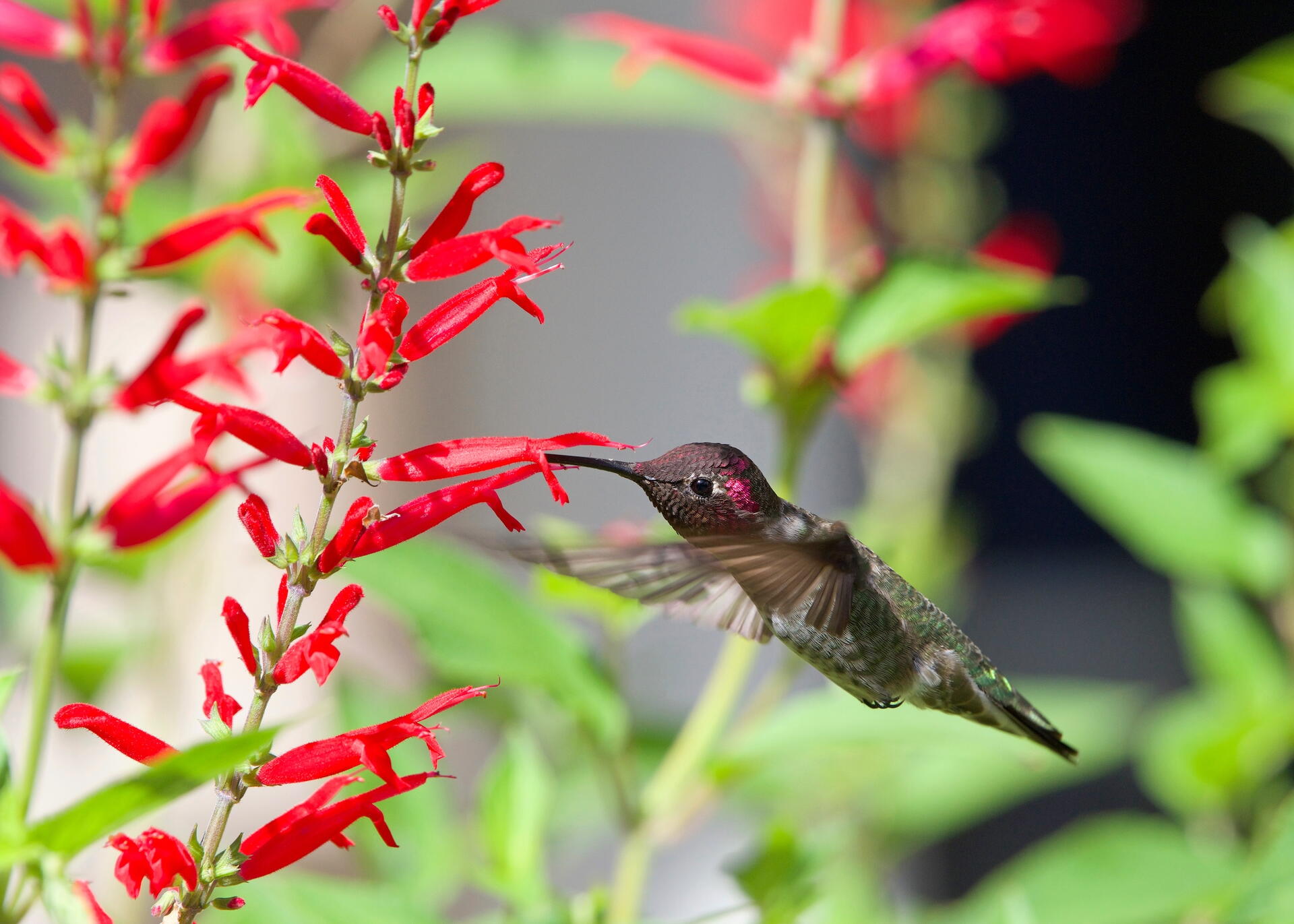
- Pineapple sage (Salvia elegans): Bright red blooms and fruity-scented leaves. Grown as an annual in most places. Flowers are edible!
- Autumn sage (S. greggii): Compact and shrubby. Blooms from spring to frost in a rainbow of colors. Does well in the heat and naturally resists diseases.
- Pitcher sage (S. azurea var. grandiflora): Tall and airy, with sky-blue flowers and aromatic leaves. Blooms in late summer to fall.
Credit: Sheila Fitzgerald
Frequently Asked Questions
-
Is salvia a perennial?
Many salvias are perennials, but some are grown as annuals because they can’t survive cold winters. Check your plant tag’s USDA Hardiness Zones to see whether yours can return each year where you live. -
Should you deadhead salvia?
Yes—deadheading salvia is a great way to encourage another round of flowers. Just snip off the flower spikes after the flower is past its prime. -
Do salvias bloom all summer?
Some salvias flower through much of summer, while others wait until later in the season. Autumn sage has a long flowering season, whereas pineapple sage typically blooms in late summer and fall. Keep up with deadheading—removing spent flowers—as the season rolls along to encourage another round of flowers. -
Can salvia grow in shade?
While a few salvias don’t mind a bit of shade, most grow and flower best with lots of sunshine. If your summers are scorching, types like autumn sage might appreciate a little afternoon shade. Before choosing where to plant your salvia, take a peek at how much light it prefers.
-
Is salvia deer resistant?
Many salvia types are not high on a deer’s menu. Still, when food is hard to find, a hungry deer might nibble on just about any plant, so don’t take “deer resistant” as a promise carved in stone.
Sources
- University of Florida Extension — Bird-Friendly Plants
- NC State Extension — Salvia nemorosa
- University of Minnesota Extension — Salvia

More Like This

Unlike annual salvias, which will not return the following year, perennial salvias should show new growth each year. However, many factors can affect their timing. Are these established plants? If so, look for them to start new growth around the same time as last year, although certain stresses may cause delays. Is there any sign of damage to the two plants, from overwintering, animals, or disease/insects? If not, your salvias likely should start growth by mid to late May, but this can depend on species--some emerge later than others. A period of warmer weather may help to wake them up. For more information about how salvias are emerging in your area, you might try contacting a local garden center or your county's Cooperative Extension--contact information can be found here:
https://extension.psu.edu/county-offices
Hope this helps!
Hi Michael,
In your area, it is best to just leave the stems alone until early spring—when the chance of frost has passed—and new growth begins. At that time you can prune away the old stems. This will help to avoid any freeze damage that could take place during any cold stretches this winter.
Hope this helps!
- « Previous
- 1
- 2
- …
- 10
- Next »

Comments