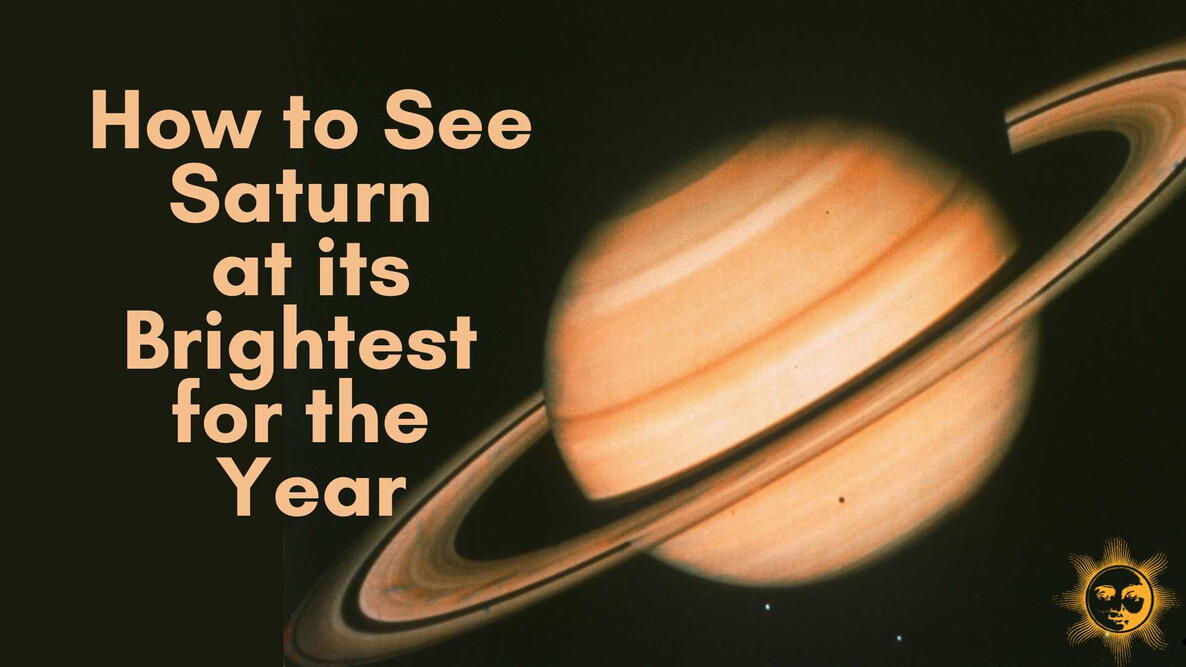
Saturn reaches opposition on October 4, 2026, when Earth passes between the Sun and the Ringed Planet. Saturn will rise around sunset, remain visible all night, and appear at its brightest for the year. Here’s when and where to look—and what you need to see its magnificent rings.
Quick Facts About Saturn Opposition
- Opposition date: October 4, 2026
- Best viewing: Late September through early October
- Best time: Around local midnight
- Visible without a telescope: Yes, as a golden, star-like point
- Rings visible: Through a small telescope
- Where to look: Use local planetary rise-and-set times
When Is Saturn at Opposition in 2026?
This is the time. On October 4, the Ringed Planet will be at its 2026 opposition—at its very nearest to Earth and well-placed for viewing. Near opposition, Saturn rises around sunset and is highest around local midnight.
What Does “Opposition” Mean?
Saturn is closest to Earth around opposition. On this day, Earth passes right between the Sun and Saturn. With the Ringed Planet opposite the Sun, its face is fully illuminated.
Saturn, the sixth planet from the Sun, will shine at its very brightest. The Ringed Planet will be close, big, and bright from early September through early October.
What Telescope Do You Need to See Saturn’s Rings?
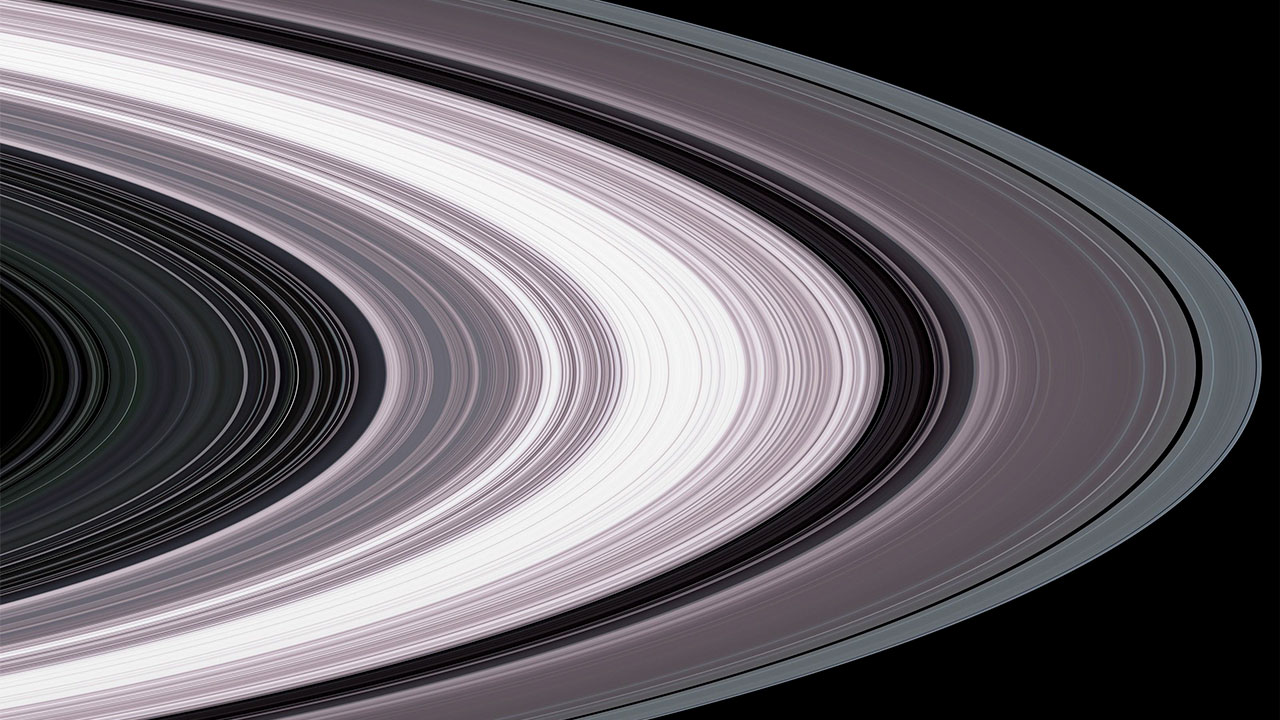
Even through small backyard telescopes, the thinner, darker outer ring, the unimaginatively named “A ring,” is clearly separated from the broader, whiter B ring by an inky-black space. This is the famous Cassini Division, a gap that shows up wonderfully with only 100x on nights when the stars are steady and not twinkling.
Those rings are fashioned of countless chunks of ordinary water ice, ranging from tiny grains to large chunks of ice. The rings span 100,000 miles but are only about 35 feet thick. So thin, they’re analogous to a sheet of paper the size of a city block.
How to Find Saturn in the Night Sky
Say you’re sold and want to find Saturn for yourself. If it were one of the sky’s most dazzling stars, the way Venus or Jupiter always are, this would be a piece of cake. But it’s easy anyway.
While Saturn is at “opposition” in early October, the planet doesn’t change much month to month, so start looking the next time you have a clear night this month.
See Saturn’s rise and set times for your location.
Frequently Asked Questions
When is Saturn at opposition in 2026?
Saturn reaches opposition on October 4, 2026. Around opposition, Earth passes between Saturn and the Sun, making Saturn appear especially bright and well-positioned for viewing.
What is the best time to see Saturn?
Near opposition, Saturn rises around sunset, reaches its highest point around local midnight, and remains visible until sunrise. The weeks before and after October 4 also offer excellent viewing opportunities. NASA Night Sky Network
Can you see Saturn without a telescope?
Yes. Saturn is visible to the unaided eye as a bright, golden, star-like point. It generally shines more steadily than surrounding stars, although it may appear to twinkle when close to the horizon.
Can you see Saturn’s rings without a telescope?
No. Saturn’s rings cannot be distinguished with the unaided eye or ordinary binoculars. You will need a telescope to separate the rings from the planet.
What telescope magnification shows Saturn’s rings?
A small telescope using approximately 40x to 50x magnification can reveal Saturn’s rings under clear, steady conditions. Around 100x or more may show additional detail, including the Cassini Division.
Can binoculars show Saturn’s rings?
Standard binoculars will show Saturn as a bright point but generally cannot resolve its rings. High-powered, tripod-mounted binoculars may make Saturn look elongated, but a telescope provides a much clearer view.
Why is Saturn brightest at opposition?
At opposition, Saturn is approximately opposite the Sun in Earth’s sky and relatively close to Earth. Its visible side is also almost completely illuminated, helping the planet appear brighter.
What will Saturn’s rings look like in 2026?
Saturn’s rings appeared nearly edge-on from Earth in 2025. During 2026, they gradually open to a wider viewing angle, making them increasingly noticeable through a telescope.
Where should I look for Saturn?
Saturn rises in the east around sunset near opposition, travels across the sky overnight, and sets in the west around sunrise. Its exact direction and height depend on your location, so consult a planetary rise-and-set calculator for local details.
Is October 4 the only night to see Saturn?
No. Although October 4 is the date of opposition, Saturn will remain an excellent evening target for weeks afterward and easily visible through the end of 2026.
You’ll see why Saturn is such a fail-safe customer-satisfaction target through any size telescope. When Galileo first observed Saturn in 1610, he could see that something was definitely screwy about Saturn, but to him the rings looked like a pair of handles like those on a sugar bowl. His telescopes just weren’t good enough, and you can’t blame him, since nowhere on Earth is there any kind of ball surrounded by unattached rings.

More Like This


Comments