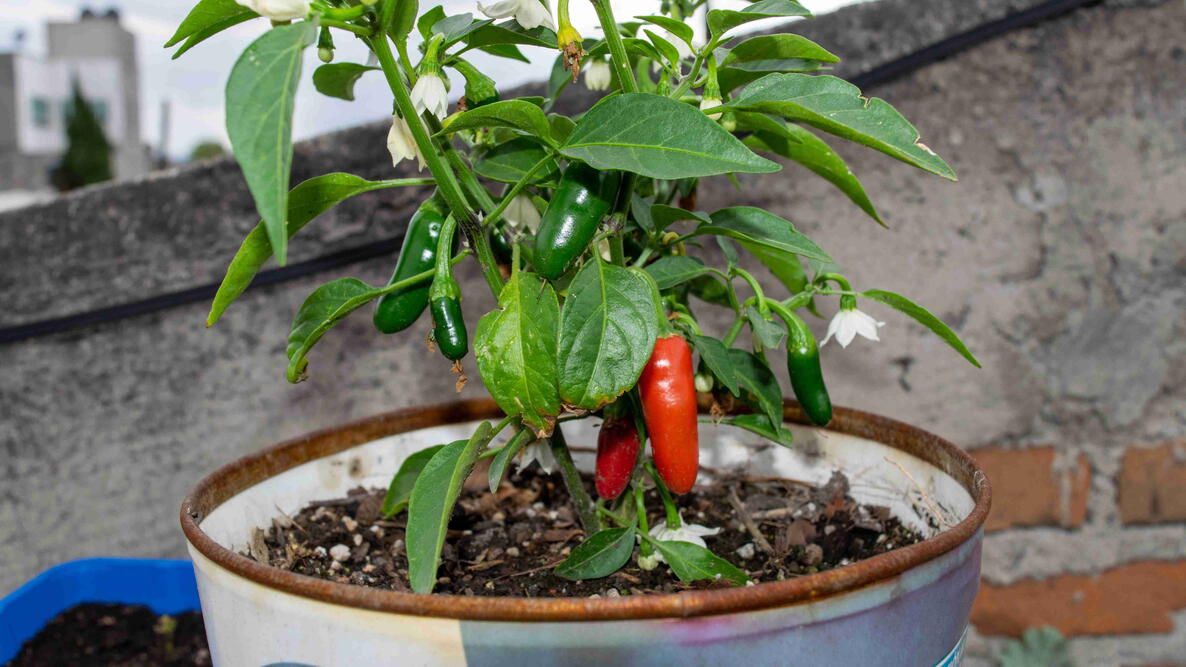
From bells to fiery habaneros, peppers are packed with flavor and heat and surprisingly fun to grow. But you don’t necessarily need big veggie beds – or even a garden – to harvest all of your favorite pepper varieties at home. In this guide, I’ll share my best tips for keeping peppers in containers and how to grow your favorite mild or hot pepper plants indoors, outdoors, and anywhere in between!
Growing Peppers in Containers
Container Size and Type
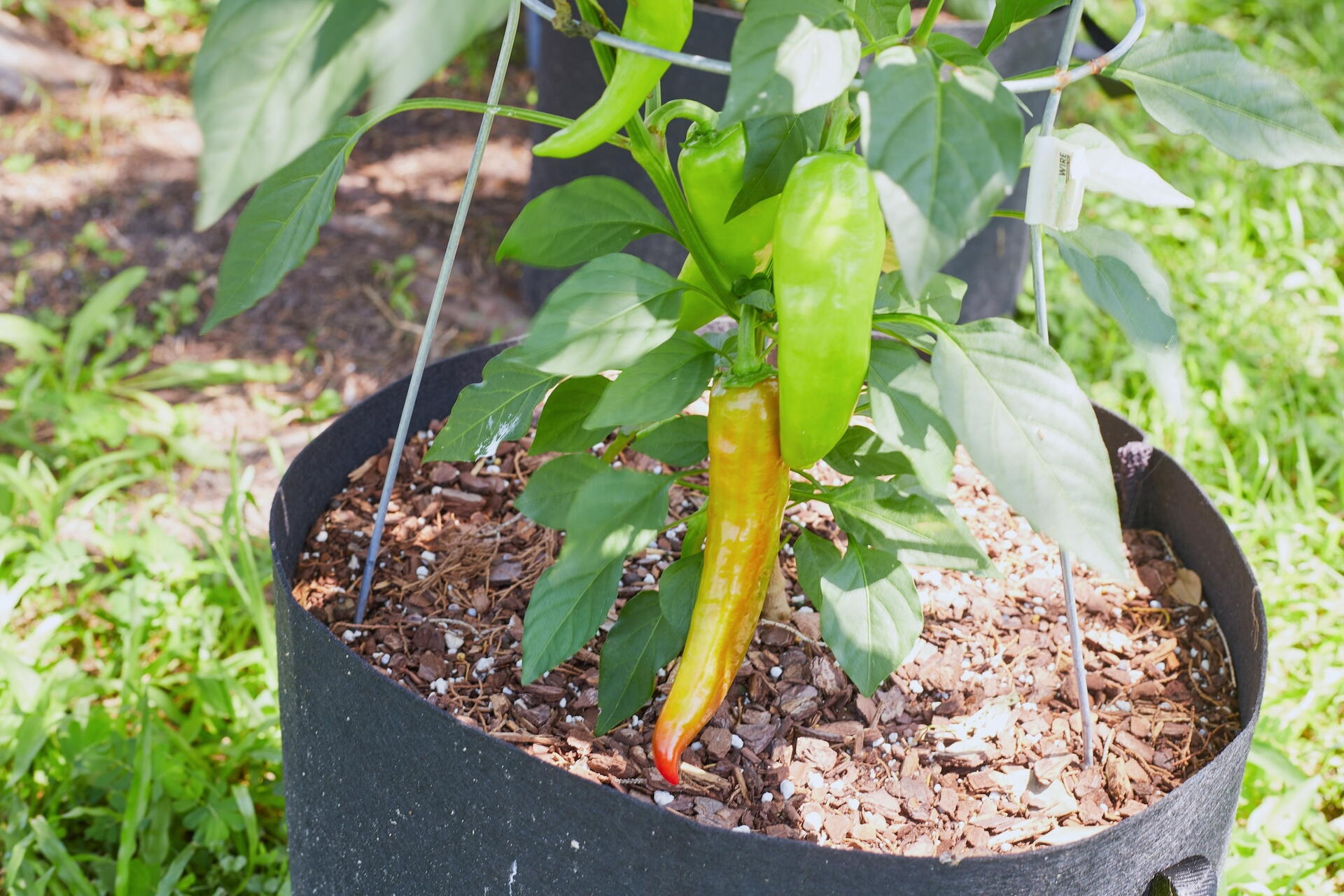
For container size, bigger pots and planters are usually best. Small, dwarf, and compact pepper varieties can grow in 2- to 3-gallon containers, but standard-sized peppers generally do better in pots holding at least 5 gallons. Bell peppers, in particular, can grow quite large, which is why I always grow mine in 10-gallon bags!
Pepper plants can grow in plastic, ceramic, or terracotta pots, fabric grow bags, and even upcycled buckets. Just make sure your container is made from food-safe materials and has drainage holes so pepper roots don’t sit in soggy soil.
I personally like fabric grow bags because they’re breathable, drain quickly, and have handles for easy carrying. They can leak, though, which gets messy on patios and porches. I keep mine on small scraps of tarp, but if you’re worried about the mess, a terracotta pot with a saucer works, too.
Not sure what size pot you need? Check our Vegetable Container Size Chart to find the right container for your plants.
Best Pepper Varieties for Containers
Almost any type of pepper can grow in a container, but if you’re new to growing peppers, compact varieties are the easiest place to start.
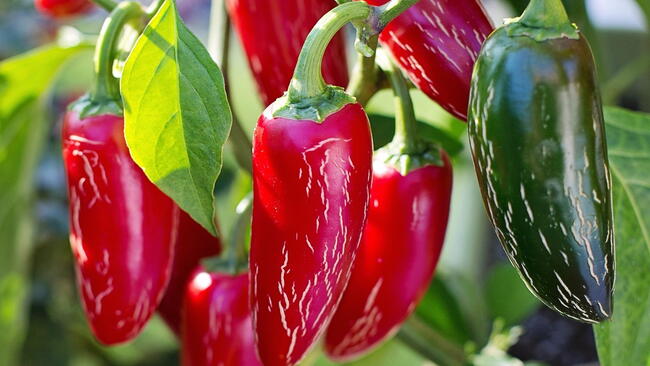
Dwarf peppers like ‘Patio Fire and Ice,’ ‘Mini Bell,’ and ‘Medusa’ are good choices for smaller pots. You can also grow popular hot peppers, including:
- Jalapeños
- Habaneros
- Thai chilies
- Cayenne peppers
- Ghost peppers
Just check the mature size of your chosen variety. Some hot pepper plants grow surprisingly large and need a roomy container to thrive!
Best Potting Mix for Peppers
Peppers grow best in a rich, well-draining potting mix that holds moisture without becoming soggy. Most store-bought potting mixes designed for containers and edible crops work well. Just avoid using garden soil, which can become compacted in pots and cause drainage problems.
Before planting my peppers, I like to mix some finished compost into store-bought potting mix for an extra nutrient boost. If you’d rather make your own potting mix, that’s an option, too! Just make sure it’s lightweight, drains well, and contains enough organic matter to support healthy growth.
Planting Peppers in Containers
Starting with nursery plants? That’s the easiest way to grow peppers in containers! Choose healthy, compact plants with sturdy stems and green leaves. Once the weather is warm enough, harden them off if necessary and transplant them directly into their permanent containers.
Starting Peppers From Seed
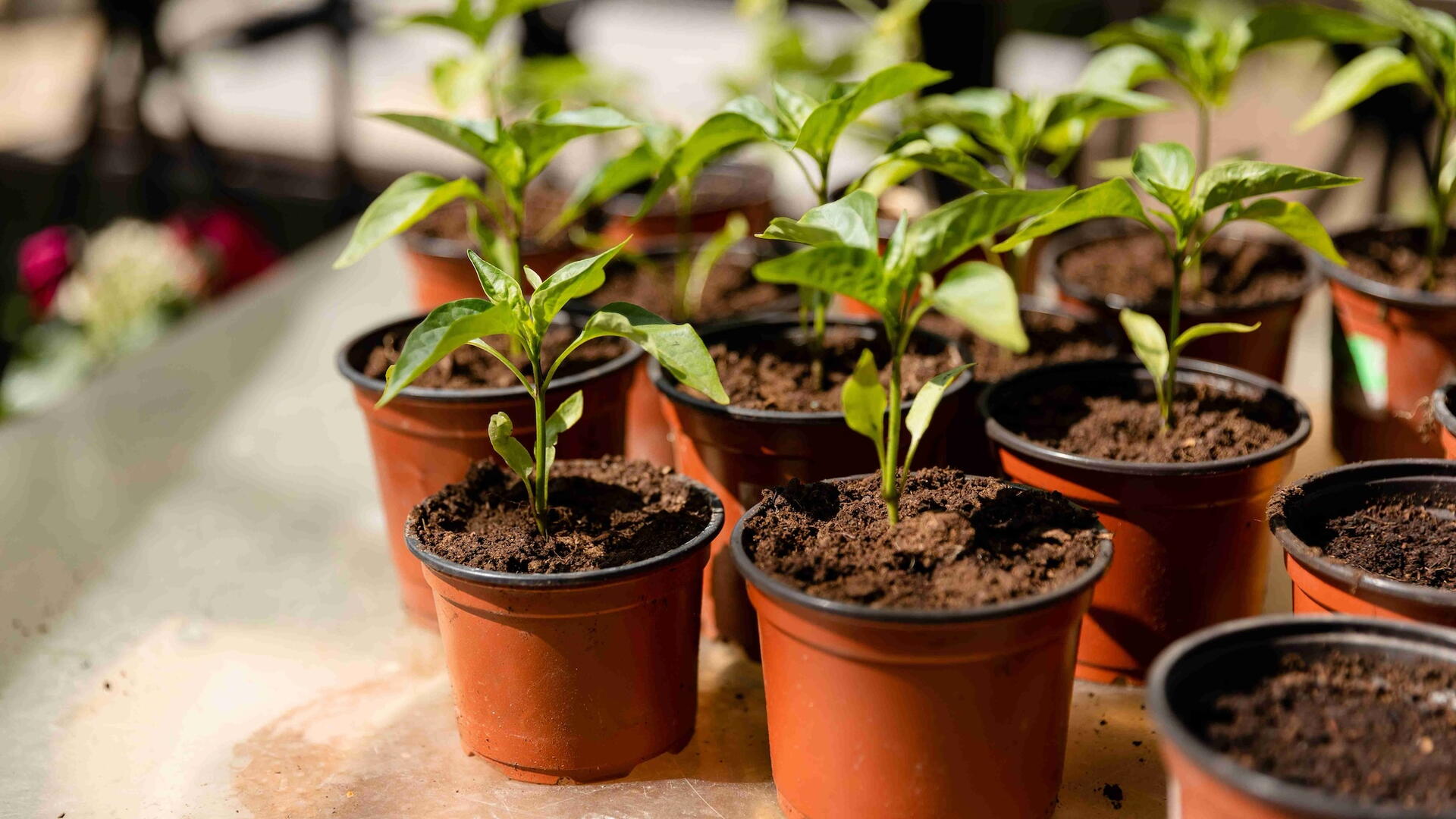
I like to start my own pepper plants from seed indoors in spring. Once the seedlings are large enough and the weather warms, I transplant them into their permanent containers using these steps.
- Start seeds indoors. Sow pepper seeds about 8 to 10 weeks before your last spring frost date. Plant two seeds ¼ inch deep in pots or seed-starting cells filled with seed-starting mix.
- Provide warmth and light. Keep the mix evenly moist but not soggy, and place the seedlings under grow lights. A heat mat can help maintain the warm soil temperatures peppers need to germinate.
- Thin the seedlings. Once seedlings develop true leaves, snip off the weaker seedling with small scissors. I also like to run a small fan nearby to improve air circulation and reduce moisture-related problems.
- Repot as needed. If seedlings outgrow their original cells or pots before outdoor planting time, carefully move them into 4-inch containers. Continue providing plenty of light and consistent moisture.
- Harden off and transplant. Once frost danger has passed and nighttime temperatures are consistently around 55°F to 60°F or warmer, harden off your seedlings over 1 to 2 weeks. Then transplant them into their permanent containers at the same depth they were growing before. Unlike tomatoes, peppers generally don’t need to be planted deeply.
- Find a sunny spot. Place your containers where peppers receive at least 6 to 8 hours of direct sunlight daily. Water thoroughly after transplanting, and add a stake or small cage if the variety needs support.’
Watering Peppers in Containers
Container-grown peppers generally need more frequent watering than peppers planted in the ground, especially during hot summer weather. But peppers don’t like soggy soil, so don’t overwater them!
I always feel the soil before watering and give my pepper plants a thorough drink when the top inch of potting mix feels dry. In cool spring and autumn weather, I may water just once or twice a week, but during hot summer weather, my potted peppers often need water every day.
Water until excess moisture drains from the bottom of the container, and don’t let pots sit in standing water. The goal is consistently moist soil, not soggy roots.
Fertilizing Peppers in Containers
Regular fertilizing helps container-grown peppers stay healthy and produce a good harvest, but there’s no single way to feed pepper plants.
I like to mix compost into my potting mix before planting, then feed my peppers with a balanced liquid organic fertilizer once they start flowering and about every 2 to 3 weeks afterward. Granular fertilizers work too, but you usually apply them less often.
Always follow the application instructions on your fertilizer packaging. I’ve had good results with seaweed- and kelp-based fertilizers, but avoid overdoing nitrogen, which can encourage lots of leafy growth at the expense of peppers.
Common Pepper Problems
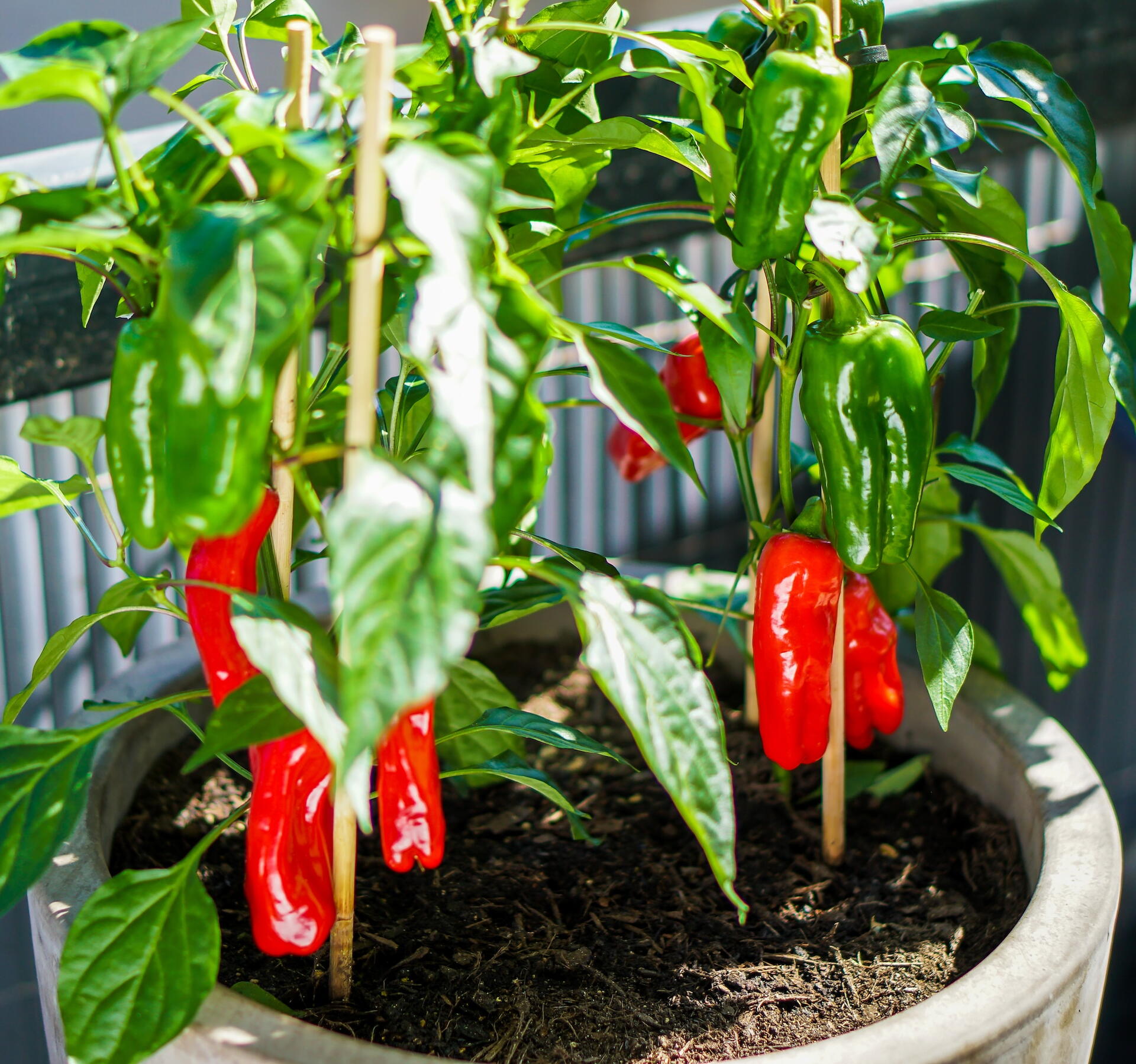
Once peppers are planted in pots, they’re relatively easy to care for and usually don’t need much pruning. That said, it still pays to watch for a few common problems that can affect plant health and productivity!
- Pests. Whiteflies, aphids, and spider mites can affect container-grown peppers, especially when you bring plants indoors. Check leaves regularly, including their undersides. Small infestations can sometimes be rinsed away with water, while insecticidal soap can help control certain pests when used according to label directions.
- Blossom-end rot. Dark, sunken spots on the undersides of developing peppers often result from inconsistent moisture, which interferes with calcium uptake. Water regularly to keep the potting mix evenly moist, but not soggy.
- Yellowing leaves. Yellow leaves can indicate overwatering, poor drainage, or nutrient deficiencies. Check the potting mix first. If it’s soggy, allow it to dry slightly before watering again.
- Poor fruiting. Peppers may produce fewer fruits when temperatures are too hot or too cold, or when plants experience inconsistent watering or nutrient problems. Although peppers are self-pollinating, extreme temperatures can interfere with flower development and fruit set
How to Overwinter Potted Peppers
Pepper plants don’t tolerate frost, so harvest any remaining peppers before freezing temperatures arrive. But there’s good news: If you’re growing peppers in containers, you can bring them indoors and keep them alive through winter!
Before bringing your peppers inside, inspect the leaves and stems carefully for pests. Then place the plants in a bright window or under grow lights. With enough warmth and light, some pepper varieties may continue producing fruit indoors. Others may slow their growth or become dormant until spring.
My tip: I always keep outdoor pepper plants separate from my houseplant collection when I first bring them indoors, just in case they’re harboring hitchhiking pests. Indoor air can also be quite dry in winter, so a humidifier may help reduce plant stress.
Overwintering your favorite pepper plants can give you a head start on the next growing season—and potentially an earlier harvest!
Frequently Asked Questions
-
How many pepper plants can you grow in one container?
For most standard-sized pepper varieties, grow one plant per 5-gallon container. Compact or dwarf peppers can grow in smaller pots, while several plants may share a large planter if there’s enough room for their roots and foliage. Avoid crowding plants, which can restrict airflow and reduce growth.
Sources
- Penn State Extension — Growing Peppers
- University of Maryland Extension — Growing Vegetables in Containers

More Like This

Comments