For daily wit & wisdom, get the Almanac newsletter.

24 Strange Facts About the Universe That Will Blow Your Mind

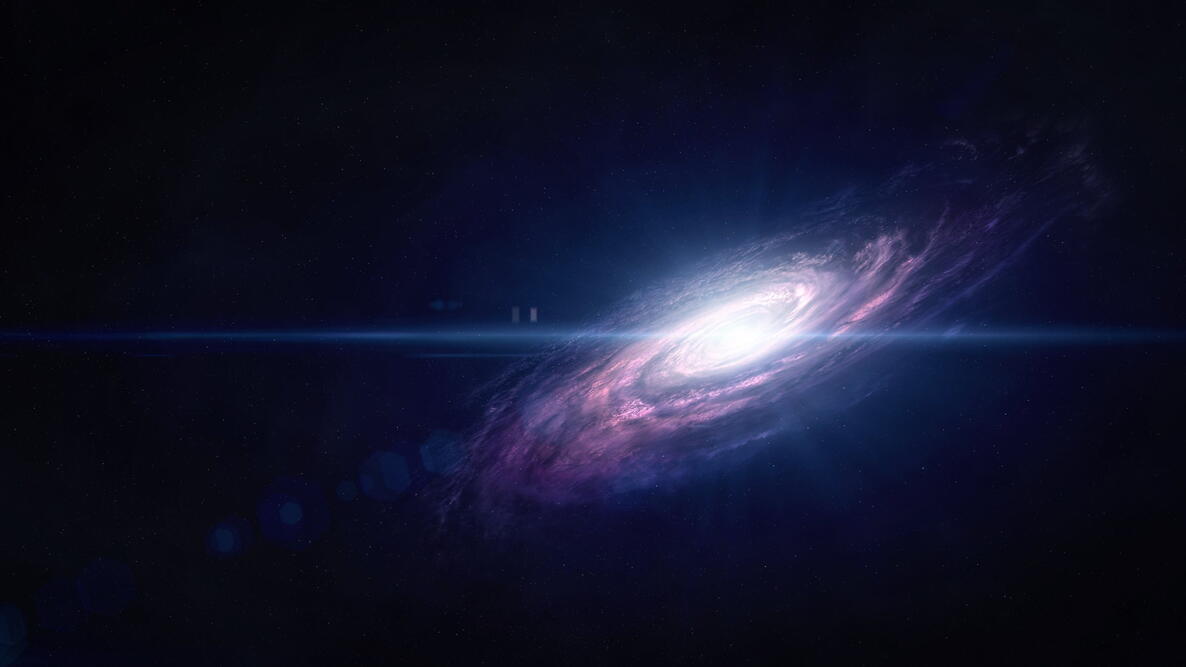
Panoramic view of the galaxy. Spiral Galaxy, beautiful science fiction wallpaper with endless deep space. Elements of this image furnished by NASA
Image Credit:
Buradaki/Shutterstock

Written By: Bob Berman Astronomer

The universe is certainly a strange place … perhaps stranger than you know! From the pages of The Old Farmer’s Almanac, here are some fascinating pieces of trivia about our solar system and beyond.

24 Strange Facts About Space and the Universe

  1. You could walk faster than Venus spins. Venus is the slowest-spinning planet in our solar system, taking about 243 Earth days to complete one rotation. Its equator moves at roughly 4 miles per hour—a brisk walking pace!
  2. A neutron star packs a mountain into a sugar cube. These collapsed stellar remnants are so dense that a sugar-cube-sized amount of their material would have a mass of roughly a billion tons.
  3. Some star names are quite a mouthful. Libra’s Zubeneschamali is one example. Compare that with the familiar three-letter name of our own star: the Sun.
  4. Sunspots helped reveal the Sun’s magnetic influence on Earth. In 1843, Heinrich Schwabe reported a cycle in the number of sunspots. In 1852, Edward Sabine connected that cycle with magnetic disturbances on Earth. The Sun and our world were linked in ways scientists were only beginning to understand.
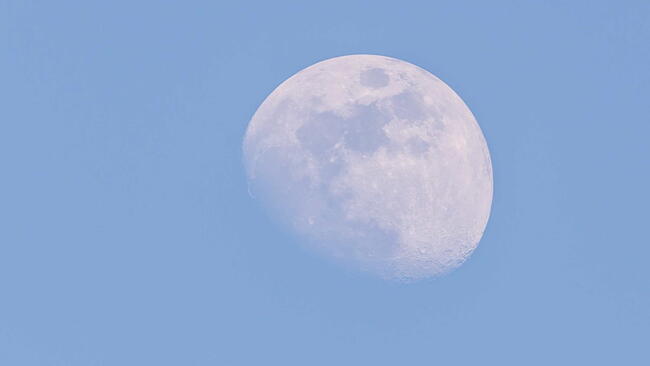
  5. The Moon’s “seas” contain ancient lava, not seawater. The large dark blotches on the Moon are called maria, Latin for “seas.” Many have wonderfully evocative names, such as the Sea of Tranquility and the Ocean of Storms. They are actually plains formed by ancient volcanic activity.
  6. There’s a Pluto-sized ball inside Earth. Our planet’s inner core is a solid sphere made mostly of iron and nickel, roughly the size of Pluto. Around it lies a separate, liquid outer core. Scientists are still investigating how the inner core’s rotation changes relative to the rest of Earth.
  7. The Sun’s energy output is almost beyond imagining. Every second, the Sun releases roughly as much energy as 91 billion explosions of 1 megaton each. That comparison comes from converting its enormous energy output—about 380 trillion trillion watts—into explosive equivalents.
  8. A schoolgirl suggested Pluto’s name. Clyde Tombaugh discovered Pluto at Lowell Observatory in 1930. Eleven-year-old Venetia Burney suggested naming it after the Roman god of the underworld—a fitting choice for such a distant world.
  9. Mars’s moon Phobos is heading for trouble. Phobos is slowly spiraling toward Mars. In about 50 million years, it is expected either to crash into the planet or break apart and form a ring.
  10. The idea that Earth circles the Sun is ancient. Long before Copernicus or Galileo, Aristarchus of Samos proposed a Sun-centered system in the third century BCE. His idea did not become the accepted explanation of planetary motion.
  11. Even a tiny model solar system needs a lot of room. On a scale model with Earth just 1 inch from the Sun, Earth would be a microscopic speck and the Sun smaller than a typical printed period. The nearest star beyond our Sun would still be about 4½ miles away.
  12. Invisible particles are streaming through you right now. Neutrinos are extraordinarily abundant particles with tiny masses. Tens of trillions of neutrinos from the Sun pass through your body every second, usually without interacting with anything at all.
  13. The observable universe is roughly 92 billion light-years across. That is the region we can, in principle, observe—not a measurement of the entire universe. How far the universe extends beyond our observable horizon remains unknown.
  14. You don’t need to count millions of stars. Under a clear, dark sky, the unaided eye can see only a few thousand at a time. Roughly 5,000 stars are visible to human eyes across the whole sky, with the actual number depending on eyesight and observing conditions.
  15. The Sun’s powerhouse is hidden deep inside. The nuclear fusion that produces its energy takes place in the core, which extends roughly a quarter of the way from the center to the surface. The visible surface is where light escapes into space.
  16. Jupiter’s Great Red Spot is a storm larger than Earth. This enormous storm has been observed for generations—and it has been shrinking. Unlike a hurricane over an earthly ocean, it swirls within the atmosphere of a planet with no solid surface to stand on.
  17. Saturn’s rings puzzled Galileo. He observed the planet’s strange appearance in 1610, but his telescope could not clearly reveal the rings. At first, he interpreted Saturn as a central body with two companions. Christiaan Huygens later explained the ring surrounding it.
  18. A “brown dwarf” is not simply a brown-colored star. Despite the name, brown dwarfs are objects that never gained enough mass to sustain hydrogen fusion like ordinary stars. Astronomical names don’t always tell the whole story!
  19. Some stellar remnants spin hundreds of times per second. A pulsar called PSR J1748−2446ad rotates about 716 times every second. That’s a dizzying pace for a neutron star containing more mass than our Sun.
  20. The first asteroid discovery came on New Year’s Day. Giuseppe Piazzi spotted Ceres on January 1, 1801. Today, this largest member of the asteroid belt is also classified as a dwarf planet.
  21. Neptune has the fastest winds in the solar system. Its winds whip clouds of frozen methane around the planet at speeds exceeding 1,200 miles per hour.
  22. Helium needs a squeeze to freeze. Cooling helium at ordinary atmospheric pressure will not turn it solid. To solidify it, scientists must apply pressure as well as extremely low temperatures.
  23. Moon rocks contain plenty of oxygen—but you can’t breathe them. Oxygen makes up roughly 45 percent of the mass of lunar rocks and soil. It is chemically bound within minerals rather than available as breathable air.
  24. An impact can leave the Moon vibrating for hours. When Apollo 13’s discarded rocket stage struck the Moon, a seismometer recorded vibrations lasting more than three hours. Scientists used those signals to learn about the lunar interior.

What were you surprised to learn? Let us know in the comments!

About The Author

Bob Berman

Bob Berman

Astronomer

Bob Berman, astronomer editor for The Old Farmer’s Almanac, covers everything under the Sun (and Moon)! Bob is the world’s most widely read astronomer and has written ten popular books.

Read more from Bob Berman