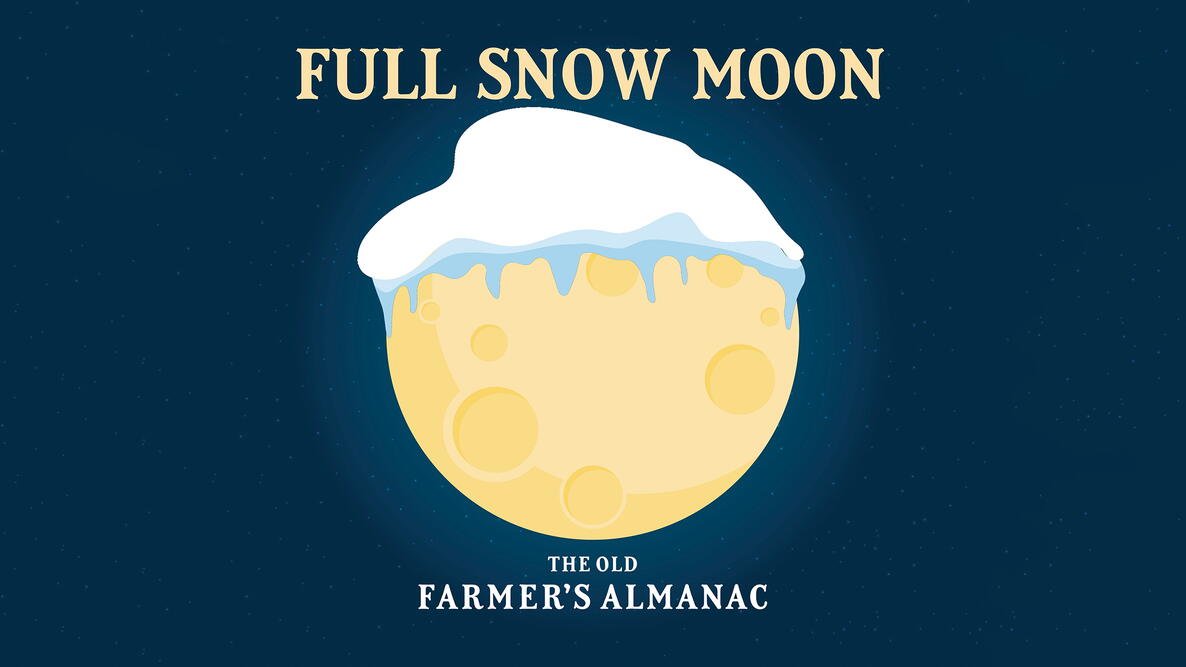
February’s Full Snow Moon peaks on Saturday, February 20, 2027, at 6:23 P.M. EST. Why is it called the Snow Moon, and when should you look skyward? Discover the meaning behind February’s Full Moon, viewing tips, and the month’s Moon phases.
When to See the Full Moon in February 2027
February’s Full Snow Moon reaches peak illumination at 6:23 P.M. EST on Saturday, February 20. Step outside after dusk to see the Full Moon in all of its glory!
See when the Moon will be visible in your area.
Will the Snow Moon Have a Lunar Eclipse in 2027?
Yes—February’s Full Moon coincides with a penumbral lunar eclipse on February 20–21, 2027, depending on your time zone. During this type of eclipse, the Moon passes through Earth’s faint outer shadow. It won’t turn into a dramatic red “Blood Moon”; any shading will be subtle, and visibility depends on your location.
Why Is It Called the Snow Moon?
The Full Moon names used by The Old Farmer’s Almanac come from a number of places, including Native American, Colonial American, and European sources. Traditionally, each Full Moon name was applied to the entire lunar month in which it occurred, not just to the Full Moon itself.
The Snow Moon
The explanation behind February’s Full Moon name is a fairly straightforward one: it’s known as the Snow Moon due to the typically heavy snowfall that occurs in February. On average, February is the United States’ snowiest month, according to data from the National Weather Service. In the 1760s, Captain Jonathan Carver, who had visited with the Naudowessie (Dakota), wrote that the name used for this period was the Snow Moon, “because more snow commonly falls during this month than any other in the winter.”

Alternative February Moon Names
Names for this month’s Moon have historically had a connection to animals. The Cree traditionally called this the Bald Eagle Moon or Eagle Moon. The Ojibwe Bear Moon and Tlingit Black Bear Moon refer to the time when bear cubs are born. The Dakota also call this the Raccoon Moon; certain Algonquin peoples named it the Groundhog Moon, and the Haida named it Goose Moon.
Another theme of this month’s Moon names is scarcity. The Cherokee names of Month of the Bony Moon and Hungry Moon give evidence to the fact that food was hard to come by at this time.
→ See our calendar of Full Moon names and meanings.

Moon Phases for February 2027
All dates and times listed below are Eastern Standard Time. See the Almanac’s Moon Phase Calendar for times in your city/state.
| Moon phase | Date | Time (EST) |
|---|---|---|
| New Moon | February 6 | 10:56 A.M. |
| First Quarter | February 14 | 2:58 A.M. |
| Full Moon | February 20 | 6:23 P.M. |
| Last Quarter | February 28 | 12:16 A.M. |
→ When is the next Full Moon? See our Full Moon calendar.

February Snow Moon Video
Each month, we will explain the traditional names of the Full Moon along with some fascinating Moon facts. In this video, learn about the Snow Moon, “Moon weather,” and the horns of the new crescent Moon. Click below to watch the video.
Best Days in February 2027
For readers who follow the Almanac’s astrological traditions, here are February’s Best Days for planting, setting eggs, and fishing.
For Planting…
…Aboveground crops: 7-9, 12, 13, 17, 18
…Belowground crops: 25, 26
For Setting Eggs
15, 23, 24
For Fishing
6-20
→ See all our Best Days for various activities.
Moon Facts and Folklore
- On February 6, 1971, Alan Shepard became the first man to hit a golf ball on the Moon.
- Wolves have howled at the Moon for centuries, yet it is still there.
- And hand in hand, on the edge of the sand, they danced by the light of the Moon. —Edward Lear, English poet (1812-88)
Share your thoughts about the February Moon below!

More Like This

- « Previous
- 1
- 2
- …
- 10
- Next »

Comments