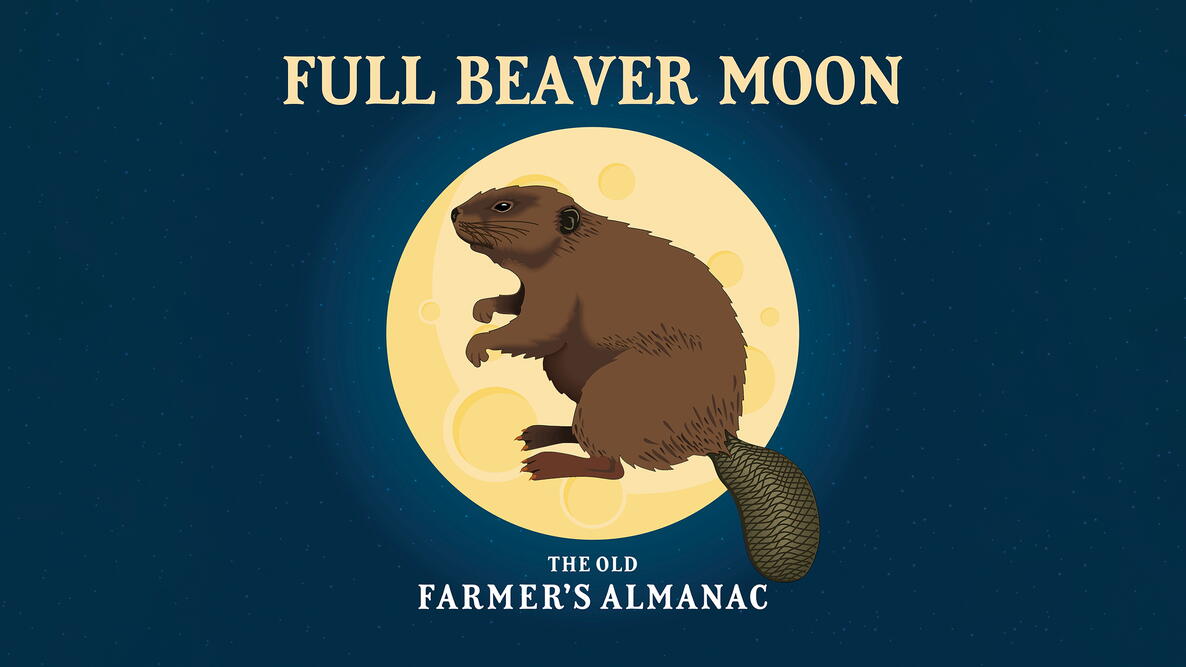
November’s Full Beaver Moon reaches peak illumination on Tuesday, November 24, 2026, just two days before Thanksgiving. Look for it on the evenings of November 23 and 24. Find your local moonrise time, learn why November’s Moon is called the Beaver Moon, and explore its seasonal folklore.
When to See November’s Full Moon
The Beaver Moon reaches peak illumination on November 24 at 9:53 A.M. EST. The Moon will appear nearly full on the surrounding evenings, so look for it on November 23 and 24. Find out exactly what time the Full Moon will appear above the horizon in your area with our Moonrise and Moonset Calculator.
What Makes the November 2026 Full Moon Special
The November Full Moon is a supermoon, the first in a series of three consecutive supermoons (November, December, January). A supermoon occurs when the Moon is at its closest point to Earth in its orbit, called perigee.
Because it’s a supermoon, it may appear slightly larger and brighter than a typical full Moon—up to 8% larger in diameter and 16% brighter. For most casual observers, the difference is subtle, but it’s more noticeable if compared to a micromoon, when the Moon is at its farthest point from Earth.
Being near perigee and full, this Moon can also produce slightly higher tides, known as perigean spring tides or king tides, especially along coastlines, though the effect is modest.
Moon Phases for November 2026

Below are the times for each Moon phase this month (in Eastern Time). Click here to see the Moon Phase dates and times for your location.
 | Last Quarter: November 1, 3:28 P.M. EST |
 | New Moon: November 9, 2:02 A.M. EST |
 | First Quarter: November 17, 6:48 A.M. EST |
 | Full Moon: November 24, 9:53 A.M. EST |
→ When is the next Full Moon? Consult our Full Moon Dates chart.
Why Is It Called the Beaver Moon?
For decades, the Almanac has referenced the monthly Full Moons with names tied to early Native American, Colonial American, and European folklore. Traditionally, each Full Moon name was applied to the entire lunar month in which it occurred and through all of the Moon’s phases—not only the Full Moon.
The Beaver Moon
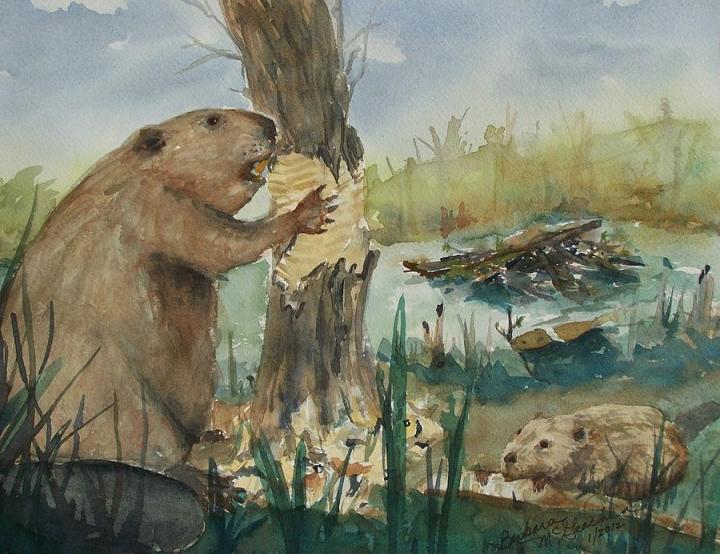
Why the “Beaver” Moon? This is the time of year when beavers begin to take shelter in their lodges, having laid up sufficient food stores for the long winter ahead. During the fur trade in North America, it was also the season to trap beavers for their thick, winter-ready pelts.
Alternative November Moon Names
November’s Moon names highlight the actions of animals preparing for winter and the onset of the colder days ahead. Digging (or Scratching) Moon, a Tlingit name, evokes the image of animals foraging for fallen nuts and shoots of green foliage and bears digging their winter dens. The Dakota and Lakota term Deer Rutting Moon refers to the time when deer seek mates, and the Algonquin Whitefish Moon describes the spawning time for this fish.
About the seasonal change of November, this Moon has been called the Frost Moon by the Cree and Assiniboine peoples and the Freezing Moon by the Anishinaabe—for good reason, as winter is right around the corner!
→ See more Full Moon names and their meanings.
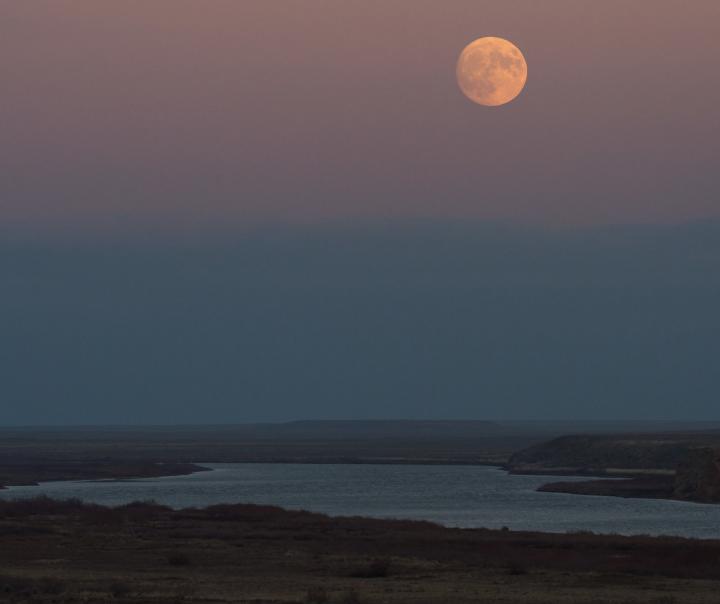
Full Beaver Moon Video
An Almanac editor shares more facts and folklore about November’s Full Beaver Moon. Click below to watch the video.
Best Days in November 2026
The following dates follow the Almanac’s traditional astrological Best Days calendar, based on the Moon’s sign and phase.
For Harvesting:
- Aboveground crops: 22, 23
- Belowground crops: 8, 26, 27
For Setting Eggs:
- 24, 25
For Fishing:
- 9-24
See Best Days for more activities.
Learn more about Full Moon Names and share your thoughts about this month’s Moon below!

More Like This


Great question! According to the United States Naval Observatory, the First Quarter and Last Quarter Moon phases are named as such because of their position in the Moon's orbit. The First Quarter is 1/4 of the way through its orbit from starting position (New Moon), and the Third Quarter is 3/4 of the way along in its orbit.
http://aa.usno.navy.mil/faq/docs/moon_phases.php
The Full Moon is named instead for the percent of surface illuminated from our viewpoint (100 percent, full disc), and occurs when the Moon is 1/2 the way along in its orbit.
New Moon--named so because in this case it is the start of the lunar cycle; we can see no surface illumination from our position on Earth.
I'm not sure I understand your question, but if you are looking for how to find out when the Moon is due south, I believe that you need to find the Moon's azimuth when it is 180 degrees East of North. The following calculator will help you with that:
http://aa.usno.navy.mil/data/docs/AltAz.php
Just select "Moon" and put in your location, and it will give you the azimuth in intervals that you've selected for one day. For example, for Boston, Massachusetts, on November 14, the Moon's azimuth at 5:34 am EST is 180.1 degrees East of North, which means it is about due South for that location.
As to the relationship between the tides and when the Moon is due South, it is a general guideline that when the Moon is due South, there will be the time of high tide in coastal locations. Keep in mind that different coastal locations, due to the layout of the coast etc, may experience 1 or 2 high tides, and if 2, some places will have 1 very high tide and 1 not-as-high tide, while others have about equal high tides. So, the "high tide occurs when the Moon is due South" is a very general guideline. The Moon's position plays a large role, but so does Earth's topography etc.
Hope this helps!
- « Previous
- 1
- 2
- …
- 10
- Next »

Comments