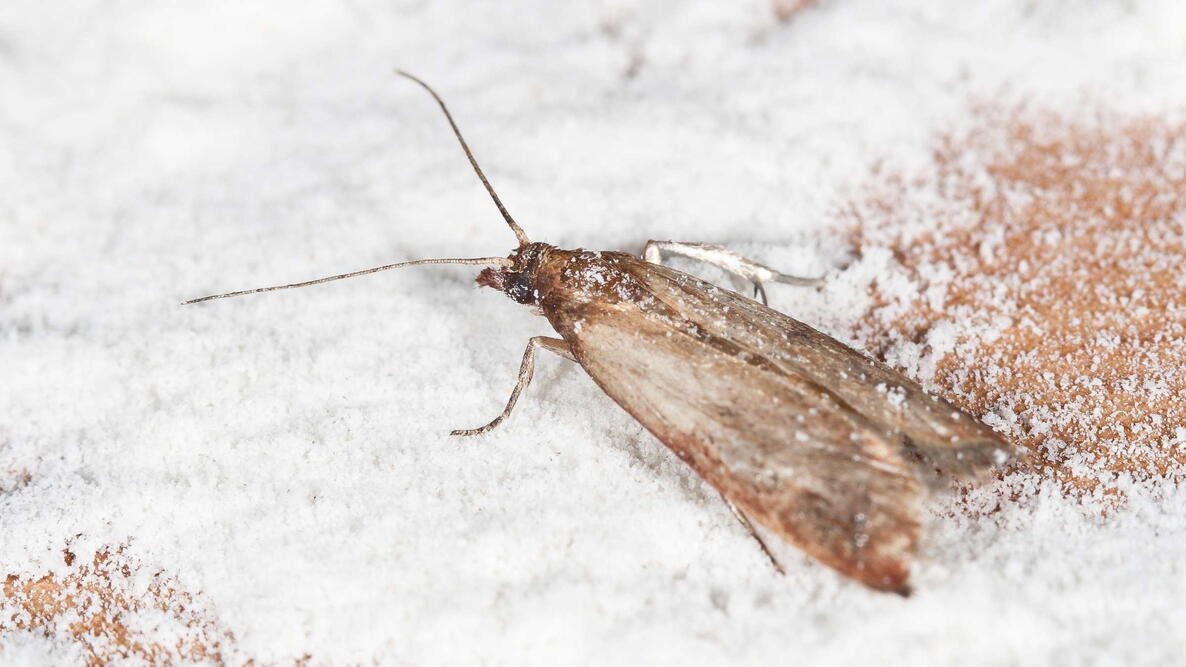
You open a bag of whole wheat flour, a box of cereal, or a bag of dog food only to find little worms, moths, or even some webs. Ew! Here’s how to get rid of these pantry pests, such as pantry moths or worms.
What Are Pantry Moths?
You’ve just encountered the Indian meal moth, perhaps the most common among the “pantry pests.” These moths can infest bags or boxes of flour, grains, dried beans, seeds, nuts, cereals, baking chocolate, cake mixes, rice, nuts, dried fruit, dog food, birdseed, teas, herbs, spices, potpourri mixtures, and even decorative wreaths that include nuts, fruits, and/or seedheads.
The University of Florida cooperative extension describes what you’ve just seen this way: “Most of the ‘damage’ to stored products occurs when the larvae spin massive amounts of silk that accumulate fecal pellets, cast skins, and egg shells in food products.”
Not a very appetizing image.
Where Do Pantry Moths Come From?
Although you may need to do some serious cupboard cleaning, don’t lay the blame for the infestation on your poor housekeeping. Meal moths probably laid those eggs at a food-packaging facility or in the bulk bins at the natural food store.
After mating, the half-inch long gray/brown female meal moth finds a suitable environment for laying her eggs—as many as 400 at once. When the eggs hatch, the larvae feed and grow for several weeks before spinning a cocoon (pupa), from which emerges an adult moth. Depending on the temperature, food source, and other factors, the meal moth’s life cycle lasts from a month to 10 months or longer.
Are Pantry Moths Harmful?
The good news: This pest does not cause disease, even if you accidentally cook and eat a few larvae (gross), and it doesn’t escape your foodstuffs to eat its way through your fabrics or furniture. It likes the same foods that you and your pets like.
The bad news: Indian meal moths can be difficult to eradicate, especially if they’ve completed their life cycle and dispersed throughout your pantry.
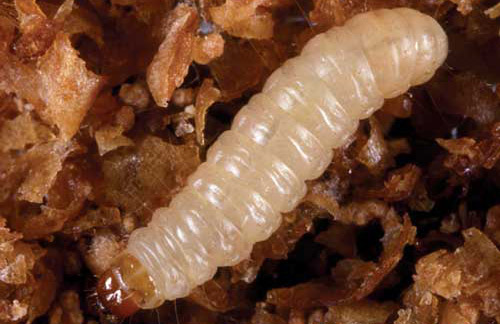
Credit: John Lyle, University of Florida.
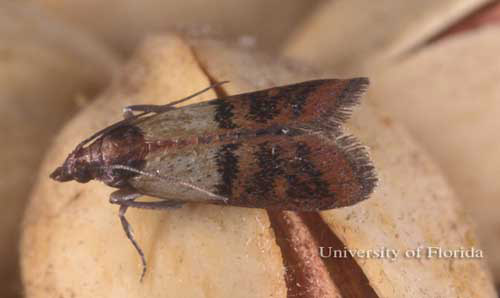
Credit: John Lyle, University of Florida.
How to Control Pantry Moths
- First, get the infested flour and any other infested products you might find out of your house. Don’t just throw them in the trash unless you plan on taking the trash out right away. You could also dig a hole away from the house and bury the infested product(s) in the soil.
- Don’t store that trash in the garage or basement while you wait for trash pickup or your next trip to the dump.
- Then, remove everything from your cupboards and food storage areas, including cans and glass jars. Vacuum and scrub all surfaces. Remove and replace torn or peeling shelf liners. Using a flashlight, pay special attention to the corners and the undersides of shelves, as well as to cracks or holes in shelving.
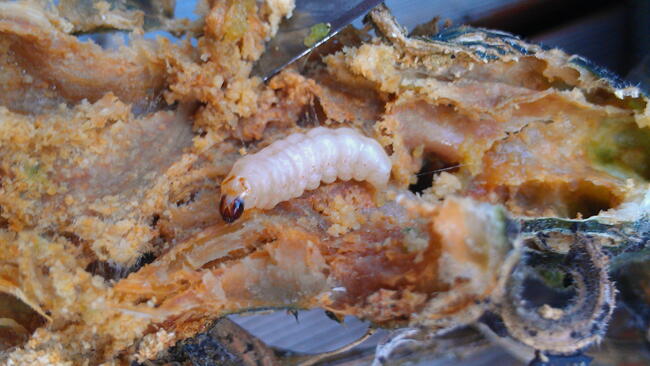
- Meal-moth larvae have legs and often move quite far from their original home. You may find larvae and pupae tucked away in door hinges, backs of door knobs, and corners of wire baskets; underneath shelves; and around the edges of jar lids, cans, and non-food items also stored in your pantry or cupboard.
- The larvae can chew through paper and plastic. If (like me) you tend to keep an assortment of nuts, fruits, and grains bought from bulk storage bins and stored in plastic or paper bags, check every bag for openings that could have allowed entry of meal-moth larvae or for holes the larvae may have chewed themselves.
- If you have concerns, place any items that seem intact with no signs of damage to the food inside, in the freezer at 0° or below for four days. That will kill any eggs that might be present.
- Now, resolve to store all pantry edibles in sealed glass or metal containers as soon as you bring the food products into your home. If a product is infested, the larvae won’t be able to escape the container to contaminate other products.
- Keep small bags of spices in the refrigerator or freezer.
- Keep pet foods and birdseed away from the pantry in covered metal containers in a laundry room, garage, or outside shed.
- Hang seed-and-fruit wreaths outside. Better yet, purchase or make wreaths of twigs or evergreens that don’t contain edibles.
- Consider placing some meal-moth pheromone traps (widely available online and in hardware, garden, and home-supply stores). These traps monitor the presence of meal moths, and perhaps prevent a future infestation. The traps work by attracting the male moths, who then become stuck to glue boards and die, unable to fertilize female moths. (Warning: Some folks find the glue traps too gruesome since the trapped moths aren’t killed quickly but flutter for some time before dying.)
Note: Don’t be deterred by negative comments from others who claim the traps didn’t work, and now they have moths flying all around their homes. These folks are probably aren’t seeing meal moths, but rather one or more of the many other Lepidopterans (butterflies and moths) that commonly visit home interiors.
Finally, please don’t use insecticides to kill meal moths. Not only are they unlikely to be effective, but many aren’t safe for use around food.
See more about pantry pests—mice!
Here are some more management techniques from our readers!
- Add a few bay leaves to each container of stored seeds, flour, grains, or dried fruit. Also, if you have one, your cookie jar.
- Sprinkle diatomaceous earth around the edges and in the corners of your pantry shelves.
- Look way beyond your pantry for moths, webs, and/or larvae, e.g., around your ceilings and the walls of your food-storage spaces.
Do you have or have you had pantry moths? What did you do to get rid of them?

More Like This


We're sorry to hear that you are having such trouble with these pests! Here are a few tips to help eradicate the infestation: After emptying cupboards, vacuum these areas, as well as ceilings, floors, every corner you can get to. Throw out the vacuum bag or empty the container immediately in the trash, away from the house. Wash the cabinet surfaces (and counters) with hot, soapy water, including the shelf undersides. You can then also go over the surfaces again using a weak diluted solution of bleach, but test spot before you do to make sure it does not damage the surface. When cleaning, throw out any paper shelf liner if possible, or wipe down plastic liners. Be sure to check the drawer at the bottom of the oven, if applicable. Inspect all open grains, dry pet foods, bird seed, dried flower crafts, etc and throw out any that are infested. If unsure, store decorations, etc in freezer bags in the freezer for 4 days to kill any pests. Store non-infested foods in tightly sealed containers. Seal cracks in walls, etc., where the moths may be entering. Check other rooms for signs as well. Pheromone traps will catch male pantry moths. Hope this helps!
- « Previous
- 1
- 2
- …
- 10
- Next »

Comments