Keeping warm is a basic need we all share. As we enter winter’s chilliest months, we present our top tips for staying cozy that don’t include turning up the furnace!
Here are some tips—from Almanac editors and readers—about staying warm. These aren’t “big” projects like buying a new heating system—just inexpensive, resourceful ways to help you warm up now!
How to Keep Warm in Winter
1. Dress in Layers
Bundle up. Wear long underwear, sweaters, and even hats indoors. Remember the days of “sleeping caps”? They make sense! Yes, wear a cap or hat to keep your head warm. If you’re headed outside, cover your face with a scarf.
To avoid getting overheated inside, wear layers. I recommend a “wicking” polyester (or silk) undershirt next to your skin versus cotton. I gave a polyester t-shirt to my father, and he kept talking about the fantastic difference as if I had invented sliced bread! Just don’t layer yourself so much that you’re pouring sweat. The idea is to keep your body warm AND dry.
One reader adds, “I can’t imagine surviving cold weather, inside or out, without a stretchy fleece neck warmer. I have several, and I put one on when watching television or reading to avoid turning up the thermostat. Just think about summertime when you are feeling too hot—if you can, you try to cool down by opening your collar. We are using the reverse of that principle here.”
Another idea: Try flannel-lined pants.
2. Keep Your Feet Warm
I highly recommend “house slippers” indoors. I know that it sounds a bit old-fashioned, but having the rubber sole makes a difference.
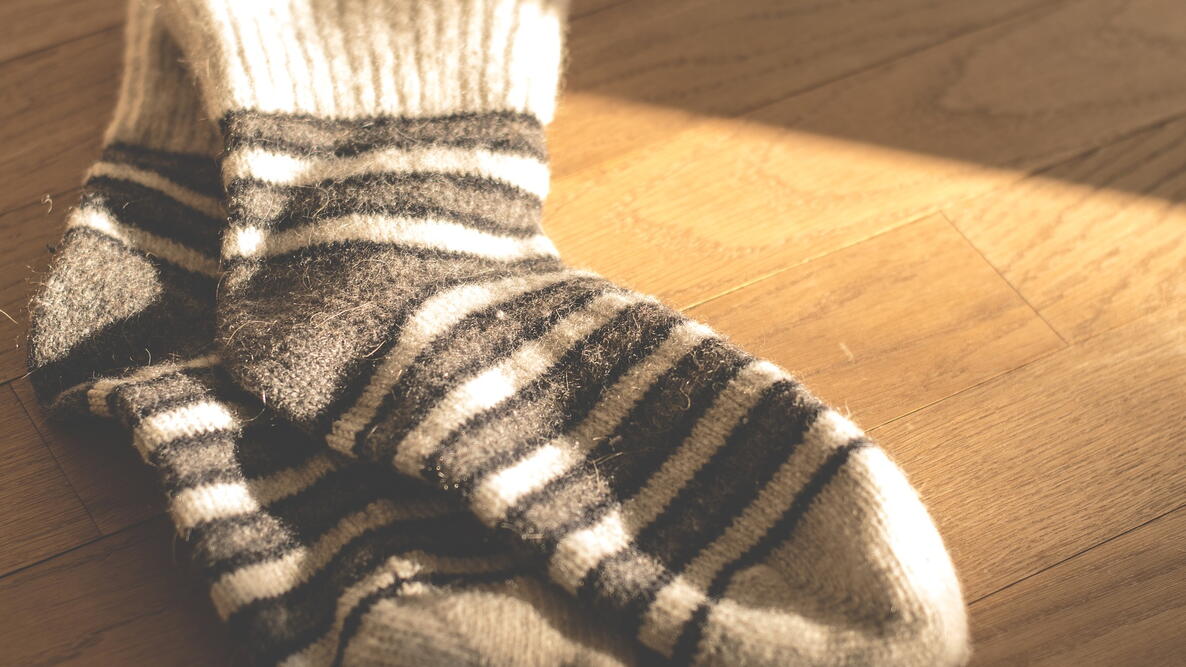
And warm socks! One reader says, “I’m from Florida. But when it’s cold, like when we got down to 23 last week, socks are my best friends. A soft, cozy pair worn to bed keeps my feet toasty warm, and as long as my feet are warm, I’m comfortable with the thermostat turned down.”
“Keep changing your socks! Everybody forgets that your feet sweat, and THAT can make you cold even though you are layered up.” Wool socks keep your feet from sweating.
For the outdoors, it helps to insert foam liners in your boots or hiking shoes to give your toes an extra layer of insulation against the cold earth.
And remember this health tip: Warm feet and hands really do help you sleep better. So, whether it’s socks or a warm tub, ensure your feet aren’t frozen when you get in bed, or you’ll have a hard time falling asleep. See this post on warm feet for better sleep.
3. Heat Up Your Bed
Don’t turn up the heat for the entire house. Use a (safe) electric blanket that turns itself off. A hot water bottle with a wool or fleece cover may be an even cheaper and safer option. Here’s what other readers say:
- “Fill your bottle with hot water from the faucet before going to bed and slip it into the foot of the bed between the sheets. When you’re ready for bed, it’s all nice and toasty at your feet. Believe it or not, the water bottle stays warm all night long.”
- “Use rice! Put the rice in a fleece cover, then warm in the microwave. It will stay warm half the night and keep your toes comfortable.”
- “I have a water bottle, but using a large heating pad with an automatic shut-off is better and quicker. Mine shuts off after 30 minutes. I lay the heating pad in the bed and turn it on for about 15 minutes before retiring. I turn it off and then on again if I still need a little more heat, but it is usually adequate just turning it on once.”
4. Harness the Sun
During the day, open the blinds and curtains on the south-facing windows—and let in the warming sunlight. At night, close the blinds and curtains to insulate your home better. One reader adds, “We use roller blinds every night for all windows. Saves a lot of energy cheaply and easily.”
5. Keep the Kitchen Cozy
Many readers keep the kitchen humming!
- “I put a cast-iron pot of water with liquid potpourri on the top of our cast-iron stove. This increases the humidity in the room and puts a lovely smell in the air.”
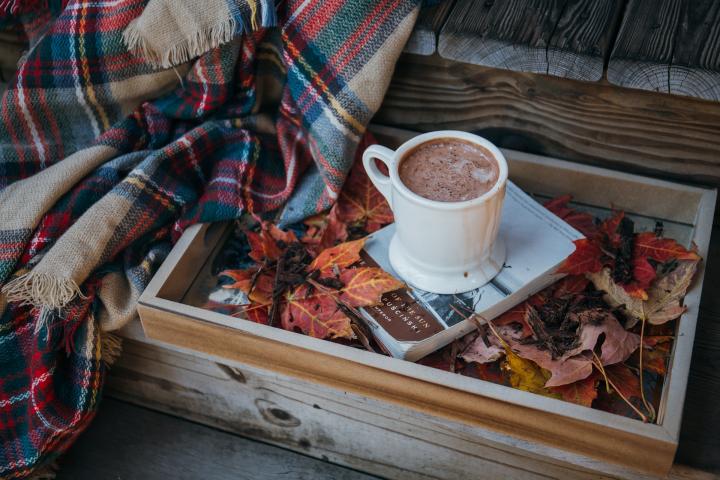
- “Drink lots of yummy hot chocolate!!!!”
- “Bake something in the oven, either dinner or a dessert (it doesn’t have to be fattening, but even better if it is).”
- “A hot cup of tea is great… If you are sick, a hot toddy works wonders. Also, I always have a crock pot of soup going during the cold months.”
- “Use matches, not lighters. It seems silly, but if your pilot goes out, your lighter will not work.”
6. Block Drafts
Beyond weather-stripping, which is difficult with old houses, consider these reader tips:
- “I hang blankets to close off the open stairwell going to the second floor; since heat rises, it keeps the warm air downstairs where we spend most of our time. I noticed it saves a lot of heating dollars.”
- “Don’t forget to put something at the bottom of outside doors—you can just feel the cold air pour in. You can buy a fancy roll or just use a blanket or towel.”
- “I made long round pillows to place against my doors and window sills. I found some scrap pieces of upholstery fabric that are nice and heavy and help keep the drafts out.”
- “Just like layers of clothing, I put layers at the windows. The closed Venetian blinds and a flannel-backed tablecloth are between the window and the thermal-backed drapes. And we hang a blanket over the entire exterior door ‘cause air doesn’t just come in at the bottom.”
Another reader says, “I put bubble wrap on the windows. Just spray a mist on the window, and the wrap will stay on all winter!”
See our related article about How to Save Money on Heating.
7. Stay Active
Get your body moving. At the Almanac, we joke that “one log can heat a house.” Just run up the stairs with the log, throw it out the top window, and repeat three times. You’ll be warm!
Our readers add:
- “Keep active; this is a good time to clean out closets, garages, etc. Anything to keep active.”
- “If I get a chill just sitting, I get up and stir around; the movement not only warms me up but also stirs the heat in the house. Children are great when playing; they stir the air around.”
- “Don’t just sit around. Stay active to keep your blood from ‘thickinin.’ Exercise is good for ya.”
8. Humidify Your Home
A humidifier won’t make the temperature higher, however, it may make it feel slightly warmer. Water vapor from the humidifier slightly increases the air’s ability to hold heat.
(If you turned up a thermostat, the relative humidity would drop; you haven’t removed moisture from the room; you simply increased the amount of moisture needed to remain at a constant relative humidity. Low humidity means more evaporative cooling and more moisture from your body entering the atmosphere, which cools you off in the process.)
Of course, you don’t want it too high! Here’s what some readers suggest:
- “I discovered that when I run my vaporizer (humidifier) in the bedroom, I can turn the heat down a couple extra degrees overnight. In the morning, I raise the heat by about 2 degrees at a time instead of making the furnace work hard to raise it all at once.”
- “I keep coffee cans lined with large baggies with water, around the vents to add humidity to the house, and this works great. I lined the coffee cans so they would not rust.”
- “I put a water bath canner full of water on the stove (lasts all night).”
- “I leave the water in the tub after getting out. Letting it sit until it reaches room temperature will add a little warmth to the house and help humidify it, too.”
Of course, the main reason for a humidifier is to give you relief from the dry air and make the humidity in the house nearer what humans are comfortable living in.
Stay hydrated and keep your skin well moisturized as well. One reader says, “Add a liberal dose of bath oil in the tub before going out. It works for otters and seals and for me, too.”
9. More Ideas
Here’s a new one! “I live five miles from the Canadian border in the St Lawrence region—icebox country! To stay warm INEXPENSIVELY, recycle old pantyhose that has runs or snags. This layer next to the bottom, legs, and toes—with slacks over the top—keeps me toasty. For guys like Joe Namath, too!!”
And, one of our personal favorites, from a reader, Brook: “Cuddle your fur babies!” We love any excuse to curl up on the couch with our four-legged friends.
Check out this great video from our former Editor, Janice Stillman about how to stay warm with one piece of wood!
I hope these tips help—please add more suggestions on how to get and stay warm. Simply “submit” your comment below.






Comments