Frost is one of a gardener’s worst foes! Learn how to predict frost, understand the difference between a frost advisory and a freeze warning, and protect your garden from frost.
What Is Frost? How Frost Forms on Plants
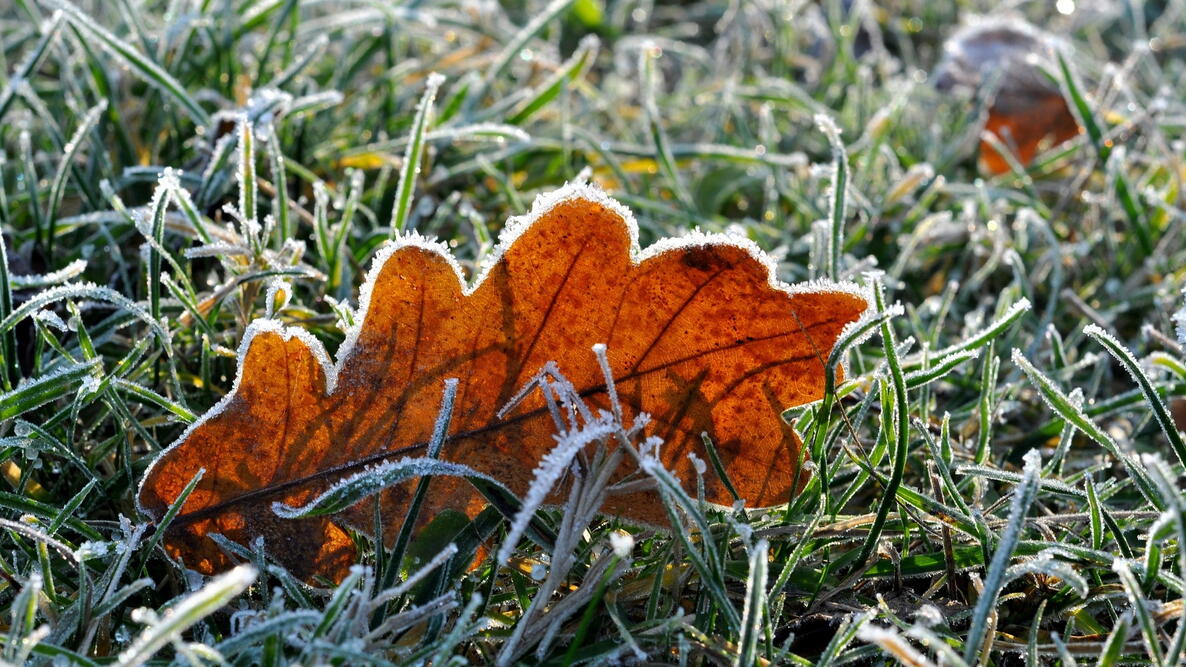
“Frost” refers to the layer of ice crystals that form when water vapor on plant matter condenses and freezes without first becoming dew.
- A light frost occurs when the nighttime temperature drops to at or just below 32°F (0°C).
- A hard freeze is a period of at least four consecutive hours of air temperatures that are below 28°F (–2°C).
Many plants can survive a brief frost, but very few can survive a hard freeze. (See more about this below.)
Frost Advisory vs. Freeze Warning: Know the Difference
As with other significant weather events, meteorologists will often issue a warning or an advisory, depending on the likelihood of the event happening and its severity. According to the National Weather Service, the warning terms for frosts and freezes are defined as follows:
- Frost Advisory: Issued when minimum temperatures are expected to be between 33° and 36°F (0.5° and 2°C). Skies are generally clear, and winds are light.
- Freeze Watch: Issued when minimum temperatures are expected to be 32°F (0°C) or less within the next 24 to 36 hours.
- Freeze Warning: Issued when minimum temperatures are expected to be 32°F (0°C) or less.
- Hard Freeze Warning: Issued when minimum temperatures are expected to be 28°F (–2°C) or less.
Of course, the easiest way to predict frost is to let the weatherman do it for you! However, if you want to be able to predict it yourself, read on.

Know Your Frost Dates for Fall & Spring
The first step in predicting frost involves getting to know the average frost dates for your area. Put your zip code in our Frost Dates Calculator to find frost dates for spring and fall for your location.
Note: These dates are averages, so they can only tell us what is typical, not the future. Also, the frost dates are based on a 30% probability, meaning that there is a 30% chance of a frost occurring after the given spring frost date or before the fall frost date. (In other words, these dates are NOT absolutes and should only be used as rough guidelines.)
Understand Your Garden Microclimates
Keep in mind that the occurrence of frost can vary greatly by microclimate, too. In fact, while you may have frost in your garden, your neighbor across the street may see no sign of it! A microclimate is exactly what it sounds like: a climate on a small scale. For example, if your garden is located at the bottom of a hill where cold air settles, it’s likely to be impacted by frost earlier than a garden at the top of the hill. Or, if your plants are abutting a rock wall in full sun, they’ll be kept warmer to some extent by the heat given off by the rocks.
5 Tips for Predicting Frost Accurately
Consider these factors when the radio and TV reports say “frost tonight”:
1) Temperature: How warm was it during the day?
It may sound simple, but one of the best ways of determining if a frost is due overnight is to gauge the temperature. If the temperature reaches 75ºF (in the East or North) or 80ºF (in the desert Southwest), the chance of the mercury falling below 32ºF at night is slim. See our 5-day forecasts to check your weather forecast.
2) Is it windy?
A windy night is also likely to reduce the likelihood of a frost. A still night allows cold air to pool near the ground; a light breeze stirs things up; a heavy, cold wind sweeps away warm air near the ground.
3) Is it cloudy?
Observe the sky. If the Sun sets through a layer of thickening clouds, the clouds will slow radiational cooling and help stave off a frost. With clouds, the risk of frost is reduced.
4) Slope: How is your garden landscaped?
Gardens on slopes or high ground often survive. However, cold air sinks and will puddle down into valleys and hollows. If your home and garden are at the bottom of a slope or in a valley, and there is no wind, then there is a higher risk of frost. A landscape with trees can assist in preventing frost. Trees transpire a lot of moisture through their leaves.
5) What is the dew point?
As a rule of thumb, don’t worry about a frost if the dew point (the temperature at which the air is no longer able to ‘hold’ all the moisture within it) is above 45°F on the evening weather report. The more moisture in the air, the less likely a frost will occur. A light watering of the garden a day or two before a frost is predicted can help stop it from settling.

How to Protect Plants from Frost
A frost means damage or even death to many vegetable crops. However, there are vegetables that actually benefit from a frost. The flavor of broccoli, for instance, actually improves if the plant has experienced a frost, and carrots get sweeter as the temperature drops. Know the frost resistance of different vegetables here.
- Keep an eye on the weather forecast. If it looks like temperatures are going to drop, get ready to protect tender plants.
- Generally, covering plants to create a temporary pocket of warmer air is the best way to protect them. Make use of season extenders like row covers, cold frames, or cloches to protect tender plants, such as seedlings or warm-weather veggies. Row covers or garden fleece can be used to help create a warmer environment beneath them. You’ll need to use posts, bamboo, or flexible PVC piping to create space for the plants to grow, then drape landscape fabric or plastic over the frame; weigh down the edges with rocks or bricks or pegs so the covers do not blow away. To protect young plants from frost, use 2-liter soda bottles cut in half as cloches.
- It’s best to have all covers in place well before sunset. Drape loosely to allow for air circulation. Before you cover the plants in late afternoon or early evening, water your plants lightly.
- Remove any covers by mid-morning so that plants can get full exposure to the warming sunlight.
For more frost protection tips, read our main article: Protecting Your Garden from Frost.
Learn More
Following these tips should help prevent your garden from taking too much of a hit when frost occurs!
For more information, read Preparing Your Garden for Winter and Fall Chores: Autumn Garden Cleanup.
Let us know in the comments what you do to prepare for frost!

More Like This

Comments