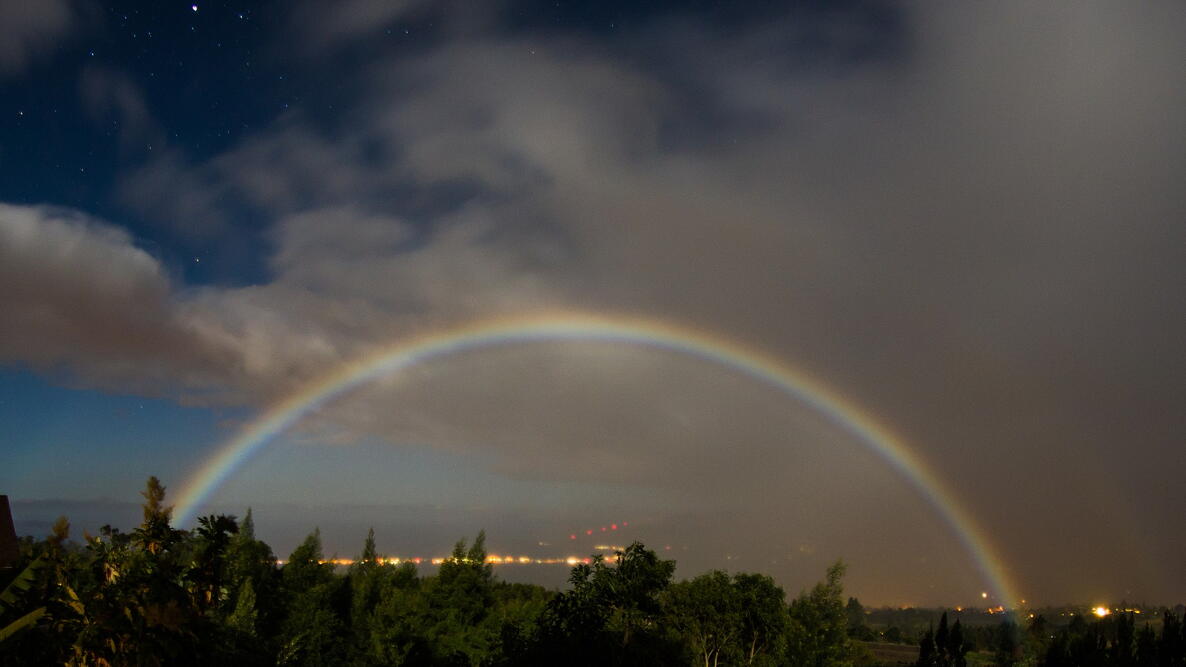
Caption
What is a moonbow? It’s a night rainbow around the Moon! That’s right—not all rainbows happen during the day. See where to find a moonbow, how this lunar rainbow is formed, and some stunning photos of moonbows.
What Is a Moonbow?
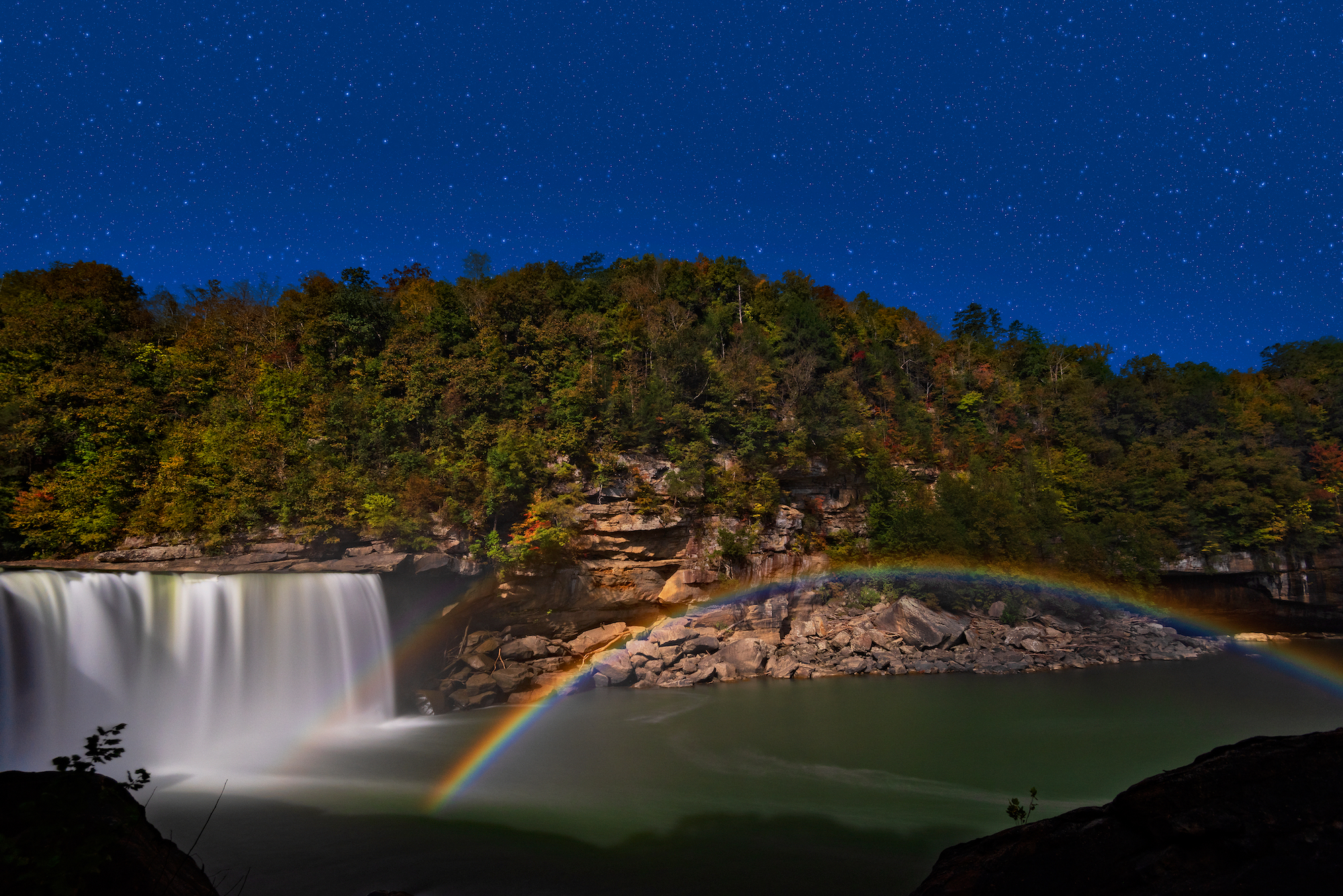
Just like a solar rainbow, a moonbow, or lunar rainbow, appears as an enormous arc in the sky when moonlight is refracted through water droplets in the air. Moonbows are much less intense than solar rainbows since the Sun produces much more light. They usually appear spooky-white rather than the well-known set of rainbow colors. All of the colors of the spectrum are actually present in a moonbow, but because moonlight is much less intense than sunlight, our eyes have trouble picking up the various colors. (If you’re a photographer, the colors of a moonbow will show up in long exposures or on high-speed film.)
The size of a moonbow depends on the Moon’s height in the sky: the lower the Moon, the bigger the moonbow. The largest moonbows occur when the Moon is within only an hour of rising or setting.
How Rare Is a Moonbow?
A moonbow is a much rarer occurrence than a solar rainbow. In order for a moonbow to appear, a few things need to happen:
- The Moon must be in or near its brightest phase (Full) and be unobstructed in the sky.
- Water droplets must be present in the part of the sky opposite the Moon. Water droplets in the air can come from a recent rain shower, a nearby waterfall, or even the spray produced by the crashing waves on a shoreline.
- The Moon must be low in the sky—no more than 42 degrees above the horizon—so the night sky is very dark.
If all of these things happen together, there’s a chance that a moonbow will appear! The Full Moon is nearest the horizon when it’s rising or setting, so look for a moonbow in the hours after sunset or before sunrise.
Best Time to See a Moonbow
The best days to see moonbows are near the Full Moon when it’s low in the sky, ideally within 2 or so days on either side of the Full Moon. Find out: When is the next Full Moon?
The best time to see moonbows is a couple of hours after sunset (or, before sunrise). Similar to a regular rainbow, you must have the Moon behind you when you look for a moonbow.
Best Places in the World to See a Moonbow
There are certain places where you are more likely to see moonbows.
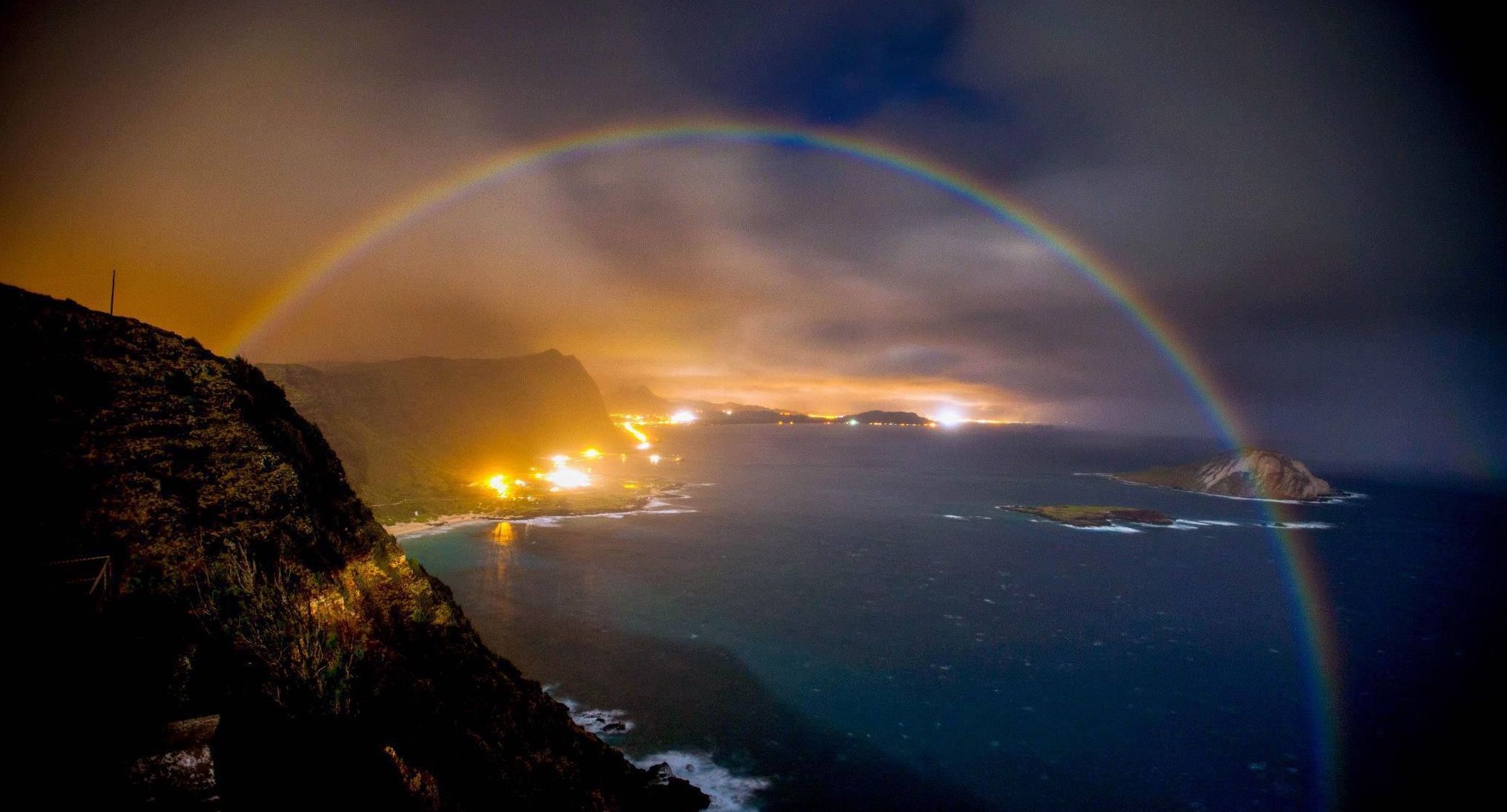
- Hawaii is certainly a popular place to spot a moonbow, given its many waterfalls and tropical rain.
- In the U.S., a reliable spot for moonbows is Cumberland Falls in Kentucky, which has a 168-foot-tall waterfall.
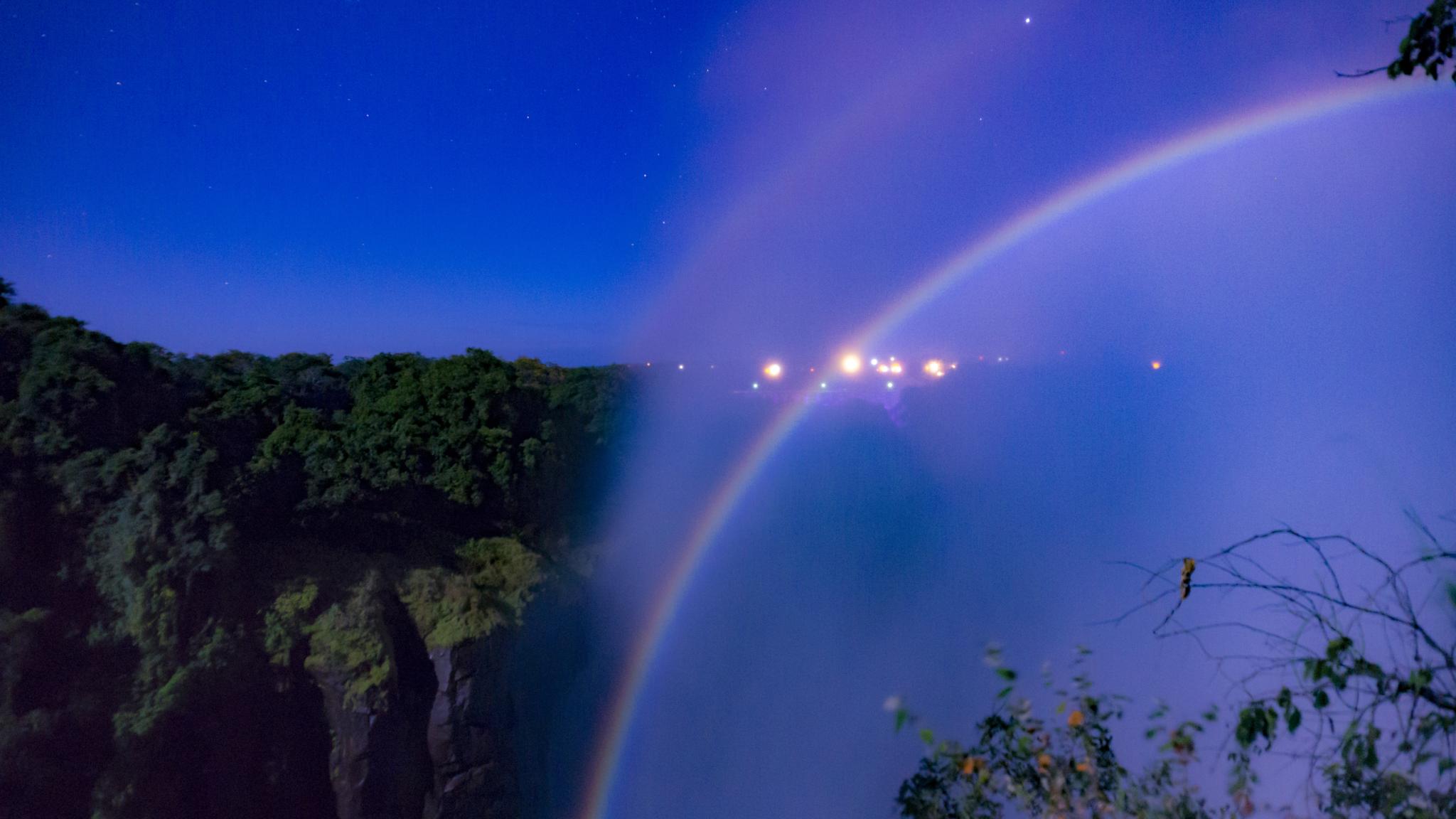
- Outside of North America, a famous place is Victoria Falls, on the border between Zambia and Zimbabwe.
Essentially, you need large waterfalls that produce a lot of mist; most waterfalls don’t produce enough.
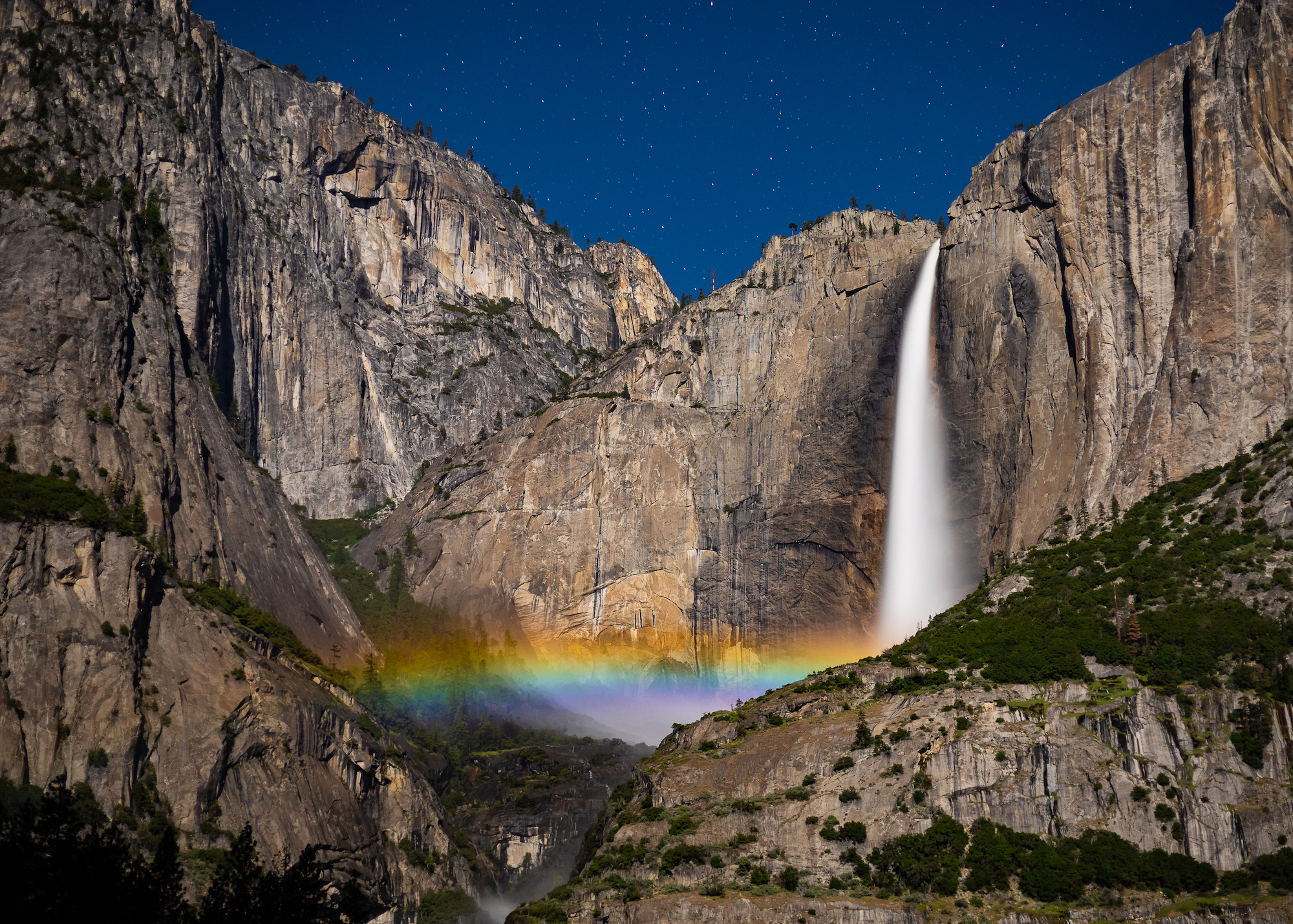
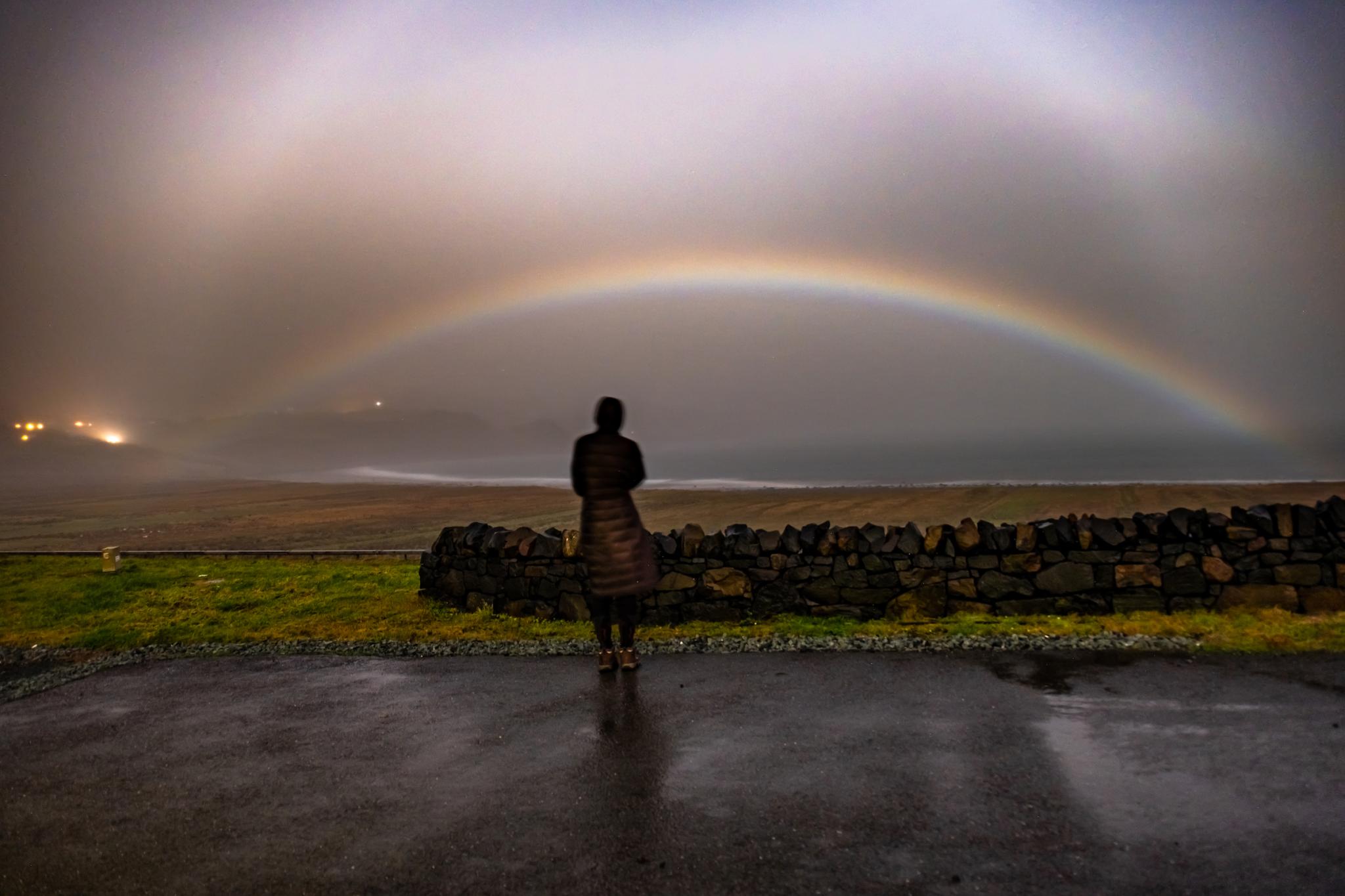
Moonbow during the night above Staffin Bay, Isle of Skye, Scotland. Credit: Lukassek/Shutterstock.
Moonbow vs. Rainbow: What’s the Difference?
| Feature | Moonbow (Lunar Rainbow) | Rainbow (Solar Rainbow) |
|---|---|---|
| Light source | Moonlight | Sunlight |
| Time visible | Night | Day |
| Rarity | Rare | Common |
| Moon/Sun position | Moon must be low in the sky (below 42°) | Sun must be low in the sky (below 42°) |
| Best phase | Near a Full Moon | Anytime with direct sunlight |
| Color appearance | Often white or faint | Bright, vivid colors |
| Why colors appear faint | Moonlight is much dimmer than sunlight | Sunlight is bright enough for colors to be visible |
| Water source required | Rain, mist, waterfalls, ocean spray | Rain or mist |
| Best viewing time | After sunset or before sunrise | During or after rain showers |
| Photographing | Colors appear better in long exposures | Colors visible to the naked eye |
| Common locations | Waterfalls, coastal areas | Anywhere with sun and rain |
Frequently Asked Questions
Are moonbows real rainbows?
Yes, moonbows are true rainbows. They form through the same process as solar rainbows, but they appear fainter because moonlight is much less intense than sunlight.
Why do moonbows look white?
Moonbows often appear white because the human eye struggles to detect color in low light. Although all colors are present, they’re easier to see in photographs taken with long exposure.
Can you photograph a moonbow?
Yes! Moonbows photograph beautifully. Cameras with long exposure settings can reveal vivid rainbow colors that are not easily visible to the naked eye.
Do moonbows happen only at Full Moon?
Moonbows are most visible near the Full Moon, but they can occur when the Moon is at least 80–90% illuminated and conditions are just right.
Have you ever seen a moonbow? Let us know in the comments!


Comments