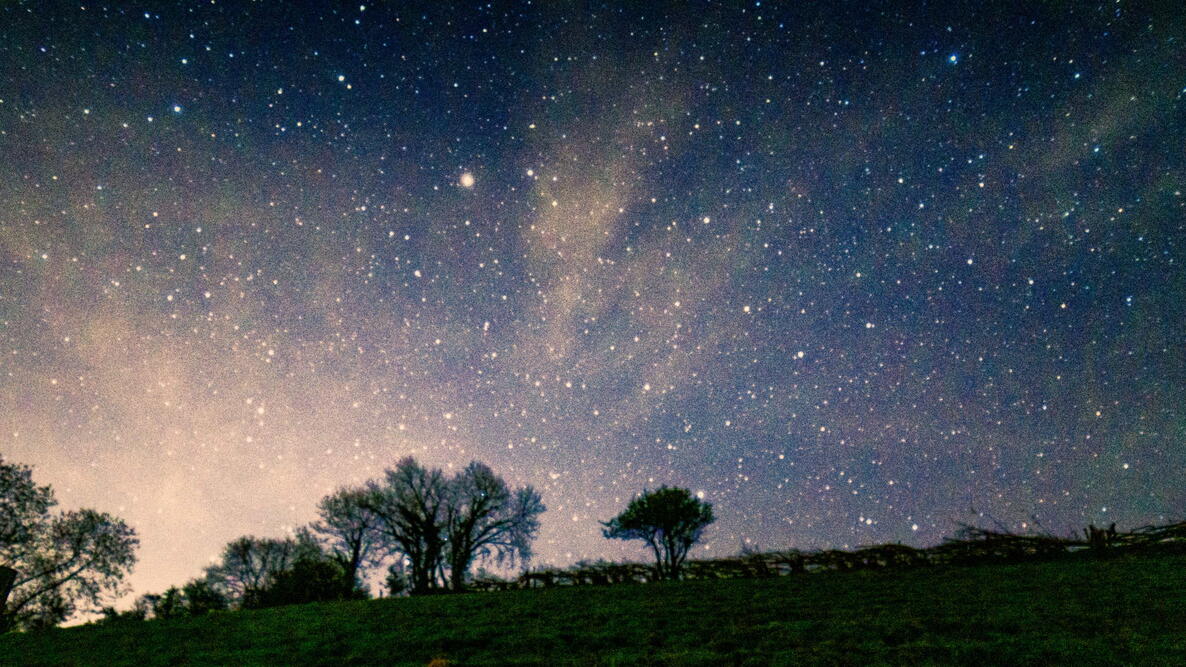

Are you a stargazer? Welcome to the April 2025 Sky Watch guide. Astronomer Bob Berman tells us the top things to see this month from visible planets to bright stars.
Visible Planets of April 2025
- On the 1st of April at nightfall, the crescent Moon hovers just above the famous Pleiades star cluster, a major treat through binoculars.
- On the 2nd, the waxing crescent Moon meets Jupiter. Spot their approach as dusk fades to darkness. Jupiter will shine at a very bright magnitude –2.1 in the night sky.
- On the 5th, the Moon has moved on to meet Mars, passing within 2°06’ of each other. The Red Planet, still bright at magnitude 0.5, resumes its direct eastward (leftward) motion. This leaves the area occupied by the stars Castor and Pollux, the names of the twin half-brothers in Greek mythology who represent Gemini.
- On April 12, a full Moon rises around dusk and setting at around dawn, visible most of the night.
- Are you an early worm? In the east at dawn, Venus moves higher each morning, shining at a maximum brilliance of magnitude –4.8.
- From April 19 to 30, look towards Venus at 5:30 A.M. Very low below the blazing planet are Mercury and Saturn.
- On the 25th, the waning crescent Moon joins the trio of planets—Venus, Mercury, Saturn. It hovers to the left of Saturn, and above Mercury—with Venus higher than them all.
Looking for more wonders of the night sky? Plan ahead with my Top Astronomical Events of 2024.
April 2025 Moon Phases
The Full Pink Moon of April rises on April 12, 2025, at 8:22 P.M (EDT). See your local Moon phases.
- First Quarter Moon: April 4
- Full Moon: April 12
- Last Quarter Moon: April 20
- New Moon: April 27
The traditional name of “Pink Moon” has nothing to do with its color; rather, this Moon marked the appearance of the moss pink, or wild ground phlox, which is one of the first spring flowers. See the complete April Full Moon Guide.
Lyrid Meteor Shower: April 21-22
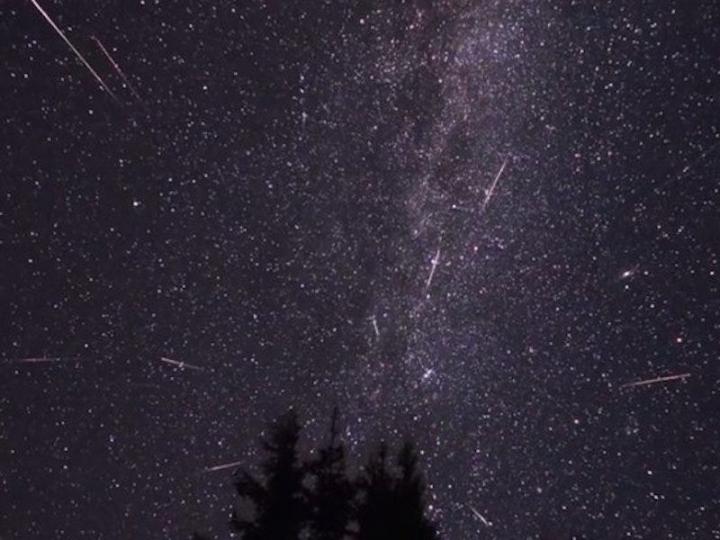
Unfortunately, the Lyrids won’t have ideal conditions this year. The Moon will be nearly full during the Lyrids’ peak, which will make the shooting stars more difficult to see. Try watching in the early morning predawn hours of the 23rd after the Moon has set and the shower’s radiant is high in the east. For more details, see our 2025 Meteor Shower Calendar.
Earth Day: April 22
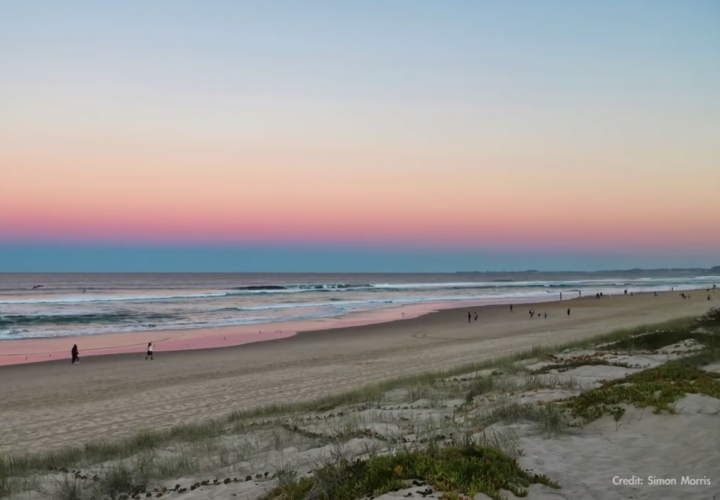
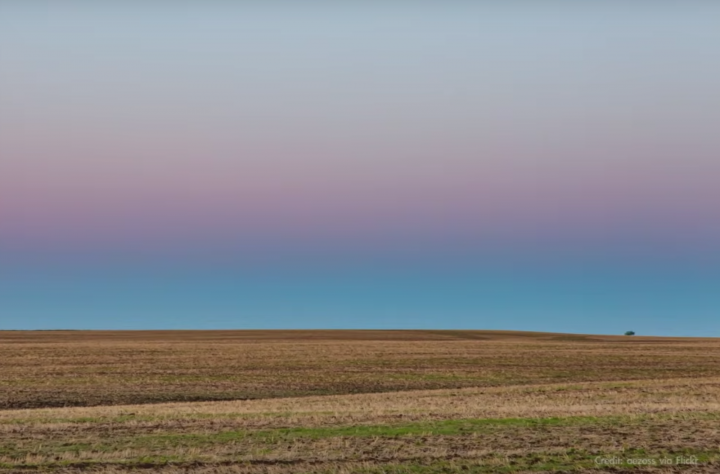
Don’t forget to celebrate our own planet Earth on April 22, which is Earth Day! How can we appreciate the wonder and beauty of our home planet? Look at the sunset in the West and then spin yourself around to face East. What do you see near the horizon?
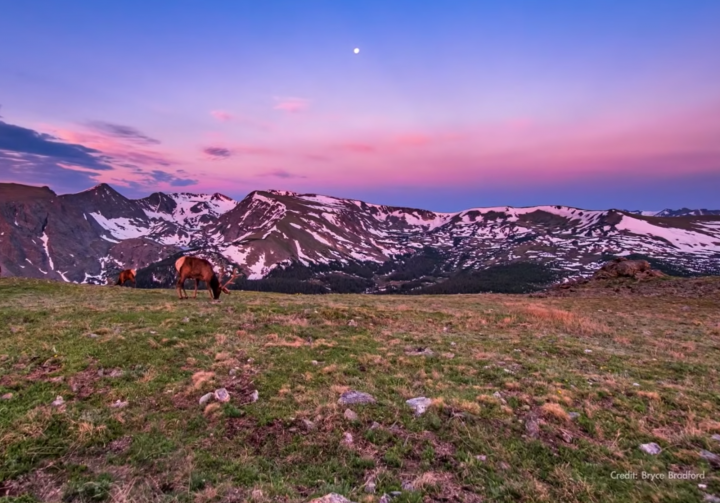
You’ll often notice a band of pink or orange-hued sky with a blueish band underneath. These bands move upward following sunset to form an arch over the sky that slowly fades as night sets in. The dark blue band is Earth’s shadow rising. Above it, the rosy-hued band is known as the “Belt of Venus,” a cool phenomenon that forms an arch with Earth’s shadow at sunset! It’s a beautiful sight.

More Like This

Comments