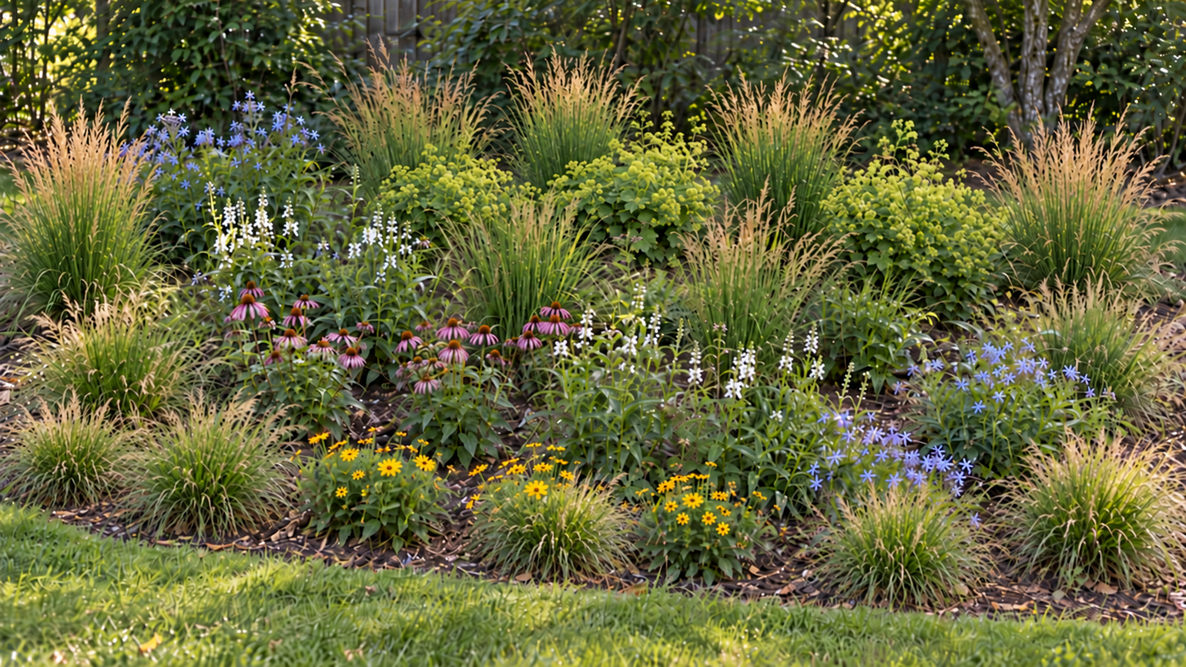
Looking for a perennial flower garden layout? This garden plan combines colorful perennials and ornamental grasses in a natural-looking flower bed. Designed for full sun, it offers changing blooms, attractive foliage, and texture from spring through fall.
Unlike annual flowers, which complete their life cycle in one growing season, perennials return year after year when grown in suitable climates. This design features purple coneflowers, bluestar, coreopsis, and other dependable plants arranged in natural groups. Follow the layout as shown, or adapt it to your space and growing conditions.
| Feature | Details |
|---|---|
| Garden Type | Perennial flower border with ornamental grasses |
| Difficulty Level | Beginner to intermediate |
| Hardiness Zones | Zones 5–7; plant substitutions may be needed in other zones |
| Sun Exposure | Full sun (6+ hours daily) |
| Seasonality | Spring through fall, with winter interest from ornamental grasses |
| Soil Type | Well-drained garden soil amended with compost as needed |
| Watering Needs | Water regularly during the first growing season; established plants need supplemental water during dry spells |
| Special Features | Long-lived perennials, pollinator-friendly flowers, ornamental grasses, and seasonal color |
| Garden Size | Adaptable perennial border; allow room for mature plants and access for maintenance |
Perennial Flower Garden Layout
This garden arranges flowering perennials and ornamental grasses in natural drifts, with taller plants providing structure and lower-growing flowers filling the front. Choose a sunny location with well-drained soil, and allow enough room to reach the plants as they mature.

Plants in This Perennial Flower Garden
This design combines seven varieties of flowering perennials and ornamental grasses. Use the plant list below as a guide, allowing room for each plant to reach its mature size.
| Plant | Quantity | Growing Notes |
|---|---|---|
| ‘Blue Ice’ bluestar | 6 | Blue spring flowers; foliage turns golden yellow in fall |
| Purple coneflower | 6 | Summer flowers that attract pollinators; leave seed heads for birds |
| ‘Miss Manners’ obedient plant | 6 | White flower spikes from midsummer to fall; less aggressive than the species |
| ‘Little Bunny’ fountain grass | 9 | Compact ornamental grass with late-season plumes |
| Lady’s mantle | 3 | Chartreuse flowers and scalloped foliage; blooms in late spring to early summer |
| ‘Zagreb’ coreopsis | 3 | Bright yellow summer flowers; compact, spreading growth |
| ‘Karl Foerster’ feather reed grass | 5 | Tall, upright grass with summer plumes and winter interest |
- ‘Blue Ice’ bluestar: Dense mounds feature starry blue flower clusters in mid- or late spring. Slender, rich-green leaves turn bright yellow in fall. It is about 18 inches tall and grows in Zones 4 to 9.
- Purple coneflower: Large, daisy-form, purple-pink flowers with prominent centers bloom through the summer atop 3- to 5-foot-tall stems. Also look for cultivars with white, orange, or yellow flowers. It grows in Zones 3 to 9.
- ‘Miss Manners’ obedient plant: Sturdy, upright stems are topped with spikes of bright-white blooms from midsummer to early fall. Obedient plant can be a rampant spreader, but this cultivar is fairly well-behaved. It is 18 to 24 inches tall and grows in Zones 3 to 9. .
- ‘Little Bunny’ fountain grass: Dense clumps of spiky foliage feature brushy, silver seed heads from late summer into winter. It is 12 to 18 inches in bloom and grows in Zones 5 to 9.
- Lady’s mantle: One-foot-tall mounds of elegantly pleated, velvety, scalloped-edge leaves boast frothy clusters of green-yellow flowers in early to midsummer. It is about 18 inches tall in bloom and grows in Zones 4 to 7. .
- ‘Zagreb’ coreopsis: Moderately spreading clumps of slender green leaves bear an abundance of bright-yellow, daisy-like flowers through summer. It is 12 to 18 inches tall in bloom and grows in Zones 4 to 9.
- ‘Karl Foerster’ feather reed grass: Clumps of grassy foliage, 2 to 3 feet tall at maturity, feature 5- to 6-foot-tall stalks topped with plumes that are pinkish-gray in summer and tan in winter. It grows in Zones 5 to 9.


Tips for Planting and Care
- Arrange plants in their pots before planting, allowing room for their mature spread—especially the tall feather reed grasses.
- Plant at the same depth as in their containers and water thoroughly after planting.
- Apply 2–3 inches of organic mulch to retain moisture and suppress weeds, keeping mulch away from plant crowns.
- Leave ornamental grasses and perennial stems standing through winter for structure and wildlife habitat; cut back in early spring.
- Divide perennials as needed when clumps become crowded, typically after several years.
Seasonal tip: This garden changes throughout the growing season. Bluestar and lady’s mantle bloom in spring to early summer, coneflowers and coreopsis provide summer color, and ornamental grasses add texture and interest into fall and winter. Not everything needs to bloom at once!
A little patience: Perennial gardens take time to fill in. As the old gardening saying goes, “The first year they sleep, the second year they creep, and the third year they leap.” Give your plants room to mature and enjoy watching the garden develop.
More Garden Plans to Explore
Frequently Asked Questions
-
When is the best time to plant a perennial flower garden?
Spring and early fall are generally good times to plant perennials. If planting in fall, allow at least 4 to 6 weeks before the ground freezes so roots can become established. Water new plants regularly during their first growing season.
-
How far apart should you plant perennials?
Space perennials according to their mature width, not the size of their nursery pots. This design groups flowers in natural drifts, but taller ornamental grasses and spreading perennials need room to fill out without becoming overcrowded.
-
Will this perennial flower garden bloom all summer?
The plants bloom at different times, providing changing color and interest throughout the growing season. Bluestar flowers in spring, coneflowers and coreopsis brighten summer, and obedient plant blooms later in the season. Ornamental grasses add texture into fall and winter.


Vegetable Garden Plans
Flower Garden Plans
More Like This

Hi Susan, While many perennials enjoy sun, there are certainly some great plants that prefer partial shade. Perennials that come to mind are: phlox, lungwort, hosta, astilbe, bleeding heart, heuchera. At your garden center, stroll around and the perennials for shade are usually separated from the perennials for sun. Each plant will have a tag telling you their preferences. You can also browse online. For example, this flower company has collections for shade which may provide inspiration: https://www.whiteflowerfarm.com
See our page on zone 7 plants here: http://www.almanac.com/plants/hardiness/7
- « Previous
- 1
- 2
- …
- 10
- Next »

Comments