Image Credit:
Margaret Boyles


Quick question or two. Once weighed down with plate do you cover with crock lid? And after two weeks, refrigerate uneaten pickles, drain bribe and start all over again?

No need to cover further. The plate just keeps the flies out. I try not to have any uneaten pickles when I throw out the old brine, but if I do, I just add them to the new one.
How much salt do you put in?
I just taste the brine until it seems right. No measured amount, since I'm not preserving these pickles.
I just bought a book by Sandor Katz called WILD FERMENTATION that explains with salt only, not vinegar, for lots of veggies.
I am wondering if one could keep a pickle crock going on the countertop using the natural fermentation method (no vinegar). In other words, is it safe to keep the naturally fermenting crock unrefrigerated and just keep adding veggies? If so, would one change the brine every few weeks or keep the brine with its live cultures going?
I'm a rank beginner at natural fermentation. But if it were me, Theme, I'd make naturally fermented pickles in small batches, using a recipe like this, not adding new cukes (or other vegetables) to the fermenting jar, but making new jars of pickles as the veggies accumulate.
Of course, you can begin eating the salt-brined pickles as soon as you like.
The story is wonderful, however, the recipe is not showing????

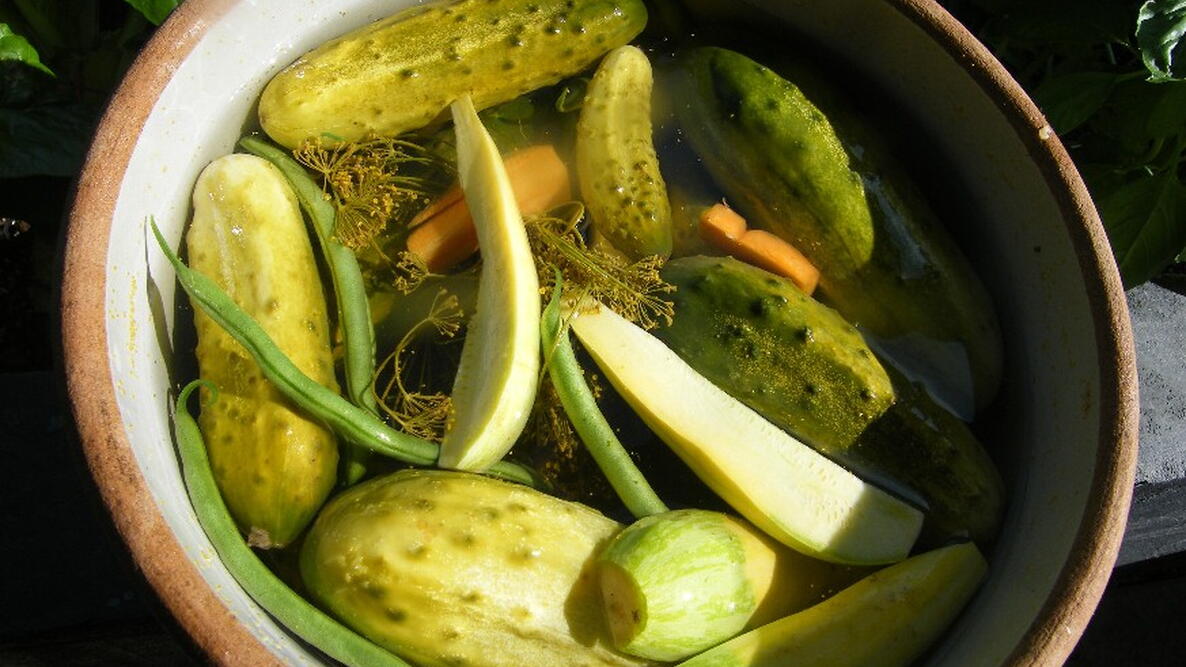
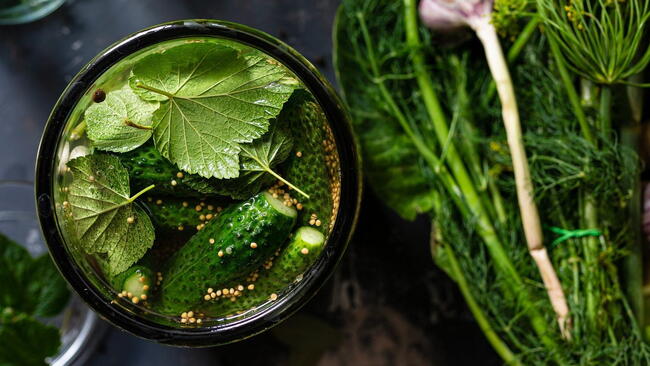
Every couple of weeks, I made a fresh brine--half cider vinegar, half tap water—filling the crock two-thirds full. I’d add three or four dill heads, a few peeled garlic cloves, and a little pickling salt. Then I’d start adding vegetables, usually weighing them down into the brine with a small plate.
Thank you for your response below. However, my question is whether one could do this on the countertop without the vinegar. I think the answer is that, if one is naturally fermenting in a saltwater brine, one has to refrigerate after a few weeks as the cultures will keep working on the pickles to the point of over fermenting (rotting). However, I may be wrong about this. Perhaps one can naturally ferment perpetual pickles as long as they are in a cool dark place? Thanks for your guidance.
- « Previous
- 1
- 2
- …
- 10
- Next »
📣The Gardening Club Just Got Better! 3 Deliveries, 10% Store Discount, and more!

Comments